


Imagine walking into the staff kitchen at 10:00 AM, ready for a quick coffee, only to find a sink overflowing with crusty bowls and a microwave lingering with the smell of yesterday's lunch. It's a common frustration that can quickly sour the mood of an otherwise productive morning. Most professionals agree that a messy break area creates unnecessary friction and impacts team morale. Mastering tea room etiquette in the workplace is no longer just a matter of courtesy; it's a vital part of managing a professional, hygienic, and harmonious environment for every staff member.
With Australian regulations in 2026 now treating psychosocial hazards as enforceable obligations, maintaining a respectful shared space is essential for workplace compliance. We've compiled the ultimate checklist to help you navigate the unwritten rules of the office kitchen, from managing communal milk to proper cleaning protocols. You'll learn how to establish clear signage and SOPs that reduce daily frustrations and streamline orientation for new starters. This guide provides the practical steps needed to transform your tea room into a clean, welcoming hub that supports both physical health and workplace wellness.
Key Takeaways
- Implement a "clean as you go" philosophy to eliminate sink clutter and maintain professional hygiene standards across all shared surfaces.
- Master the unwritten rules of shared resources, including effective fridge labelling and understanding the social nuances of tea room etiquette in the workplace.
- Reduce workplace friction by following appliance protocols, such as minimising microwave odours and boiling only the water required to improve energy efficiency.
- Maintain the tea room as a neutral social zone by managing noise levels and avoiding heavy work-related discussions near quiet zones.
- Develop clear, helpful signage and incorporate kitchen standards into your organisation's induction process to ensure long-term compliance for all staff.
The Core Principles of Staff Kitchen Hygiene
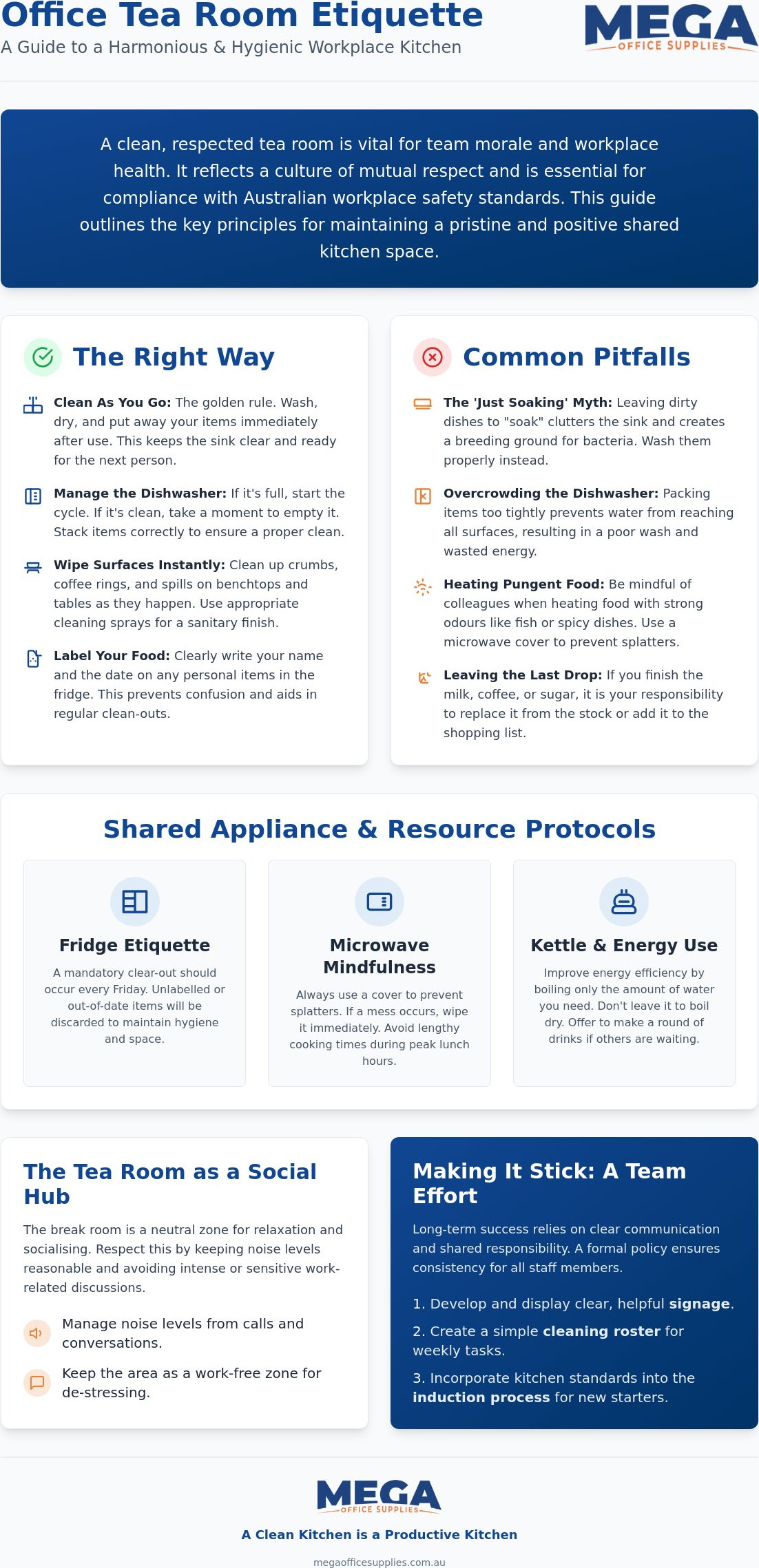
Maintaining a high standard of hygiene is the foundation of effective tea room etiquette in the workplace. It isn't just about appearances; it's a matter of health, safety, and mutual respect. Applying the foundational principles of etiquette to a shared kitchen means acknowledging that your actions directly impact the workday of your colleagues. A "clean as you go" philosophy is the most efficient way to manage this environment. This approach requires every staff member to take responsibility for their own mess immediately, ensuring the space remains functional for the next person.
One of the most persistent myths in office kitchens is the idea that "just soaking" a dish is a valid cleaning step. In reality, a sink full of stagnant, lukewarm water and food scraps is a primary breeding ground for bacteria. Items left in the sink create a "graveyard" effect; once one person leaves a mug, others feel permitted to do the same. This leads to a cluttered, unhygienic mess that someone else eventually has to clear. To prevent this, items should be rinsed and placed directly into the dishwasher or washed, dried, and put away immediately.
Dishwasher management also requires a specific level of attention. There is a significant difference between stacking and packing. Stacking involves placing items in their designated zones to allow for maximum water circulation and effective cleaning. Packing, or overcrowding the racks, often results in shielded surfaces that remain dirty, necessitating a second cycle. This wastes time and energy. If the dishwasher is full, the correct protocol is to start the cycle rather than leaving your dirty items on the benchtop.
Surface and Benchtop Maintenance
Crumbs, coffee rings, and spills should be addressed the moment they occur. Using professional-grade cleaning chemicals ensures that surfaces are not just visually clean, but properly sanitised against pathogens. It's essential to change tea towels and sponges at least once a day in high-traffic areas. Damp sponges can harbour biofilms and spread bacteria across supposedly clean surfaces, significantly increasing cross-contamination risks in communal food preparation areas.
Dishwasher and Sink Protocols
Clear instructions for loading the dishwasher should be posted nearby to avoid confusion and ensure every staff member knows how to operate the machine correctly. This includes scraping all food scraps into the bin before rinsing. The sink must remain clear at all times; it's a utility for rinsing and hand-washing, not a storage area for dirty cutlery. After use, give the basin a quick rinse to ensure no residue remains. These small, disciplined actions prevent the buildup of grime and keep the tea room a welcoming space for all.
Navigating Shared Resources and Communal Supplies
Managing communal assets is often the primary source of friction in shared spaces. It requires a clear understanding of the social contract between what belongs to the collective and what is private property. In many Australian offices, the "tea round" serves as a vital social lubricant, but it shouldn't become a source of stress. It's polite to offer a drink when you're heading to the kettle, but it's equally acceptable to decline if you're in the middle of a focused task. The key is consistency. If you're part of a regular rotation, ensure you contribute as much as you consume to maintain professional harmony.
The "last of the milk" rule is perhaps the most critical component of tea room etiquette in the workplace. If you empty a carton, it's your responsibility to replenish it from the backup stock or add it to the procurement list immediately. Leaving a near-empty bottle with just a teaspoon of liquid is poor form and disrupts the morning routine for the next colleague. Clear boundaries help prevent these issues.
Fridge Etiquette and Food Storage
Shared fridges can quickly become a hygiene hazard if not managed with discipline. Adhering to workplace health and safety standards involves more than just temperature control; it requires organised storage. Every item should be labelled with a name and the date it was placed in the fridge. A mandatory Friday afternoon clear-out ensures that forgotten leftovers don't become a health risk. This policy should be firm: if it isn't labelled or it's past its prime, it gets disposed of to maintain a professional environment.
Managing Coffee and Tea Supplies
A well-stocked kitchen is essential for workplace wellness and productivity. Ensure that coffee and tea supplies are monitored regularly by the designated officer. Don't wait until the tin is empty to report a shortage. Bulk items like stirrers and napkins should be kept in tidy dispensers to minimise waste and maintain a professional appearance. If you're bringing in shared treats, place them in a central, designated "community zone" to avoid any confusion with private lunches. For high-volume environments, sourcing bulk kitchen consumables ensures you never run short during the Monday morning rush.
Appliance Etiquette and Safe Operating Procedures
Safe and considerate appliance use is a cornerstone of professional tea room etiquette in the workplace. While some might dismiss kitchen rules as unnecessary, the reality is that communal appliances are high-wear items that require specific handling to remain functional and safe. Implementing clear Safe Operating Procedures (SOPs) isn't about patronising staff; it's about risk mitigation and maintaining a standard of office kitchen hygiene that protects everyone. When appliances are misused, it leads to equipment failure, potential fire hazards, and unnecessary maintenance costs for the organisation.
With the 2026 NSW Codes of Practice now serving as mandatory compliance benchmarks, businesses must ensure that all shared facilities are managed to a high standard. This includes the regular inspection and maintenance of electrical items. Beyond the hardware, the social impact of appliance use is significant. A neglected microwave or a greasy sandwich press can quickly become a point of contention, leading to the type of psychosocial friction that modern WHS regulations now require employers to manage actively.
The Microwave Code of Conduct
Microwave misuse is one of the most frequent complaints in shared breakrooms. To maintain a professional environment, always cover food with a microwave-safe lid or paper towel to prevent explosions and splatters. If a spill occurs, wipe the interior immediately while the residue is still warm. Beyond physical cleanliness, be mindful of the olfactory impact of your lunch. In open-plan offices, heating highly fragrant foods like fish or heavy curries can be disruptive to colleagues. If your meal has a strong aroma, consider using a different break area or ensuring the space is well-ventilated. A quick wipe of the keypad and handle with sanitising wipes from your facility supplies cupboard helps minimise the spread of germs in high-touch zones.
Boiling and Toasting Safety
Energy efficiency and physical safety are paramount when using kettles, urns, and toasters. Only boil the amount of water you actually need. This simple habit saves significant energy over a year and reduces the time colleagues wait for the kettle to reset. When using a toaster or sandwich press, never leave the appliance unattended. Crumbs and grease buildup are significant fire risks; ensure the crumb tray is emptied weekly and the plates of the sandwich press are wiped down after each use. If you notice a frayed cord, a loose plug, or an unusual smell coming from an appliance, report it to the facility manager immediately. Turning appliances off at the wall at the end of the day is often a mandatory requirement in Australian government and corporate sectors to ensure compliance with fire safety protocols.
Social Norms and Noise in the Tea Room
The tea room serves as a vital neutral zone within the organisation, acting as a space where staff can disconnect from high-pressure tasks. However, maintaining proper tea room etiquette in the workplace extends beyond physical cleanliness to include social and sensory considerations. From an Occupational Health and Safety (OH&S) perspective, the tea room is part of the "work environment and facilities" that must be managed to ensure the health and safety of all workers. This includes controlling noise levels and preventing the space from becoming a source of psychosocial stress. Under 2026 Australian regulations, managing these psychosocial hazards is now a regulated and enforceable obligation.
Acoustic management is particularly critical in open-plan offices where workstations are often located in close proximity to the kitchen. Loud conversations or the constant clatter of cutlery can be highly disruptive to colleagues trying to focus. Respecting break limits during peak periods is also essential. In high-volume environments, such as large government departments or busy healthcare centres, the kitchen must remain accessible. Lingering too long when others are waiting to prepare their meals can lead to unnecessary workplace friction. Creating an inclusive environment where every staff member feels welcome is a key part of maintaining a professional hub.
The "Quick Chat" vs. The Meeting
While the tea room is ideal for a casual catch-up, it isn't the place for an informal meeting. If a discussion becomes technical or requires more than a few minutes, it should be moved to a dedicated collaboration space. Utilising a whiteboard in a breakout room ensures that ideas are captured without blocking the flow of the kitchen. Keeping pathways clear is a basic courtesy. It allows colleagues to get a quick refill without feeling like they are interrupting a private conference. This separation of social and functional spaces is essential for productivity.
Odour and Sensory Management
Sensory comfort is a significant factor in workplace wellness. While we addressed appliance cleaning previously, the broader management of odours involves proper ventilation and waste disposal. Food waste should be disposed of in the correct bins, ideally those with lids that are emptied daily, to prevent lingering smells from permeating the office. Inclusivity also plays a role here; ensuring the space is welcoming for all staff, regardless of their cultural background or dietary requirements, is a key management duty. To maintain a fresh and professional environment, ensure your team has access to high-quality facility supplies including appropriate bin liners and sanitising products.
Implementing a Tea Room Policy That Works
Formalising tea room etiquette in the workplace requires more than just a set of suggestions; it necessitates a structured policy that integrates with your organisation's broader operational standards. An effective policy removes ambiguity and provides a clear framework for every staff member to follow. By codifying these expectations, you reduce the likelihood of the minor frustrations that frequently escalate into workplace friction. This is particularly relevant under current 2026 WHS regulations, which require businesses to manage psychosocial hazards with the same diligence as physical safety risks.
Integrating kitchen protocols into the new starter induction is the most efficient way to establish a culture of respect. Don't wait for a conflict to arise before explaining the "clean as you go" philosophy. When a new employee joins the team, provide a brief overview of the kitchen's Safe Operating Procedures along with their standard safety briefing. This ensures that every staff member, regardless of their background, understands the collective responsibility required to maintain a professional break environment. Consistency from the first day prevents the gradual decline in standards that often occurs in busy offices.
Effective Communication and Signage
Communication regarding kitchen standards should be direct and professional. Avoid the trap of using passive-aggressive or handwritten notes, which can feel patronising and are often ignored. Instead, use high-quality stationery to create clear, instructional signage that matches your corporate branding. Keep the messaging simple by focusing on the top three to five most important points, such as dishwasher loading rules or fridge clear-out dates. Place these signs at eye level near the relevant appliance or station to ensure they act as helpful reminders at the point of use.
Procurement for a Better Break Room
Staff cannot be expected to maintain high standards if they lack the necessary tools. Ensuring that professional-grade facility supplies are always available is a core procurement duty. This includes maintaining a consistent stock of detergent, sanitising wipes, and fresh tea towels. Consider implementing a simple feedback system, such as a clipboard or a digital form, where staff can request restocks before supplies run out. Safety is also a critical component of procurement; always maintain a well-stocked first aid kit in the tea room area to address minor burns or cuts immediately.
- Designate a "Kitchen Captain": Appoint a rotating officer to oversee the space and report any maintenance or supply issues.
- Implement a Cleaning Roster: Use a transparent, fair roster for deeper cleaning tasks that fall outside daily individual responsibilities.
- Provide Clear Waste Zones: Label bins clearly for recycling, organics, and general waste to streamline disposal and minimise odours.
A well-managed tea room is a reflection of a well-managed business. By providing the right supplies and clear guidelines, you transform the staff kitchen into a hub of workplace wellness that supports productivity and team morale. With over 20 years of combined industry experience, Mega Office Supplies understands the logistical demands of workplace maintenance. We provide the essential consumables and hardware needed to keep your facility running without friction, ensuring your tea room remains a professional and welcoming space for everyone.
Optimising Your Workplace Break Environment
A professional and hygienic staff kitchen is the result of clear communication, the right tools, and a shared social contract. Implementing structured cleaning rosters and safe operating procedures moves your team beyond simple courtesy toward a robust management system. Mastering tea room etiquette in the workplace reduces interpersonal friction and ensures your facility remains compliant with modern health and safety standards. Providing your team with professional-grade consumables makes these unwritten rules much easier to follow consistently.
Mega Office Supplies is a family-owned Australian business dedicated to supporting your procurement needs with reliability and expertise. We offer a comprehensive range of kitchen and cleaning essentials designed for high-volume environments, including schools, government departments, and corporate offices. Our team simplifies the procurement process by accepting Australian Government Official Purchase Orders. Browse our range of Tea Room and Facility Supplies today to equip your facility for success. Maintaining a welcoming space for your staff is an investment in your organisation's long-term wellness and productivity.
Frequently Asked Questions
Who is responsible for cleaning the office tea room?
Every staff member is responsible for their own immediate mess, including washing their own mugs and wiping up personal spills. For larger maintenance tasks like emptying the communal dishwasher or sanitising shared benchtops, responsibility usually falls to a designated facility officer or follows a rotating staff roster. This ensures that the burden of workplace maintenance is shared equitably rather than falling on a few individuals.
Is it okay to microwave fish or other strong-smelling foods in the office?
It is generally discouraged to heat highly fragrant foods like fish or heavy curries in a shared microwave. These odours can linger for hours and permeate open-plan office spaces, which may be disruptive to colleagues. If you must heat a meal with a strong aroma, ensure the kitchen is well-ventilated or consider using a secondary break area away from main workstations to maintain sensory comfort for the team.
What should I do if I find someone else’s dirty dishes in the sink?
You are not obligated to wash dishes that belong to a colleague. If the sink is cluttered, the most professional approach is to move the items to a designated "holding tray" or notify the kitchen captain. Avoid leaving passive-aggressive notes; instead, raise the issue during a team meeting or refer to your organisation’s tea room policy to ensure the "clean as you go" standard is being upheld by everyone.
How often should the office fridge be cleaned out?
The office fridge should be completely cleared and cleaned once a week, typically on a Friday afternoon. This frequency prevents the buildup of bacteria and ensures that forgotten leftovers don't become a health hazard over the weekend. A firm policy where unlabelled or expired items are disposed of during this clear-out is the most effective way to maintain professional hygiene standards in a shared facility.
Is a "tea round" mandatory in Australian offices?
The "tea round" is a social courtesy rather than a mandatory requirement. While offering to make a coffee for a colleague is a positive gesture that builds rapport, no staff member should feel pressured to participate if they are under a tight deadline. It is perfectly acceptable to decline an offer or skip a round if your workload requires focused attention, provided you don't always consume without occasionally reciprocating.
What are the essential supplies every workplace tea room should have?
A high-functioning kitchen requires professional-grade cleaning chemicals, dishwashing liquid, fresh tea towels, and sanitising wipes. For consumables, you should stock bulk coffee and tea supplies alongside sugar, stirrers, and napkins. Maintaining these essentials, along with a compliant first aid kit, makes following tea room etiquette in the workplace much easier for staff and ensures the environment remains professional and well-equipped.
How can we stop people from using other people’s milk?
Providing a communal milk option is the most effective way to prevent milk theft. When the organisation supplies bulk milk for the team, the temptation to "borrow" from private cartons is significantly reduced. For staff with specific dietary requirements, using waterproof labels or markers to clearly identify private property is recommended. If the organisation provides the basics, it sets a clear boundary between communal and private stock.
Should we have a cleaning roster for the staff kitchen?
Implementing a cleaning roster is highly recommended for tasks that fall outside of daily individual responsibilities. While everyone should clean their own mess, a roster ensures that deeper cleaning duties like descaling the kettle, wiping out the microwave, or organising the pantry are distributed fairly. A transparent, visible roster reduces workplace friction by ensuring that maintenance tasks don't always fall on the same few employees.
Article by
Mega Office Supplies Team
The Mega Office Supplies Team provides practical guidance for Australian businesses, schools, government organisations, healthcare providers, hospitality venues, warehouses and home offices. Based in Tweed Heads South, Mega Office Supplies is a family-owned and operated Australian business offering office stationery, workplace furniture, technology products, labels, printers, cleaning and janitorial supplies, safety products, art materials, education resources and everyday business essentials from trusted brands.
General Information
This article is provided as general information only to help customers compare and choose office, workplace, school, cleaning, technology, furniture, safety and business supplies. Product details, specifications, compatibility, availability, pricing and suitability may vary. Always check the individual product page, manufacturer information, workplace requirements and relevant safety guidance before purchasing or using a product.


