





Did you know that nearly 47% of working Australians describe their typical workday as mostly sitting? This sedentary habit is a primary driver of chronic lower back tension and the inevitable afternoon slump that drains your focus. Understanding the health benefits of using a standing desk is the first step toward breaking this cycle and reclaiming your physical well-being during the business day.
You've likely experienced the physical toll that comes from being anchored to a chair for eight hours straight. It's a common frustration for professionals who need to maintain high performance without compromising their long-term health or risking sedentary-related conditions like heart disease. This guide will show you how transitioning to a professional-grade sit-stand workstation can alleviate persistent aches, boost your metabolic health, and sharpen your daily productivity. We'll explore practical ergonomic strategies and durable furniture solutions that meet Australian OH&S standards, ensuring you're equipped with the knowledge to build a more dynamic and resilient workspace that supports your performance until 5 PM and beyond.
Key Takeaways
- Understand why "sitting disease" poses a risk to even active professionals and how dynamic movement serves as the only effective countermeasure.
- Learn how the health benefits of using a standing desk include reduced intradiscal pressure in the spine and a measurable boost to your metabolic rate.
- Discover the link between postural changes and cognitive function, using increased oxygenation to eliminate the common afternoon productivity slump.
- Master the "20:40:2" ergonomic rule to transition safely to a sit-stand workstation without the risks of over-standing or muscle fatigue.
- Identify the essential technical specifications, including weight capacity and height stability, needed to select a professional-grade desk for your workspace.
Understanding the "Sitting Disease" and the Sit-Stand Solution
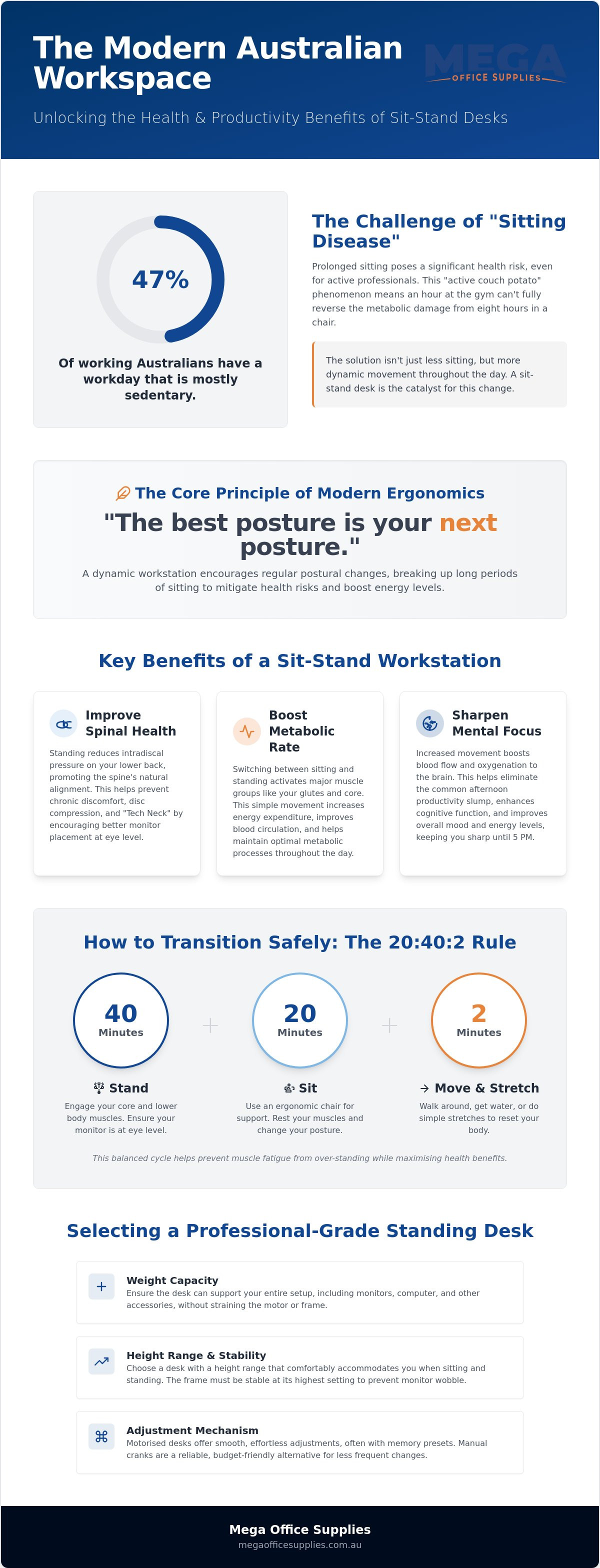
In 2022, data showed that nearly 47% of working Australians spent the majority of their day sitting. This high level of sedentary behaviour has created a significant health challenge within modern Australian office culture. Sedentary behaviour isn't just a lack of exercise; it's a specific state of low energy expenditure that occurs while sitting or reclining for long periods. Even for those who meet physical activity guidelines, the risk remains. Experts often refer to this as the "active couch potato" phenomenon, where an hour at the gym cannot fully reverse the metabolic damage caused by eight hours of static sitting.
The solution lies in a more dynamic approach to workplace design. One of the primary health benefits of using a standing desk is that it encourages regular movement throughout the day. To understand what is a standing desk in a functional sense, you should view it as a catalyst for posture correction rather than a tool for standing all day. The core principle of modern ergonomics is simple: the best posture is your next posture. By breaking up long periods of sitting, professionals can mitigate the risks associated with "sitting disease" and maintain higher energy levels.
The Physiology of Sedentary Work
When you sit for extended periods, your glutes and core muscles effectively deactivate. These muscles are vital for spinal support, and their deactivation leads to increased pressure on your lower back. Static posture also impacts blood circulation and slows down lymphatic drainage, which can cause swelling in the lower limbs. While high-quality ergonomic office chairs provide essential support, they cannot facilitate the muscle activation required to keep the body's metabolic processes running at an optimal rate. True physical relief comes from changing the load on your joints and muscles through regular intervals of standing.
The Rise of Adjustable Workstations in Australia
Australian organisations have increasingly prioritised workplace wellness as a core operational strategy. We've seen a significant shift from fixed-height desks to versatile motorised and manual sit-stand models. This transition is particularly evident in the government and corporate sectors, where flexible office fit-outs are becoming the standard. Modern office furniture supplies now focus on durability and ease of adjustment to ensure that employees can switch heights without disrupting their workflow. This shift reflects a broader commitment to meeting WHS standards and supporting the long-term health of the Australian workforce through better hardware and functional design.
Physical Health Benefits: Spinal Integrity and Metabolic Health
Maintaining spinal integrity is a primary concern for Australian professionals who spend long hours at a workstation. When you sit in a traditional chair, the intradiscal pressure in your lower back is significantly higher than when you stand. This pressure can lead to disc compression and chronic discomfort. By transitioning to a standing position, you allow your spine to return to its natural neutral alignment, which reduces the mechanical strain on the lumbar region. This shift is essential for preventing long-term structural damage to the vertebrae.
Another critical advantage involves the prevention of "Tech Neck". This condition occurs when the head is tilted forward for extended periods, usually to look at a monitor that is positioned too low. A standing desk encourages better monitor alignment by allowing the screen to sit at eye level. This adjustment minimises the load on the cervical spine and the surrounding musculature. To further enhance this setup, many professionals integrate monitor arms to ensure precise height and tilt adjustments.
Alleviating Chronic Back and Neck Pain
The mechanical advantage of standing lies in the distribution of weight. While sitting often leads to a slouched posture that overstretches the posterior ligaments, standing engages the core and lower body to provide a stable base. This engagement reduces the specific strain on the lumbar region that often triggers lower back pain. Consistent use of sit-stand workstations preserves long-term spinal health by distributing mechanical loads evenly across the musculoskeletal system.
Metabolic Improvements and Blood Sugar Regulation
The health benefits of a standing desk extend far beyond simple comfort. Research highlighted by Harvard Health Publishing suggests that standing after a meal can significantly improve glucose clearance compared to sitting. When you stand, your large muscle groups remain active, which helps regulate blood sugar levels more effectively. This metabolic activity is a crucial factor in reducing long-term cardiovascular health risks.
Standing is considered a low-intensity thermogenic activity. While the calorie burn per minute is only slightly higher than sitting, the cumulative effect over a standard Australian work week is substantial. This weight-bearing activity also plays a vital role in maintaining bone density and joint health by providing the necessary stimulus for bone remodelling. Integrating the health benefits of using a standing desk into your daily routine provides a sustainable way to manage metabolic health without requiring intense physical exertion during office hours. If you're looking to upgrade your current setup, exploring a range of standing desks can help you find a durable solution tailored to your specific workspace needs.
Mental Performance: Energy, Mood, and Cognitive Function
The relationship between physical posture and neurological health is a critical consideration for any high-performance workplace. Beyond physical comfort, the health benefits of using a standing desk include significant improvements in cognitive processing and emotional resilience. When you transition from a seated to a standing position, you trigger the release of Brain-Derived Neurotrophic Factor (BDNF). This protein acts as a biological fertiliser for the brain, supporting the survival of existing neurons and encouraging the growth of new ones. This neurological stimulation is essential for maintaining mental sharpness during complex analytical tasks that require deep concentration.
Combatting the "afternoon slump" is a common priority for Australian administrators and business owners. This drop in energy often occurs because prolonged sitting leads to shallow breathing and reduced blood flow. By simply changing your posture, you increase the body's oxygenation levels. This natural boost provides a more sustainable energy lift than caffeine, allowing you to maintain focus until the end of the business day. Feeling physically active rather than trapped at a desk for eight hours can also shift your psychological state, leading to a more proactive approach to your daily to-do list.
Boosting Daily Productivity and Focus
Standing naturally increases alertness by keeping the body in a state of readiness. It reduces task-switching fatigue, which is the mental exhaustion that comes from moving between different digital platforms and projects. Research into workplace ergonomics suggests that blood flow to the brain increases when standing, which can sharpen cognitive processing speed. Many professionals find that specific tasks, such as clearing high volumes of emails or conducting phone calls, are best suited for a standing posture. For those looking to integrate these advantages into a professional environment, choosing high-quality office furniture supplies ensures the transition between sitting and standing is seamless and quiet.
Improving Mood and Reducing Workplace Stress
The psychological impact of your workspace configuration shouldn't be underestimated. Standing helps reduce feelings of stress and workplace anxiety by altering your hormonal balance. Maintaining an upright, expansive posture can lower cortisol levels while supporting a sense of confidence and vigour. Users of sit-stand workstations frequently report higher energy levels and improved job satisfaction compared to those in fixed-seated roles. This dynamic approach also fosters a more collaborative office atmosphere. Standing meetings, for example, tend to be shorter and more focused than their seated counterparts. By prioritising the health benefits of using a standing desk, organisations can create a resilient work culture that values both mental well-being and functional efficiency.
Implementing Ergonomics: How to Transition Safely
While the health benefits of using a standing desk are well-documented, many professionals make the mistake of standing for too long, too soon. Over-standing can lead to lower limb fatigue, swelling, and increased pressure on the veins in your legs. You must adopt a structured transition plan that prioritises dynamic movement rather than static standing. The primary objective is to find a balance that supports your musculoskeletal system without causing unnecessary strain or fatigue.
A highly effective strategy used by ergonomic experts is the 20:40:2 rule. This framework suggests sitting for 40 minutes, standing for 20 minutes, and spending at least 2 minutes moving or stretching. This ratio ensures you aren't static in either position for long enough to cause discomfort. In Australian office or warehouse environments, the floor surface plays a major role in your comfort levels. Hard concrete or thin commercial carpets offer very little cushioning. This makes supportive footwear and proper floor protection essential. Using high-quality chair mats can help your chair glide easily while protecting the floor during your sitting intervals.
The Gradual Transition Framework
Don't expect to stand for half your workday immediately. Start with 15 to 30 minute intervals to build endurance in your legs and core. It's vital to listen to your body's pain signals. If you experience sharp heel pain or persistent calf aching, it may be a sign of plantar fasciitis or the early stages of varicose veins. Incorporate micro-breaks into your cycle. Gentle calf stretches or a quick walk to the staff kitchen can reset your circulation and prevent muscle stiffness. Building this endurance takes time but ensures your transition is sustainable.
Correct Ergonomic Setup for Standing
Your workstation must be adjusted correctly to realise the full health benefits of using a standing desk. Follow the 90-degree elbow rule: your desk height should allow your elbows to be bent at a right angle while your wrists remain neutral on the keyboard. This positioning is critical for preventing Carpal Tunnel syndrome and general wrist strain. Your monitor height should be set so your eye level meets the top third of the screen. This prevents the slouching often associated with fixed-height setups. On hard office floors, consider the role of anti-fatigue mats to reduce the impact on your joints. For a complete range of professional-grade solutions, you can browse our selection of sit stand workstations to find the right fit for your ergonomic requirements.
Selecting the Right Standing Desk for Your Professional Environment
Electric vs. Manual: Choosing for Efficiency
Electric motorised desks are often the preferred choice for high-traffic Australian workplaces. They encourage more frequent transitions because the adjustment is effortless. In hot-desking environments, programmable height presets allow multiple users to save their preferred settings, ensuring rapid transitions between shifts. Manual wind-up desks provide a durable, cost-effective alternative for areas without easy access to power, though they may be adjusted less frequently due to the physical effort involved. Desk converters are a practical option for fixed-height furniture, allowing you to trial the health benefits of using a standing desk without a full office fit-out.
Essential Accessories for the Ergonomic Workspace
A standing desk is only one part of a complete ergonomic workstation. Because you will still spend a significant portion of your day seated, investing in professional ergonomic office chairs is essential for the sitting phase of your cycle. This ensures your spine remains supported when you aren't standing. Integrating monitor arms allows you to maintain the perfect focal depth and screen height as you move. Without them, you risk neck strain each time you change positions.
Cable management is another critical factor often overlooked. As the desk moves, loose cables can become snagged or disconnected, creating a safety hazard. Using flexible cable trays or spine systems keeps your workspace tidy and prevents damage to your equipment. A clean, organised desk reduces mental clutter and supports the productivity gains discussed earlier. If you're ready to upgrade, you can explore our full range of standing desks for your workplace upgrade.
Future-Proofing Your Professional Workspace
Transitioning from a static seated position to a dynamic sit-stand routine is an effective way to protect your long-term physical and neurological well-being. By breaking the cycle of prolonged sitting, you reduce spinal pressure and regulate metabolic markers that directly impact your daily energy levels. Embracing the health benefits of using a standing desk isn't just about physical comfort; it's a strategic investment in your cognitive performance and workplace longevity. Whether you're managing a government department, a classroom, or a corporate office, the right ergonomic hardware provides the stability required for a resilient work environment.
Mega Office Supplies has been family owned and operated since 2008. We specialise in supplying the government, education, and corporate sectors with professional-grade furniture designed for durability. With national Australian delivery on all office furniture, we ensure your organisation has access to the tools required for a safer, more productive day. Upgrade your workplace wellness with our professional standing desk range and take a proactive step toward a healthier, more active office culture.
Frequently Asked Questions
Is standing at a desk better than sitting all day?
Standing at a desk is not inherently better than sitting if you remain in a static position for eight hours. The real health benefits of using a standing desk come from alternating between the two postures throughout the day. Static standing can lead to leg fatigue and circulatory issues; just as sitting causes spinal compression. Aim for a balanced ratio that keeps your muscles active and your blood flowing without overtaxing your lower limbs.
How many hours a day should you use a standing desk?
There isn't a single "correct" number of hours, but most ergonomic experts suggest a gradual increase until you're standing for roughly 2 to 4 hours across an eight-hour shift. Following the 20:40:2 rule, which involves standing for 20 minutes of every hour, is a practical way to achieve this. Listen to your body's signals and don't force yourself to stand if you're experiencing significant lower back or leg discomfort.
Can using a standing desk help with weight loss?
A standing desk is a tool for metabolic health rather than a primary weight loss solution. While you burn slightly more calories standing than sitting; the difference is approximately 8 to 10 calories per hour for most adults. The primary advantage is the reduction in blood sugar spikes and improved insulin sensitivity after meals. It's a low-intensity activity that supports a healthy lifestyle when combined with regular exercise and a balanced diet.
Do I need special shoes to use a standing desk at work?
You don't necessarily need specialised footwear, but supportive, flat shoes are highly recommended over high heels or thin-soled dress shoes. If your workplace has hard concrete or commercial tile floors, the impact on your joints can be significant. Many Australian professionals find that using an anti-fatigue mat provides the necessary cushioning to stand comfortably for longer periods. This setup reduces the strain on your arches and lower leg muscles during your standing intervals.
What is the correct height for a standing desk?
The correct height for your desk is determined by your elbow position. When standing, your elbows should be at a 90-degree angle with your forearms resting parallel to the desk surface. Your wrists should remain in a neutral, flat position while typing to prevent repetitive strain injuries. Additionally, ensure your monitor is positioned so that your eye level aligns with the top third of the screen, preventing you from tilting your head forward or slouching.
Will a standing desk actually reduce my back pain?
Using a standing desk can significantly reduce lower back pain by alleviating the intradiscal pressure caused by prolonged sitting. It encourages a neutral spine alignment and engages your core muscles, which provide better support for your vertebrae. However, this only works if you maintain correct posture and avoid leaning on one hip. Combining postural changes with a high-quality ergonomic chair for your sitting phases ensures your back receives consistent support throughout the day.
Are standing desk converters as effective as full standing desks?
Desk converters are an effective way to access the health benefits of using a standing desk without replacing your existing furniture. They provide the necessary height adjustment for your monitor and keyboard, helping you maintain a neutral spine. While they are highly effective for posture correction, you should check the weight capacity if you use multiple monitors or heavy hardware. For many Australian home offices or schools, converters offer a versatile and space-saving ergonomic solution.
Can I use a standing desk if I have existing knee or hip issues?
You can use a standing desk with existing joint issues, but you must transition much more slowly and monitor your symptoms closely. Static standing can sometimes aggravate knee or hip inflammation, so it's vital to keep your standing intervals short initially, perhaps only 5 to 10 minutes. Use a cushioned floor mat to reduce joint impact and ensure you're wearing supportive footwear. If you're managing a chronic condition, consult your physiotherapist to determine the best sit-stand ratio.

Article by
Mega Office Supplies Team
The Mega Office Supplies Team provides practical guidance for Australian businesses, schools, government organisations, healthcare providers, hospitality venues, warehouses and home offices. Based in Tweed Heads South, Mega Office Supplies is an Australian business, family owned and operated since 2008, offering office stationery, workplace furniture, technology products, labels, printers, cleaning and janitorial supplies, safety products, art materials, education resources and everyday business essentials from trusted brands.
General Information
This article is provided as general information only to help customers compare and choose office, workplace, school, cleaning, technology, furniture, safety and business supplies. Product details, specifications, compatibility, availability, pricing and suitability may vary. Always check the individual product page, manufacturer information, workplace requirements and relevant safety guidance before purchasing or using a product.


