


What if the most significant risk to your health isn't the visible wear on your seat, but the invisible "ergonomic fatigue" occurring deep within its internal support structures? Many professionals wait until the fabric is tattered or the frame is snapped before considering an upgrade, but the subtle signs you need a new office chair often appear much sooner in the form of persistent lower back pain or a seat that no longer holds its height. When your equipment fails to provide manual precision and support, it doesn't just impact your comfort; it compromises your professional output and long-term physical wellbeing.
We understand that a high-performing workspace relies on durable, professional-grade furniture that stands up to the rigours of a full business day. This guide will help you identify the critical warning signs that your current chair is past its prime, from annoying mechanical squeaks to the loss of essential lumbar support. By the end of this article, you'll have a clear checklist to justify a replacement and the knowledge required to select a high-quality solution that ensures your peace of mind and productivity for years to come.
Key Takeaways
- Learn to distinguish between superficial upholstery damage and critical "ergonomic fatigue" that compromises your seated posture and daily comfort.
- Identify the mechanical warnings of a failing gas lift cylinder to prevent the disruption and safety risks associated with a sinking seat.
- Recognise persistent physical discomfort and neck tension as primary signs you need a new office chair to protect your long-term health.
- Apply the 5-to-10-year industry benchmark to determine whether your current furniture requires a simple component repair or a complete replacement.
- Understand the essential multi-point adjustment features, such as seat slides and lumbar support, needed to maximise productivity in professional environments.
Visible Wear and Tear: When the Surface Tells the Story
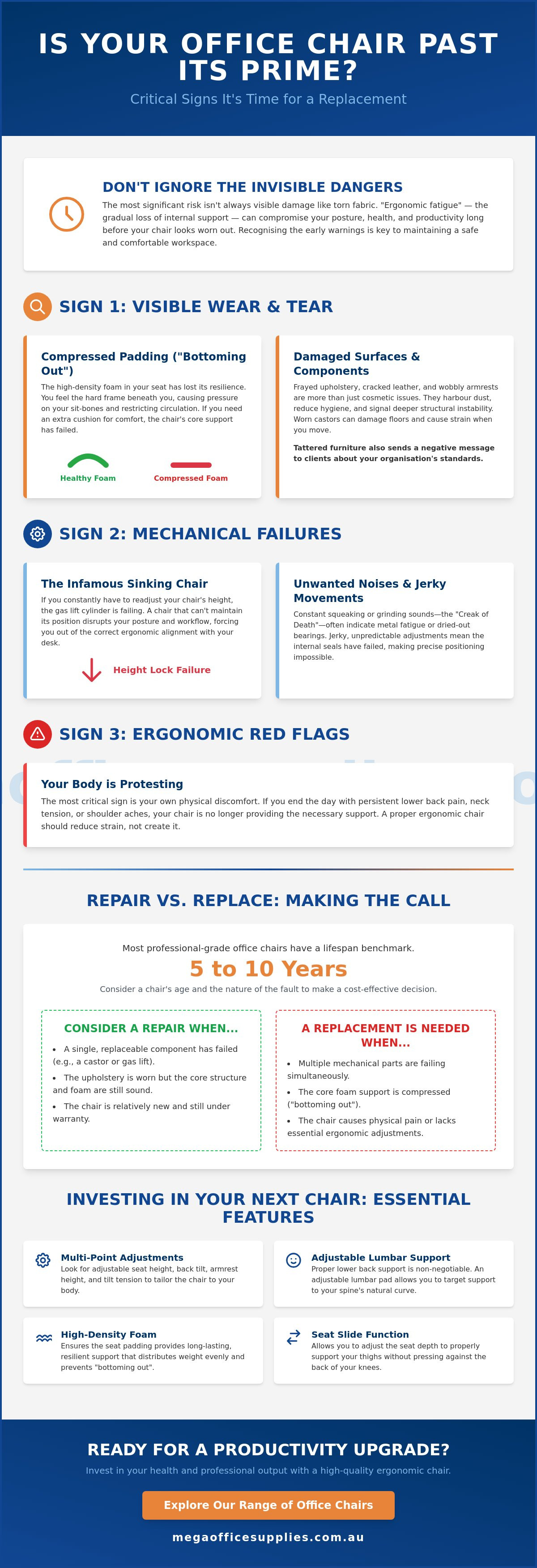
Most users ignore the initial degradation of their workspace equipment, assuming that a bit of frayed fabric is purely a cosmetic issue. However, the physical state of your seating is one of the most reliable signs you need a new office chair. Frayed upholstery or cracked leatherette isn't just an eyesore; these damaged surfaces harbour dust, skin cells, and allergens that can affect the air quality of your immediate work environment. Over time, the material loses its ability to protect the internal components from moisture and debris, which leads to accelerated structural decay and a loss of hygiene in shared spaces like reception areas or staff hubs.
To better understand how these visual cues impact your daily comfort and when it is time to consider an upgrade, watch this helpful video:
The Problem with Compressed Padding
High-quality office chairs rely on high-density foam to distribute your body weight evenly across the seat pan. When this foam loses its resilience and fails to "bounce back" after you stand up, you experience what industry veterans call "bottoming out". This occurs when the padding becomes so compressed that your weight rests directly on the hard plastic or metal frame beneath. This transfers intense pressure to your sit-bones and can restrict circulation at the hardened edges of the seat. If you find yourself adding a separate cushion to regain comfort, it's a clear indicator of fundamental failure. External cushions often shift your centre of gravity and negate the original ergonomic design features intended by the manufacturer.
Beyond the seat, you should inspect the peripheral components for signs of fatigue. Armrests that wobble or show deep cracks fail to provide the stable platform required for upper body support, often leading to shoulder tension. Similarly, worn castors are more than a minor nuisance. If they no longer glide smoothly, they can scratch expensive floor surfaces or force you to use excessive leg strength to reposition yourself. This repetitive strain adds up over a standard eight-hour shift, contributing to fatigue that a functional chair would otherwise prevent.
Aesthetic Standards in the Australian Workplace
Professionalism remains a cornerstone of any Australian business environment, whether you are managing a corporate fit-out in a capital city or a local medical clinic. Tattered furniture sends a negative message to clients and stakeholders about your organisation's attention to detail and commitment to quality. In a professional setting, the state of your furniture is an extension of your brand. Visible damage often serves as a precursor to deeper structural instability. When the surface tells a story of neglect, it is usually time to invest in a durable, professional-grade replacement that reflects the standards of your workplace.
Mechanical Failures and the Infamous Sinking Office Chair
Mechanical reliability is the baseline for any functional workspace. While surface wear is easy to spot, internal mechanical failures often manifest as a frustrating "slow sink" throughout the day. This occurs when the gas lift cylinder, which is the nitrogen-filled component responsible for maintaining height and absorbing impact, begins to lose pressure. If you find yourself adjusting your seat height every hour just to stay level with your desk, it is one of the most definitive signs you need a new office chair. A chair that cannot maintain its position isn't just a nuisance; it's a structural failure that compromises your posture.
Jerky or unpredictable height adjustments are equally problematic. When a gas cylinder's seals fail, the movement becomes erratic rather than smooth. This instability makes it impossible to achieve the manual precision required for a safe workstation setup. Beyond the lift, listen for the "Creak of Death". Constant squeaking or grinding sounds from the base or tilt mechanism usually indicate metal fatigue, failing welds, or dried-out bearings. These noises are early warnings that the chair's structural integrity is no longer guaranteed, especially under the dynamic loads of a standard workday.
Why Your Chair Keeps Sinking
The difference between a loose adjustment lever and a blown seal is critical for workplace safety. A blown seal in a gas lift cylinder allows nitrogen to leak, causing the chair to lose its height-holding capacity. This mechanical failure destroys your ergonomic desk alignment. As the seat sinks, your elbows drop below the desk surface, forcing your wrists into an unnatural upward angle to reach the keyboard. This misalignment is a primary contributor to repetitive strain injuries and carpal tunnel symptoms in high-volume office environments.
The Limits of DIY Repairs
Many users attempt to bypass these issues using temporary fixes like hose clamps or PVC pipes to lock the chair at a specific height. These methods are highly discouraged in professional settings. DIY repairs fail to address the underlying structural fatigue and often disable essential ergonomic design features like impact absorption. Furthermore, mechanical failure in the cylinder often predicts imminent failure in the tilt and tension mechanisms.
When conducting a cost-benefit analysis, replacing a failing unit is often more efficient than attempting to source and install individual components on an aged frame. Upgrading to a modern ergonomic office chair ensures you benefit from the latest Class 4 explosion-proof gas cylinders and reinforced bases. For organisations managing multiple workstations, maintaining a fleet of reliable, high-capacity seating is essential for operational stability. If your current seating is beginning to fail, exploring a range of professional office furniture solutions is the most reliable way to restore workplace efficiency.
Ergonomic Red Flags: When Your Body Starts to Protest
Your body often detects equipment failure before your eyes do. While mechanical issues like a sinking cylinder are obvious, ergonomic decay is a subtle process that manifests through physical discomfort. Persistent lower back pain that mysteriously disappears ten minutes after you stand up is one of the most reliable signs you need a new office chair. This "disappearing pain" indicates that your current seat is no longer providing the structural support required to maintain the natural curvature of your spine during prolonged periods of use.
Neck and shoulder tension are equally telling indicators. This often stems from non-adjustable or poorly positioned armrests that force your traps to stay engaged throughout the day. If your chair lacks the manual precision to align with your desk height, you'll likely succumb to the "Slump Factor". This occurs when the chair's backrest fails to support the lumbar region, forcing your spine into an unhealthy "C" shape. Over time, this loss of support leads to an anterior pelvic tilt, which can cause long-term musculoskeletal issues if left unaddressed.
The 30-Second Posture Check
You can verify your chair's efficacy with a quick structural assessment. First, sit back fully in the seat and check if the lumbar curve aligns directly with your lower vertebrae. If you feel a gap or if the support has softened, the internal tension has failed. Next, check for the "two-finger gap". There should be a space approximately the width of two fingers between the front edge of the seat pan and the back of your knees. A seat that is too deep or too shallow restricts circulation. Finally, observe your shoulders while your hands are on the keyboard. If they are hunched or hiked up, your armrests are likely the culprit, signaling a need for a more advanced workplace ergonomics solution.
Lagging Indicators: Pain as a Warning
Waiting for chronic pain to develop is a high-risk strategy for any professional. Pain is a lagging indicator; by the time you feel it, your productivity has already suffered. There is a direct connection between poor seating and reduced concentration levels. When your body is constantly micro-adjusting to find comfort, your brain has less energy for deep work. A high-performance chair centres the user, allowing for sustained focus and better output. For those managing corporate environments or home offices, investing in professional-grade office furniture isn't just about comfort; it's about maintaining the operational efficiency of your most valuable asset: yourself.
Repair vs. Replace: Evaluating the Lifetime of Your Office Furniture
Determining the lifecycle of workplace equipment is a core responsibility for any facility manager or business owner. While a high-quality seat is a long-term investment, the industry standard for a professional-grade chair typically spans between 5 and 10 years. Beyond this decade mark, the internal components and structural integrity often reach their service limit. Identifying the signs you need a new office chair involves more than just looking for holes in the fabric; it requires a calculated assessment of whether the unit remains fit for its intended purpose in a high-intensity environment.
Employer Duty of Care in Australia
Under Australian Occupational Health and Safety (OH&S) standards, employers have a legal obligation to provide equipment that minimises the risk of workplace injury. Substandard seating is a primary contributor to musculoskeletal disorders, which can lead to costly WorkCover claims and extended staff absences. For schools, government departments, and corporate offices, maintaining a regular audit of office furniture is essential for compliance. When multiple units in a fleet begin to show signs of age, bulk replacement is often more efficient than piecemeal repairs. This approach ensures a uniform standard of support across the organisation and reduces the logistical friction of managing varied maintenance schedules.
The Replacement Decision Matrix
To determine if a chair requires a simple component swap or a total replacement, apply the following criteria:
- Replace Immediately: If the five-star base is cracked, the metal frame is bent, or the structural welds are showing signs of fatigue. These are safety failures that cannot be safely repaired.
- Consider Repair: If the chair is less than five years old and the issue is isolated to a single castor or a minor plastic shroud. Castor replacements are cost-effective if the seat foam and cylinder remain functional.
- Invest in a New Model: If the gas cylinder is failing and the seat foam has lost its resilience. Attempting to repair both the internal lift mechanism and the padding often costs nearly as much as a new, warrantied model.
The hidden cost of retaining worn-out furniture is the "discomfort tax" paid through reduced employee focus. A staff member who spends 15 minutes a day micro-adjusting a failing chair loses over 60 hours of productivity per year. When you calculate the hourly rate of your team against the cost of a new unit, the return on investment for an upgrade becomes clear. If your current seating is compromising your team's output, view our current range of ergonomic seating solutions to restore your workplace's manual precision and comfort.
Investing in Your Next Chair: What to Look For
Once you have identified the signs you need a new office chair, the focus shifts to procurement. A modern ergonomic task chair is more than a seat; it is a piece of precision hardware designed for high-intensity use. The primary goal is to find a solution that accommodates the specific physical requirements of the user while maintaining durability in a commercial setting. Investing in professional-grade equipment ensures that your workspace remains a site of productivity rather than a source of physical strain.
Manual precision is achieved through multi-point adjustability. Look for models that offer a seat slide mechanism, which allows you to adjust the depth of the seat pan to maintain that essential two-finger gap behind the knees. Independent tilt tension and synchro-tilt mechanisms ensure the chair moves with you, reducing the static load on your spine. Lumbar support must be height-adjustable to target the correct vertebrae, as static support rarely fits the varied heights of an Australian workforce.
Choosing between breathable mesh and high-density foam depends on your environment and personal preference. Mesh provides superior airflow, which is ideal for Australian climates and open-plan offices where temperature regulation is key. High-density foam offers a softer initial feel but must be of professional grade to prevent the "bottoming out" issues mentioned in previous sections. Many organisations now integrate these chairs with standing desks to create a dynamic workstation. This combination allows users to alternate between sitting and standing, further reducing the risk of ergonomic fatigue and promoting better circulation throughout the day.
Professional Grade Standards
In Australia, the gold standard for commercial durability is the AFRDI rating. Choosing chairs that meet these rigorous testing standards ensures the equipment is fit for purpose in demanding environments like schools, healthcare facilities, or government departments. We draw upon decades of combined industry experience to curate a catalogue that prioritises longevity over flashiness. It's a common myth that one size fits all in office seating. Recognising the signs you need a new office chair is the first step toward reclaiming your productivity, but selecting the right fit requires understanding that a warehouse supervisor requires different support than a reception administrator.
Making the Purchase with Confidence
Navigating the procurement process should be friction-free for business owners and administrators. You can browse the Mega Office Supplies furniture range to find solutions tailored for national delivery across all sectors. For large-scale projects or government tenders, our system facilitates rapid quoting to help you evaluate costs and quantities quickly. Before you retire your old chair, ensure your new selection offers the specific adjustability features your previous model lacked. This final checklist ensures your investment delivers the security and peace of mind necessary for a functional and efficient workplace.
Future-Proof Your Workplace Productivity
Identifying the subtle and obvious signs you need a new office chair is a critical step in maintaining both your physical health and professional standards. Whether you've noticed a failing gas cylinder, flattened seat foam, or persistent lower back tension, upgrading your equipment is a direct investment in long-term output. A functional workspace requires durable, high-capacity solutions that meet Australian safety requirements and support the natural alignment of the body.
As an authorised supplier for government and educational sectors, Mega Office Supplies understands the specific durability needs of high-volume environments. We provide reliable national delivery across Australia to ensure your team remains supported, regardless of your location. Our focus remains on providing stable, professional-grade hardware that stands up to the rigours of the modern workday.
Don't let a worn-out seat compromise your well-being or your organisation's efficiency any longer. Browse our full range of professional ergonomic office chairs to find the manual precision and support your environment requires. Taking action now ensures a safer, more comfortable, and more focused workspace for the future.
Frequently Asked Questions
How long should a standard office chair last?
A professional-grade office chair typically lasts between 5 and 10 years depending on the quality of its components and the intensity of daily use. High-traffic environments, such as call centres or shared workstations, might see chairs reach their service limit sooner. If your seating has surpassed the decade mark, the internal support structures and seat foam resilience have likely degraded beyond their effective lifespan.
Can I just replace the gas cylinder in my sinking chair?
While you can technically replace a gas cylinder, it is often more cost-effective to invest in a new model if the chair is more than five years old. A sinking seat is one of the primary signs you need a new office chair because it often indicates that other vital components, such as the tilt mechanism and padding, are also nearing failure. Installing a new cylinder on a worn frame doesn't restore the original ergonomic support levels.
Is a squeaky office chair dangerous?
Persistent squeaking is often more than a minor annoyance; it can signal metal fatigue or failing structural welds within the base. These noises occur when components rub together due to mechanical misalignment or the breakdown of internal lubricants. In any professional setting, a noisy chair should be inspected to ensure the frame remains safe and hasn't developed hairline fractures that could lead to a sudden collapse.
Will a new chair really help with my lower back pain?
A high-quality ergonomic chair significantly reduces lower back pain by maintaining the natural inward curve of your lumbar spine throughout the day. Standard chairs often lack the manual precision required to support the lower vertebrae, leading to slouching and muscle strain. By providing adjustable lumbar tension and a stable seat pan, a new chair helps distribute your weight evenly and minimises pressure on your spinal discs.
What is the best material for a chair if I sit for 8 hours a day?
Breathable mesh is the superior choice for temperature regulation in Australian workplaces, especially during long shifts in warmer climates. If you prefer a traditional cushioned feel, ensure the seat uses high-density injection-moulded foam, which retains its shape much longer than standard cut foam. The best material is one that provides consistent support without "bottoming out" or trapping excessive body heat over an eight-hour period.
How do I know if my chair is ergonomic or just a standard desk chair?
True ergonomic chairs feature multiple manual adjustment points, including seat height, back tilt tension, lumbar height, and seat depth slides. A standard desk chair usually only offers basic height adjustment and a fixed backrest. If you cannot modify the chair to fit your specific limb lengths and spinal curve, it is likely a standard model that doesn't meet professional ergonomic standards for long-term use.
Are there weight limits for office chairs I should consider?
Most commercial office chairs are rated for specific weight capacities, typically ranging from 110kg to 150kg, with heavy-duty models available for higher requirements. It's essential to check for AFRDI or BIFMA certifications, which verify that the chair has been tested for structural integrity under specific dynamic loads. Using a chair that isn't rated for the intended user can lead to rapid mechanical failure and potential safety risks in the workplace.
Does Mega Office Supplies deliver office furniture across Australia?
We provide comprehensive national delivery for our entire range of office furniture across Australia. Whether you're outfitting a corporate headquarters in a capital city or a school in a regional area, our logistical network ensures your equipment arrives efficiently. We specialise in high-volume fulfilment for government, educational, and healthcare sectors, maintaining the scale required to handle large-scale fit-outs without friction.
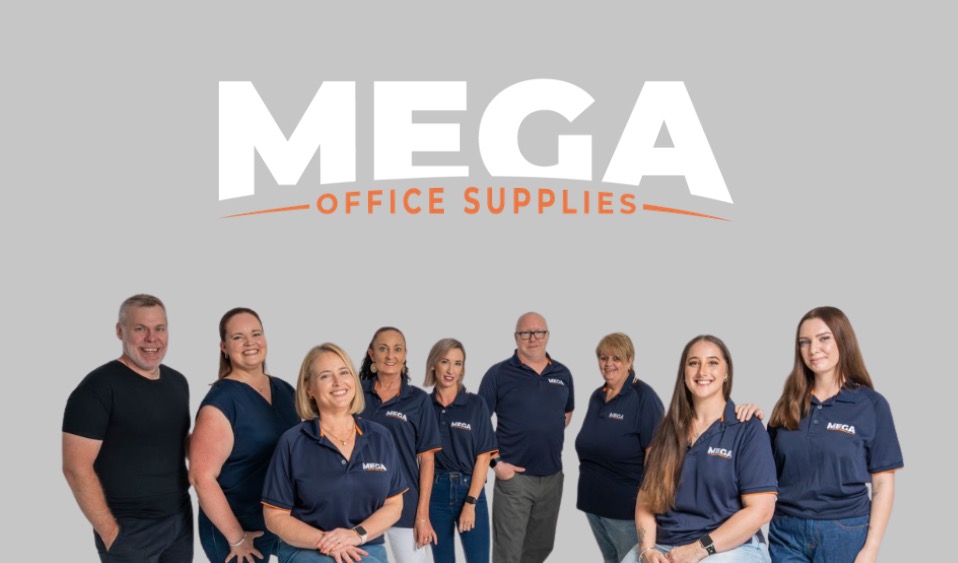
Article by
Mega Office Supplies Team
The Mega Office Supplies Team provides practical guidance for Australian businesses, schools, government organisations, healthcare providers, hospitality venues, warehouses and home offices. Based in Tweed Heads South, Mega Office Supplies is an Australian business, family owned and operated since 2008, offering office stationery, workplace furniture, technology products, labels, printers, cleaning and janitorial supplies, safety products, art materials, education resources and everyday business essentials from trusted brands.
General Information
This article is provided as general information only to help customers compare and choose office, workplace, school, cleaning, technology, furniture, safety and business supplies. Product details, specifications, compatibility, availability, pricing and suitability may vary. Always check the individual product page, manufacturer information, workplace requirements and relevant safety guidance before purchasing or using a product.


