


How many domestic-grade kettles has your business retired in the last twelve months? It’s a common frustration for procurement officers who find that household appliances quickly fail under the heavy-duty requirements of a professional environment. Using a comprehensive office kitchen supplies checklist ensures you move beyond domestic hardware and invest in commercial-grade tools built for high-volume use. We understand that managing multiple vendors for stationery and kitchen needs often leads to logistical bottlenecks and unexpected stockouts.
This professional framework will help you organise your staff room with essentials ranging from high-capacity coffee machines to safety-compliant hygiene products. By following this guide, you can streamline your procurement process and ensure your facility meets the latest Australian workplace health and safety standards. You'll learn how to accurately estimate usage rates and select products designed for longevity, ultimately creating a kitchen that boosts staff morale and maintains a functional, productive daily workflow.
Key Takeaways
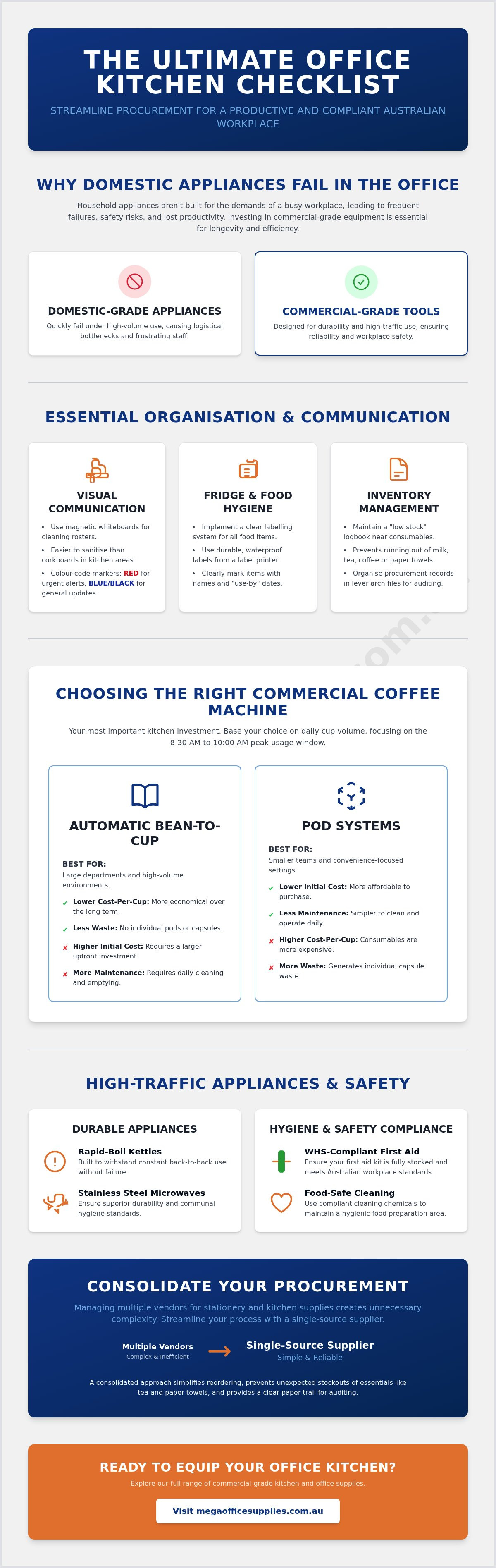
- Utilise whiteboards and labelling systems to establish clear cleaning rosters and maintain strict fridge hygiene standards.
- Select coffee machines based on daily cup volume to ensure your hardware can withstand the demands of a high-traffic staff room.
- Prioritise commercial-grade appliances, such as rapid-boil kettles and stainless steel microwaves, for superior durability and communal hygiene.
- Implement a comprehensive office kitchen supplies checklist that includes WHS-compliant first aid kits and food-safe cleaning chemicals.
- Consolidate your procurement process with a single-source supplier to streamline recurring orders for essentials like tea, coffee, and paper towels.
Essential Kitchen Organisation and Staff Communication
High-traffic environments demand structure to remain functional. An office kitchen supplies checklist isn't complete without a robust strategy for communication and shared responsibility. The office break room often becomes a point of friction if cleaning duties and food storage rules aren't clearly defined and visible to every team member. Without a central hub for information, small issues like unwashed mugs or expired fridge items quickly escalate into significant workplace hygiene problems.
Whiteboards serve as a central point for cleaning rosters and staff announcements. They provide a high-visibility surface for rotating duties, ensuring everyone knows who is responsible for the fridge or dishwasher on any given day. This level of transparency builds accountability and prevents the burden of maintenance from falling on the same few individuals. It's a simple, low-tech solution that keeps the kitchen running smoothly without constant intervention from office managers.
To help maintain a high standard of cleanliness in your shared spaces, watch this practical guide:
Noticeboards and Visual Communication
Magnetic whiteboards are often superior to traditional corkboards in kitchen settings because they're easier to sanitise and don't shed debris. Position these boards near high-use areas like the kettle or microwave where staff naturally pause. This is the ideal location for mandatory safety signage and first aid officer contact details. Use red or orange dry-erase markers to highlight urgent safety alerts or equipment faults; while black or blue can be reserved for general updates. This colour-coding system allows staff to identify critical information at a glance, improving overall workplace safety compliance.
Labelling and Inventory Management
Fridge hygiene is a primary pain point in Australian workplaces. Implementing Brother label printers allows staff to clearly mark their food containers with names and "use-by" dates. These durable, waterproof labels withstand condensation better than handwritten tape or markers. For the procurement officer, keeping a dedicated notebook as a "low stock" logbook prevents the frustration of running out of milk, tea, or paper towels. Store these logs and historical procurement records in lever arch files to simplify end-of-month auditing and ensure you have a clear paper trail for inventory tracking. This level of organisation turns a chaotic staff room into a well-managed facility.
Commercial Coffee Machines for Office Use: A Buying Guide
Coffee is the operational fuel of the Australian workplace. When you're building an office kitchen supplies checklist, selecting a coffee machine is often the most significant capital investment you'll make for the breakroom. The primary mistake procurement officers make is choosing a domestic-grade machine for a commercial environment. A household unit isn't designed to handle thirty coffees in a single hour; the internal heating elements and seals will fail under the thermal stress of back-to-back use. You must evaluate your daily cup volume by calculating peak usage times, typically the 8:30 AM to 10:00 AM window, to determine the necessary machine capacity.
Standardising your coffee and tea supplies to match your hardware is equally critical for logistical efficiency. If you invest in a high-capacity bean-to-cup system, you need a reliable supply of professional-grade beans and cleaning tablets. Conversely, pod systems require a specific capsule format that must be kept in stock to avoid downtime. Ensuring your consumables and hardware are compatible simplifies the reordering process and minimises staff complaints regarding machine availability.
Automatic Bean-to-Cup vs. Pod Systems
Automatic bean-to-cup machines represent a higher initial investment but offer a significantly lower cost per cup over the long term. These systems are ideal for large departments where volume justifies the upfront price. They produce less waste than individual capsules, though they require more rigorous daily maintenance, such as emptying grinds and running automated milk-line cleaners. Pod systems suit smaller offices or reception areas where speed and zero mess are the priority. While the cost per capsule is higher, the "mess factor" is almost non-existent; making them perfect for environments without a dedicated cleaning roster.
Key Features for Commercial Environments
Deciding between a plumbed-in model and a manual water tank model depends entirely on your kitchen layout. Plumbed-in machines eliminate the need for constant refilling, which is essential in high-traffic zones, but they require a permanent water connection. User interface simplicity is another non-negotiable feature. Staff should be able to operate the machine via a one-touch interface without needing a manual. Finally, always verify the warranty terms. Commercial use often voids domestic warranties, so ensure your equipment includes Australian-based technical assistance and a service agreement that covers the specific demands of a workplace setting. For those currently reviewing their breakroom facilities, selecting a machine with local technical support is a vital step in ensuring long-term reliability.
High-Traffic Kitchen Appliances and Hardware
Office kitchens are industrial environments disguised as domestic spaces. While a standard home kettle might boil five times a day, a workplace unit often runs fifty cycles during a single shift. This intensity is why your office kitchen supplies checklist must prioritise commercial-grade hardware over residential alternatives. Purchasing domestic appliances for a corporate setting often voids the manufacturer's warranty immediately upon installation. For long-term reliability, look for appliances specifically rated for light commercial or high-volume use.
Microwaves with stainless steel interiors are a non-negotiable requirement for communal hygiene. Unlike painted or ceramic-coated interiors, stainless steel resists the absorption of food odours and withstands the abrasive cleaning necessary in a shared facility. Similarly, fridge capacity planning should follow a strict ratio of approximately 10 to 15 litres of storage space per staff member. This calculation ensures enough room for individual lunch boxes while leaving sufficient space for communal milk and catering supplies.
Modern fit-outs increasingly rely on integrated boiling and chilled water units. These units eliminate the clutter of multiple kettles on the benchtop and provide an immediate solution for high-traffic tea rooms. While the initial capital expenditure is higher, the time saved by staff waiting for a kettle to boil often justifies the investment in larger departments. These systems also provide filtered water, which significantly improves the quality of beverages served to clients and staff.
Durability Standards for Office Hardware
Identifying commercial-use ratings ensures your investment is protected by a valid warranty. Plastic finishes may be cheaper initially, but stainless steel offers superior longevity and easier maintenance in high-touch areas. Energy efficiency ratings also play a role in minimising operational costs, especially for appliances like fridges that run 24/7. High-efficiency models reduce the business's carbon footprint while providing the thermal stability required to keep food safe in a busy environment.
Essential Kitchen Benchtop Equipment
Peak times require high-capacity tools like four-slot or conveyor toasters to prevent bottlenecks during the morning rush. Water filtration systems are another essential addition; they protect your expensive coffee machinery from scale build-up and improve the taste of drinking water. Always ensure appliances are positioned safely to prevent circuit overloads, which is a common risk in older Australian commercial buildings with limited power circuits. For a full range of high-performance facilities and breakroom hardware, always check the technical specifications for commercial suitability before making a purchase.
Hygiene, First Aid, and Safety Compliance
Workplace health and safety obligations extend directly into the staff tea room. Under the Model WHS Act, updated in December 2025, businesses must maintain a safe environment that minimises risks to health. A robust office kitchen supplies checklist prioritises high-volume hygiene and specific medical readiness. Unlike general office areas, the kitchen presents unique hazards such as thermal burns and sharp-force injuries from food preparation. Maintaining compliance requires a proactive approach to both surface sanitisation and first aid availability.
Hand hygiene stations are the first line of defence against the spread of illness in communal spaces. Position soap dispensers and hand sanitiser at the entrance to the kitchen to encourage staff to maintain cleanliness before handling shared equipment. In high-traffic environments, no-touch automatic dispensers are preferable as they reduce the number of shared contact surfaces. This proactive measure, combined with a consistent supply of paper towels for hand drying, significantly reduces the transmission of bacteria between team members.
Kitchen-Specific First Aid Requirements
Standard office kits often lack the specialised components needed for culinary accidents. Your first aid kits should include hydrogel burn dressings and blue detectable bandaids. These blue dressings are essential for food-safe environments because they are easily visible if they accidentally become detached during food preparation. Regular auditing is mandatory; medical supplies lose their efficacy once they pass their expiry dates. Ensure your designated first aid officer conducts a monthly inventory check to replace consumed or expired items. It's also vital that all portable electrical appliances, including kettles and microwaves, undergo testing and tagging every 12 months to meet Australian safety standards.
Sanitisation and Facility Maintenance
Surface hygiene relies on selecting food-safe cleaning chemicals that comply with the Australia New Zealand Food Standards Code, which was most recently updated in May 2026. Avoid using generic household sprays that may leave toxic residues on preparation surfaces. A colour-coded cloth system is a professional standard that prevents cross-contamination between the kitchen and other facility areas. For instance, using green cloths exclusively for food zones ensures that cleaning tools used in general office areas don't introduce contaminants to the kitchen.
Waste management also requires industrial-grade bins and heavy-duty liners to handle high-volume disposal without splitting. In a busy office, bins should be emptied daily to prevent odours and pests. Selecting bins with foot pedals allows for hands-free disposal, which is a critical component of modern hygiene standards. You can source all your commercial-grade cleaning and safety supplies from Mega Office Supplies to ensure full compliance with Australian workplace standards.
Consolidating Your Kitchen Procurement Strategy
Managing the logistics of a staff room often becomes a secondary task for busy administrators. However, a fragmented procurement strategy leads to higher costs and wasted time. By consolidating your office kitchen supplies checklist into a single-source procurement model, you eliminate the need to coordinate with multiple vendors for stationery, technology, and kitchen essentials. This approach provides financial transparency and simplifies the auditing process for your facilities management team. It's a strategic move that transforms a chaotic supply chain into a well-oiled operation.
Building a sustainable kitchen is another critical component of modern corporate social responsibility. Transitioning to eco-friendly consumable options, such as compostable bin liners or FSC-certified paper products, helps your organisation meet environmental targets without sacrificing functional performance. Integrating these choices into your regular procurement cycle ensures that your workplace remains both compliant and ethically aligned with current Australian business standards.
Bulk Ordering and Efficiency
Efficiency begins with data. By calculating your monthly usage rates for coffee, milk, and cleaning products, you can optimise bulk pricing and minimise delivery frequency. Consolidated invoicing reduces administrative overhead; allowing your accounts department to process a single monthly payment rather than dozens of small transactions from various suppliers. For organisations with multiple sites, utilising a national delivery network ensures a consistent supply across all locations. This logistical prowess prevents regional stockouts and maintains a uniform standard of facility maintenance regardless of the office location.
The Mega Office Supplies Advantage
Partnering with an Australian family-owned business provides a level of direct support that global competitors cannot match. Our team brings decades of combined industry experience to every client relationship, offering tailored solutions for the government, education, and healthcare sectors. You gain access to a comprehensive range of facilities and breakroom products, ensuring every item on your office kitchen supplies checklist is sourced from a reliable provider known for industrial-grade quality.
We understand the specific workflows of professional buyers who need to evaluate costs and quantities quickly. Whether you require rapid quoting for a new fit-out or automated recurring orders for high-turnover consumables like tea and paper towels, our systems are designed to facilitate a friction-free purchase process. Our historical depth in the Australian market allows us to provide grounded, practical advice on workplace maintenance that goes beyond simple product supply. By centralising your procurement with us, you secure a dependable partner dedicated to the longevity and efficiency of your workplace facilities.
Streamline Your Facility Management and Staff Wellbeing
Establishing a high-functioning tea room requires more than just stocking the fridge. It's about implementing a professional office kitchen supplies checklist that prioritises commercial-grade hardware and rigorous safety standards. You've seen how choosing the right coffee machinery and maintaining a compliant first aid station can significantly impact daily operations. By consolidating your procurement, you reduce the logistical friction that often plagues busy administrators and procurement officers.
As a family-owned Australian business with decades of combined industry experience, Mega Office Supplies is equipped to handle your high-volume requirements. We provide national delivery for all workplace essentials; ensuring your facility remains stocked, hygienic, and compliant with current Australian standards. Our team understands the practicalities of maintaining diverse environments from schools to corporate headquarters.
Browse the Full Range of Kitchen and Breakroom Supplies at Mega Office Supplies
A well-organised kitchen is a cornerstone of a productive workplace culture. It's time to build a facility that supports your team and your business goals with confidence.
Frequently Asked Questions
What are the most forgotten items on an office kitchen supplies checklist?
Items like descaling tablets for coffee machinery, spare microwave covers, and specific cleaning tools for milk lines are frequently overlooked. A comprehensive office kitchen supplies checklist should also include essentials like spare cutlery sets for visitors and industrial-grade bin liners that won't leak under the weight of wet food waste. These small additions prevent minor daily frustrations from becoming logistical hurdles for your procurement team.
How do I choose between a domestic and a commercial coffee machine for my office?
Choose a commercial machine if your office serves more than 15 cups per day. Domestic units lack the thermal stability and pump durability to handle back-to-back brewing cycles, which leads to premature hardware failure and voided warranties. Commercial models offer faster recovery times between cups and often include service agreements that ensure your team isn't without caffeine when a technical fault occurs.
Is it mandatory to have a first aid kit specifically in the office kitchen?
While the Model WHS Act requires accessible first aid facilities, having a dedicated kit in the kitchen is a professional standard due to specific risks like thermal burns and cuts. Standard office kits don't always contain the hydrogel dressings or blue detectable bandaids required for food-safe environments. Positioning a kit directly in the tea room ensures a rapid response to culinary accidents.
How often should I restock kitchen consumables in a medium-sized office?
Restock high-turnover consumables like milk twice weekly, while dry goods and cleaning supplies should be audited monthly. For a medium-sized office of 20 to 50 staff, setting up recurring orders for tea, coffee, and paper towels reduces the administrative burden. Tracking usage for one month provides the data needed to automate these deliveries and prevent the frustration of unexpected stockouts.
What cleaning chemicals are safe to use in a staff food preparation area?
Use food-safe sanitisers that comply with the Australia New Zealand Food Standards Code for all preparation surfaces. Avoid using heavy-duty industrial degreasers or generic household sprays that may leave behind toxic residues or strong perfumes. Neutral detergents and alcohol-based surface wipes are effective for daily maintenance without compromising the safety of staff meals or beverages prepared in the facility.
Should we provide reusable or disposable cutlery and plates in the staff room?
Reusable cutlery and plates are the standard for professional environments as they reduce long-term costs and waste. While disposables might seem convenient for large meetings, they create significant landfill and recurring expenses. Investing in a commercial-grade dishwasher allows your team to maintain a rotating stock of ceramic mugs and stainless steel cutlery with minimal manual effort and a lower environmental impact.
How can I reduce the environmental impact of our office kitchen supplies?
Switch to FSC-certified paper products and compostable bin liners to lower your facility's carbon footprint. You can also install water filtration systems to eliminate the need for single-use plastic bottles. Purchasing consumables in bulk reduces packaging waste and transportation emissions; aligning your kitchen operations with corporate social responsibility targets while often lowering the total cost per unit for the business.
What is the best way to organise a communal fridge to maintain hygiene?
Establish a strict "Friday Clear-out" policy and use clear labelling to maintain a hygienic communal fridge. Use whiteboards to announce cleaning schedules and ensure all staff mark their containers using waterproof labels. Organise shelves by category; keeping communal milk on lower levels to prevent leaks and reserving top shelves for individual lunch boxes to maximise visibility and accessibility for everyone.
Article by
Mega Office Supplies Team
The Mega Office Supplies Team provides practical guidance for Australian businesses, schools, government organisations, healthcare providers, hospitality venues, warehouses and home offices. Based in Tweed Heads South, Mega Office Supplies is a family-owned and operated Australian business offering office stationery, workplace furniture, technology products, labels, printers, cleaning and janitorial supplies, safety products, art materials, education resources and everyday business essentials from trusted brands.
General Information
This article is provided as general information only to help customers compare and choose office, workplace, school, cleaning, technology, furniture, safety and business supplies. Product details, specifications, compatibility, availability, pricing and suitability may vary. Always check the individual product page, manufacturer information, workplace requirements and relevant safety guidance before purchasing or using a product.


