



The stand up desk has transitioned from a modern office novelty to a fundamental component of workplace health and safety and staff retention. Australian businesses now recognise that employee wellbeing is directly linked to operational output, making ergonomic investment a priority for any productive environment. Choosing the right furniture is no longer just about aesthetics; it's about building a workspace that supports the long-term health of your team.
You've likely experienced the physical fatigue and persistent back pain that stems from a traditional, static desk arrangement. It's a common challenge to find a reliable height-adjustable solution that integrates with your current technology without causing more clutter or mechanical headaches. Many procurement officers and business owners feel the pressure to choose between manual reliability and electric convenience while ensuring the hardware meets strict Australian safety standards and durability requirements.
This guide provides a professional overview of the latest sit-stand technology to help you identify the most durable and efficient equipment for your organisation. We'll explore the differences between manual and electric drive systems, review the practicalities of current WHS regulations, and outline the key factors to consider before investing in new office furniture. You will gain the clarity needed to make an informed decision that balances long-term durability with functional design.
Key Takeaways
- Identify which lift mechanism, whether electric, manual, or pneumatic, best suits your hardware weight and frequency of adjustment.
- Learn the specific ergonomic height settings and movement cycles required to minimise physical fatigue and back pain during long shifts.
- Determine how to select a professional-grade stand up desk tailored to your specific sector, from compact urban offices to high-traffic healthcare facilities.
- Explore how adjustable workstations support modern hybrid work models and hot-desking layouts to improve overall office efficiency.
- Streamline large-scale procurement for national operations by selecting durable furniture designed for high-volume commercial use.
The Shift to Dynamic Workstations in the Modern Australian Office
Australian office environments have undergone a radical transformation. The static, fixed-height desk that once dominated corporate floorplans is being phased out in favour of flexible, height-adjustable solutions. Reflecting on The Evolution of the Stand Up Desk shows how these tools moved from niche ergonomic recommendations to a core requirement for modern office furniture fit-outs. This shift isn't just about comfort; it's a strategic response to the changing nature of professional work across the country.
This evolution is heavily driven by the rise of hybrid work and hot-desking. When staff share desks, the furniture must adapt to different body types and preferences instantly. It's about creating a workspace that is as dynamic as the team using it.
To better understand the practical application of these modern workstations, watch this helpful video:
From Luxury to Workplace Standard
Under model Work Health and Safety (WHS) regulations, Australian employers have a clear duty to manage the risks associated with sedentary work. Prolonged sitting is now linked to increased corporate health insurance premiums and a higher frequency of musculoskeletal injury claims. By integrating dynamic workstations, organisations facilitate a culture of movement. Current ergonomic recommendations suggest changing posture every 30 minutes to mitigate these risks effectively. This doesn't just reduce physical strain; it breaks the monotony of the workday and encourages a more collaborative, energetic office environment where staff feel supported in their physical health.
The Business Case for Standing Desks
Investing in height-adjustable technology offers a tangible return on investment through reduced absenteeism and improved staff retention. A well-equipped workstation that pairs a stand up desk with high-quality ergonomic office chairs creates a comprehensive health solution.
This proactive approach to workplace maintenance demonstrates a commitment to employee wellbeing, which is a significant factor for talent acquisition in a competitive market. It's a utilitarian choice that pays dividends in productivity, making it a standard inclusion for any modern Australian commercial project or government department fit-out.
Comparing Stand Up Desk Technologies and Mechanisms
Selecting the right mechanism for a stand up desk is a technical decision that impacts long-term operational reliability and user satisfaction. While the aesthetic of the desktop is often the first consideration, the internal hardware determines the weight capacity, lift speed, and noise levels. In a high-volume professional environment, these specifications are critical for maintaining a quiet and efficient workflow. Choosing the wrong lift system can lead to mechanical failure or a workstation that lacks the stability required for multi-monitor setups.
Electric vs. Manual: Which Suits Your Workflow?
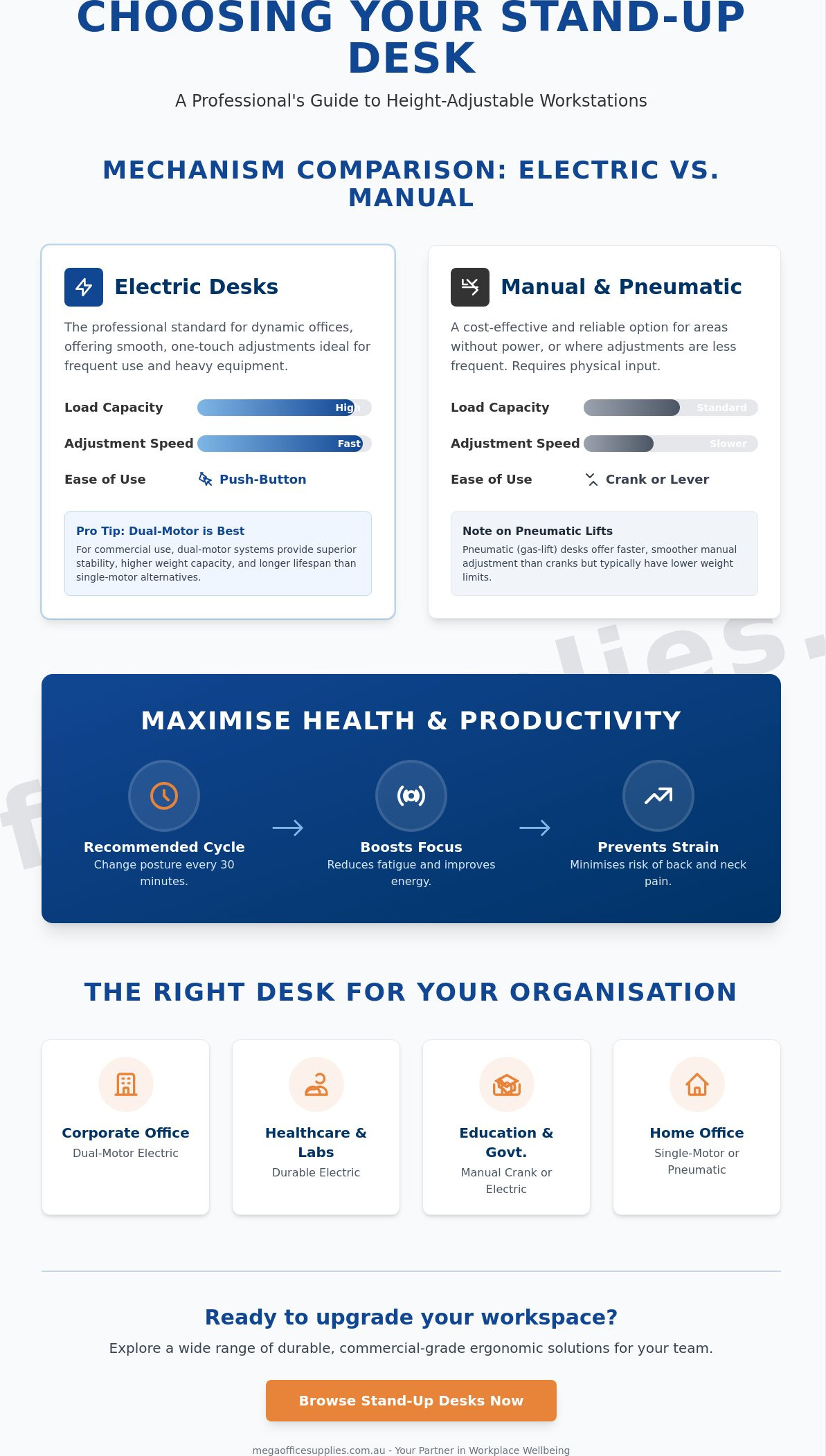
Electric height-adjustable frames are the primary choice for modern Australian offices. These systems are available in single or dual-motor configurations. Dual-motor desks are generally considered the professional standard because they offer higher load capacities and smoother, more balanced transitions. When selecting the right desk, consider that dual motors often support up to 150kg, whereas single-motor budget models might be limited to 70kg. This distinction is vital if your staff use heavy computer hardware or multiple monitor arms.
Manual crank desks still hold a place in specific sectors. They are reliable options for remote areas where power access is inconsistent or for schools that require a low-maintenance, cost-effective solution. While they lack the speed of electric models, their manual precision and lack of electronic components mean fewer potential points of failure over a long service life. For shared workstations, however, the rise of smart electric desks with programmable height presets is a significant advantage. These allow users to return to their preferred ergonomic settings with a single touch, which is essential for effective hot-desking.
Technical Specifications to Compare
Performance varies significantly across different brands and price points. Lift speed is a key metric; professional grade desks typically move at 30mm to 40mm per second. Faster movement encourages users to change positions more frequently. Anti-collision technology is another mandatory feature for modern safety. This system detects resistance and stops the motor if the desk hits an object, such as a filing cabinet or a chair armrest, preventing damage to the hardware or the surrounding furniture.
- Noise Levels: Look for motors that operate under 50 decibels to ensure adjustments don't disrupt colleagues in open-plan offices.
- Stability: Frame weight and leg stage design (two-stage vs three-stage) impact how much the desk wobbles when fully extended.
- Cable Management: Integrated trays and power bars are necessary to maintain a clean desk policy and prevent cord strain during height transitions.
When you need to outfit a large-scale operation, it's helpful to browse a wide range of commercial grade furniture to find the right balance of technical specs and value. A well-constructed frame should provide years of trouble-free service even with high-frequency daily use.
Selecting the Right Desk for Diverse Professional Environments
Not every workstation serves the same purpose. A stand up desk in a legal firm's Sydney CBD office requires a different specification than one used in a regional Queensland hospital ward. Adhering to Safe Work Australia guidelines on sitting and standing is a priority for government departments and corporate entities alike. Understanding these environmental nuances ensures that the procurement process yields functional, long-lasting results for your specific sector.
Corporate and Government Office Fit-outs
For large-scale national rollouts, consistency is essential. Procurement officers often seek standardised frames that can be deployed across multiple branches to simplify maintenance and support professional branding. In sectors like emergency services or logistics centres, where desks operate 24/7, commercial-grade durability is non-negotiable. It's important to coordinate new desktop finishes with existing office furniture to maintain a cohesive professional aesthetic across the organisation.
Education and Healthcare Specialisations
In the classroom, adjustable desks support student focus by allowing for natural movement during the learning process. This is particularly effective for neurodiverse learners who benefit from a change in posture throughout the day. When planning school facilities, linking furniture choices with broader educational supplies ensures a holistic approach to student ergonomics. In clinical settings, mobile sit-stand carts provide height adjustment for practitioners who are constantly moving between patient rooms and workstations.
Industrial and Urban Space Solutions
Urban centres frequently deal with limited floor space, making compact frames with a smaller footprint a necessity for home offices and boutique agencies. These smaller units still require the same stability as their larger counterparts to prevent monitor wobble. Conversely, industrial reception areas or warehouses require heavy-duty options that can withstand high-frequency interaction and harsher environments. Consider these practical factors to ensure your furniture remains a reliable asset:
- Industrial Durability: Select frames with scratch-resistant powder coatings for warehouse environments.
- Urban Footprints: Use 1200mm desktops for compact city offices where every square metre counts.
- Clinical Mobility: Ensure mobile units feature locking castors for stability during patient consultations.
- Aesthetic Integration: Match timber or laminate finishes to existing cabinetry for a seamless look.
Maximising the Health and Productivity Benefits of Standing
Acquiring a professional-grade stand up desk is a significant step toward a healthier workplace, but the hardware is only effective if used correctly. Many users make the mistake of standing for too long too soon, which can lead to lower back strain and leg fatigue. To achieve the intended ergonomic ROI, you must implement a structured approach to movement that balances sitting, standing, and active walking throughout the shift. This isn't just about avoiding chairs; it's about minimising static postures in all forms.
The Ideal Standing Desk Setup
Correct alignment is non-negotiable for preventing repetitive strain injuries. When you're in a standing position, your desk height should be adjusted so your elbows are at a 90-degree angle while typing. This prevents shoulder tension and wrist strain. Keyboard placement is critical; it should sit flat on the surface to maintain a neutral wrist position. Pairing your desk with adjustable monitor arms ensures your screens remain at eye level, preventing the neck strain associated with looking down at a fixed monitor.
Lower limb comfort is often overlooked. Standing on hard office carpets or floorboards for extended periods can cause circulation issues. Using anti-fatigue mats provides a cushioned surface that encourages micro-movements in the feet and calves, which significantly reduces muscle fatigue. It's also vital to wear supportive footwear; avoid standing for long periods in heels or flat shoes with no arch support. These small adjustments transform a standard stand up desk into a high-performance ergonomic station.
Managing the Transition Period
Don't try to stand for your entire eight-hour shift on day one. A gradual transition is the most sustainable way to adapt. Ergonomic experts often recommend the 20-8-2 rule: for every half hour of work, spend 20 minutes sitting, 8 minutes standing, and 2 minutes moving or stretching. This cycle keeps your metabolism active and prevents the joint loading that occurs with prolonged static positions.
Staying organised during these transitions requires a clean desk policy. Use integrated cable management to ensure that your computer accessories and stationery don't become tangled or displaced when the desktop moves. This maintains your focus and prevents the frustration of reorganising your workspace every time you change positions. For those looking to complete their ergonomic fit-out, you can browse our full range of workplace furniture to find the right accessories for your setup.
Procuring High-Performance Desks for National Operations
Large organisations require more than just a furniture supplier; they need a logistical partner capable of managing complex, multi-site rollouts. Procuring a stand up desk for a single home office is straightforward, but outfitting a national department requires a different level of operational scale. At Mega Office Supplies, we leverage our team's cumulative decades of industry experience to ensure that every piece of hardware meets commercial-grade standards. This historical depth allows us to anticipate the specific needs of procurement officers who value stability and regional expertise over flashy marketing.
Bulk Ordering and Logistics
National operations demand consistency across every location. Whether you're expanding a corporate headquarters in Melbourne or outfitting a regional government office, maintaining the same desk models is essential for future maintenance and aesthetic uniformity. Our rapid quoting tools are designed for professional buyers who need to evaluate costs and quantities quickly. We coordinate national deliveries with a focus on speed and reliability, ensuring that furniture and essential technology arrive on schedule to minimise downtime.
The Mega Office Supplies Advantage
Selecting professional-grade stock requires a deep understanding of hardware longevity. We prioritise durability in our catalogue, focusing on frames and motors that withstand high-frequency use in demanding environments. Our customers benefit from a single-source solution, accessing everything from basic office supplies to complex ergonomic fit-out products. This integrated approach simplifies the procurement workflow and reduces administrative friction.
For a detailed technical breakdown of specific models, our Sit Stand Desk Comparison Guide provides a comprehensive look at the specifications that matter most to commercial buyers. Evaluating warranties and after-sales support is a critical final step in the purchasing process. We provide transparent information on motor life, frame stability, and local support lines to give you peace of mind.
Optimising Your Workplace for Long-Term Health
The transition to height-adjustable furniture represents a fundamental shift in how Australian organisations manage employee wellbeing and operational efficiency. By selecting the right lift mechanism and understanding the specific requirements of your industry, you create a workspace that is both durable and adaptable. Remember that a professional stand up desk is most effective when paired with a structured movement cycle and the correct ergonomic accessories. This proactive approach to office maintenance reduces long-term physical strain and supports a more energetic, collaborative culture.
At Mega Office Supplies, we draw on decades of combined industry experience to provide reliable, commercial-grade ergonomic solutions for every sector. Our national delivery network ensures that whether you're outfitting a single home office or managing a large-scale government rollout, your hardware arrives promptly across Australia. We invite you to browse our full range of professional stand up desks to find the ideal fit for your specific workplace requirements. Investing in quality equipment today ensures your team remains productive and healthy well into the future.
Frequently Asked Questions
Are stand up desks actually better for your health?
Stand up desks improve long-term health by reducing sedentary time and encouraging regular posture variation throughout the workday. This aligns with Safe Work Australia's guidance on managing musculoskeletal risks in the office. While they don't replace the need for regular exercise, they help prevent the metabolic slowdown and physical strain associated with prolonged, static sitting.
How long should I stand at my desk each day?
You should aim to stand for approximately 15 to 30 minutes every hour. A practical way to manage this transition is the 20-8-2 rule, where you sit for 20 minutes, stand for 8, and move for 2. This cycle prevents the joint loading and lower limb fatigue that can occur if you stand for too long without a break.
What is the difference between a single-motor and dual-motor electric desk?
A dual-motor stand up desk features a dedicated motor in each leg, providing a more balanced, powerful, and quiet lift than single-motor models. Dual-motor systems typically handle heavier loads, often up to 150kg, and move with greater speed and synchronisation. Single-motor desks are a cost-effective alternative but are generally slower and limited to a lower weight capacity.
Can I convert my existing static desk into a standing desk?
Yes, you can use a sit-stand workstation converter that sits directly on top of your current furniture. These units use gas-lift or manual mechanisms to raise your screens and keyboard to a standing height. While they are a convenient solution for individual workstations, they don't offer the same expansive surface area or motor-driven precision as a full height-adjustable frame.
Do chiropractors recommend standing desks for back pain?
Many chiropractors recommend adjustable workstations because they allow users to vary their spinal loading throughout the day. Frequently changing positions helps alleviate the pressure on spinal discs that often leads to chronic lower back pain. It's essential to maintain correct ergonomic alignment in both positions to ensure you aren't trading one type of physical strain for another.
What height should a standing desk be for my height?
Your desk should be set at elbow height so your forearms remain parallel to the floor while you are typing. For an individual who is 175cm tall, the ideal standing height typically ranges between 105cm and 110cm. You should always use the 90-degree elbow rule as your primary guide to find the setting that minimises shoulder and wrist tension.
Are electric standing desks noisy in an open-plan office?
Professional-grade electric desks are designed to operate at noise levels under 50 decibels, which is comparable to a quiet library environment. This ensures that height adjustments won't disrupt colleagues or interrupt phone calls in a shared workspace. Cheaper, entry-level motors may produce a more noticeable whirring sound and move with less fluid motion during transitions.
Load capacities for a stand up desk typically range from 70kg for budget models to 150kg or more for premium commercial frames. When calculating your requirements, you must include the weight of the desktop itself along with all monitors, arms, and computer hardware. Choosing a frame with a higher capacity ensures the motors operate efficiently without straining under the load of modern technology.
Load capacities for a stand up desk typically range from 70kg for budget models to 150kg or more for premium commercial frames. When calculating your requirements, you must include the weight of the desktop itself along with all monitors, arms, and computer hardware. Choosing a frame with a higher capacity ensures the motors operate efficiently without straining under the load of modern technology.
Article by
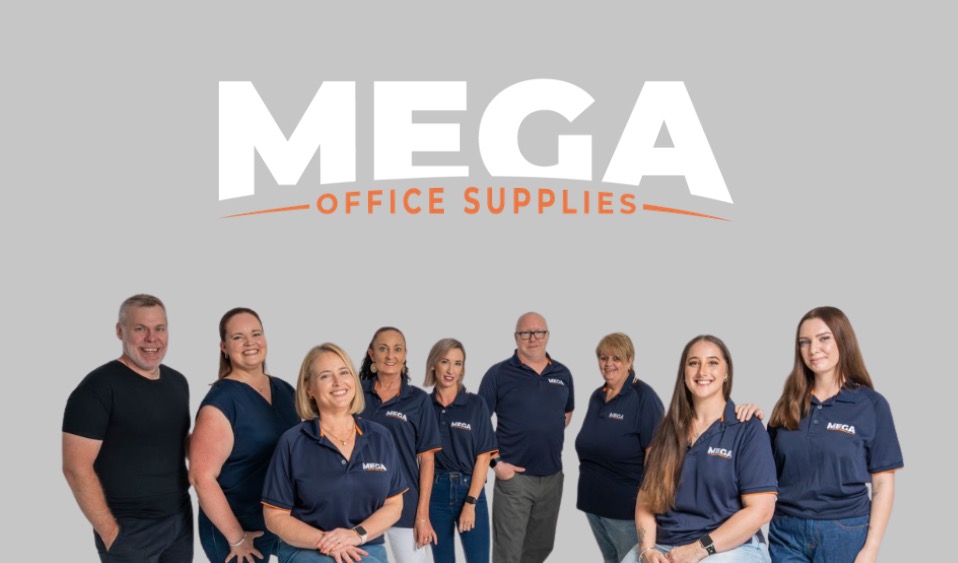
Mega Office Supplies Team
The Mega Office Supplies Team provides practical guidance for Australian businesses, schools, government organisations, healthcare providers, hospitality venues, warehouses and home offices. Based in Tweed Heads South, Mega Office Supplies has been family owned and operated since 2008, offering office stationery, workplace furniture, technology products, labels, printers, cleaning and janitorial supplies, safety products, art materials, education resources and everyday business essentials from trusted brands.
General Information
This article is provided as general information only to help customers compare and choose office, workplace, school, cleaning, technology, furniture, safety and business supplies. Product details, specifications, compatibility, availability, pricing and suitability may vary. Always check the individual product page, manufacturer information, workplace requirements and relevant safety guidance before purchasing or using a product.


