


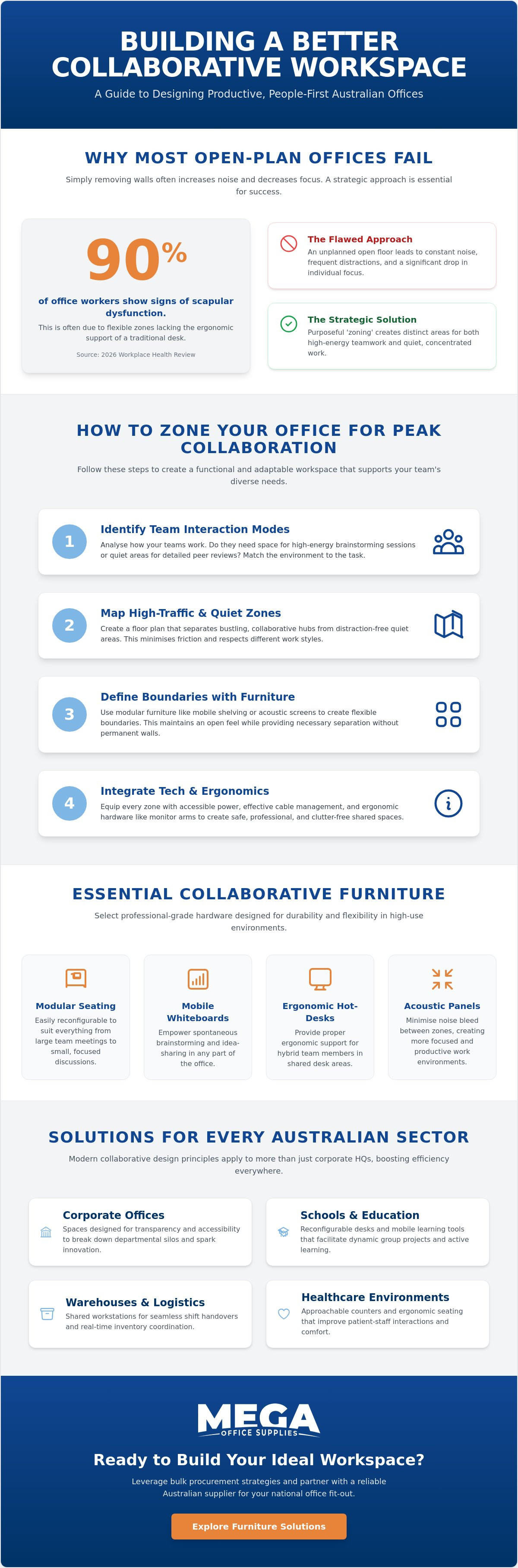
Most open-plan offices fail because they assume that removing walls is enough to spark innovation. In reality, simply opening up a floor plan often leads to increased noise and decreased focus. Creating a collaborative workspace with furniture requires a deliberate strategy that moves beyond aesthetics to address how people actually move and work. A 2026 Workplace Health Review highlighted that 90% of office workers now show signs of scapular dysfunction, often because their flexible collaborative zones lack the ergonomic support found at a traditional desk.
It's frustrating to manage a procurement budget only to find staff avoiding the very zones designed for them. We recognise the difficulty in balancing high-traffic team areas with the quiet spaces required for complex tasks. This guide promises to equip you with the technical knowledge to build a modern Australian workplace that supports both social interaction and productivity. We will cover the latest 2026 OSHA ergonomics best practices, the importance of modularity in hybrid environments, and how to select professional-grade hardware that ensures long-term value for your organisation.
Key Takeaways
- Identify your team’s primary interaction modes to map out distinct high-traffic and quiet zones that reduce office noise and disruption.
- Discover why modularity is essential when creating a collaborative workspace with furniture, allowing your floor plan to adapt to fluctuating hybrid work attendance.
- Learn how to integrate essential technology like cable management and monitor arms into shared "hot-desk" areas to maintain a safe and professional environment.
- Optimise your national office fit-out by leveraging bulk procurement strategies and choosing a reliable Australian partner for ongoing logistical support.
What is a Collaborative Workspace and Why Does it Matter?
A collaborative workspace isn't just an open area with a few chairs. It's a purposeful zone designed for active problem-solving and team synergy. In the professional context of a collaborative working environment, every piece of hardware serves a specific function. We've moved away from the rigid, isolated cubicles of the past. Today's Australian offices prioritise modularity and fluid movement to keep teams connected and engaged. This shift reflects a deeper understanding of how physical environments influence output and innovation.
Creating a collaborative workspace with furniture involves more than just buying tables. It requires a strategy that improves employee engagement. When staff feel their environment is tailored to their needs, productivity naturally increases. Faster decision-making and improved team morale are direct results of a well-planned layout. A "one size fits all" approach often fails because it ignores the specific noise levels and privacy requirements of different professional tasks. Effective design ensures that furniture supports the work rather than getting in the way of it.
To better understand how these design principles come together, watch this helpful video:
The Evolution of the Australian Workplace
The rise of hybrid work has fundamentally shifted why we go to the office. It's no longer just a place to sit at a desk for eight hours. The physical office is now a hub for high-value team interactions that can't happen as effectively via a screen. Selecting the right office furniture signals a culture of transparency and accessibility. When a space is configured for openness, it encourages spontaneous brainstorming and reduces the barriers between different departments.
Collaboration Across Different Sectors
Modern design isn't limited to corporate headquarters. In Australian schools, collaborative zones facilitate group learning through reconfigurable desks and mobile whiteboards. Within warehouse and logistics hubs, shared workstations allow for seamless shift handovers and real-time inventory coordination. Healthcare environments also benefit from this approach. Reception areas are now designed to foster better patient-staff interaction through approachable, ergonomic counters and seating that prioritises both comfort and professional utility.
Modern sectors demand versatility and durability. Whether you're managing a school staffroom or a corporate boardroom, the furniture must be professional-grade to withstand high-volume use. Relying on generic designs often leads to underutilised spaces and wasted procurement budgets. Instead, focus on functional clarity to ensure every square metre of your office adds value to the team's daily operations and long-term goals.
How to Zone Your Office for Peak Collaboration
Effective office design begins with logical spatial planning. Zoning ensures that different team activities don't conflict with one another. To start, identify your team's primary interaction modes. Some departments require high-energy brainstorming sessions, while others focus on detailed peer reviews. Creating a collaborative workspace with furniture means matching the hardware to these specific behaviours. For example, a creative team might need mobile whiteboards and modular seating, whereas a finance team requires stable surfaces for reviewing physical documents.
Mapping out "High-Traffic" and "Quiet" zones is the next critical step. This reduces the friction caused by noise and visual distractions. A U.S. Government Accountability Office report on collaborative work environments details how large-scale organisations are successfully transitioning to these layouts by prioritising functional zones over traditional desks. Once you've mapped these areas, select furniture that defines boundaries without the need for permanent walls. Mobile shelving units or acoustic screens provide the necessary separation while maintaining the flexibility of an open plan.
Integration of shared technology is essential for a functional zone. Ensure that every collaborative area has accessible power outlets and cable management solutions to prevent clutter. Finally, treat your layout as a living system. Test and iterate based on actual staff movement. If a particular table remains unused, move it or change its purpose. This data-driven approach ensures your procurement budget is never wasted on stagnant assets. For those starting a new project, viewing a comprehensive range of office furniture can help identify the right modular components for your specific sector.
The Huddle Space: For Quick Tactical Meets
Huddle spaces are designed for brief, high-impact interactions. By using high tables and stools, you encourage participants to keep meetings concise and action-oriented. Proximity is the most important factor here; place these zones near main work areas to facilitate spontaneous problem-solving. Equip these areas with essential tools like whiteboards and flip charts. This allows teams to visualise ideas quickly without the formality of booking a boardroom.
The Breakout Area: Fostering Spontaneous Ideas
Breakout areas serve as the social engine of the workplace. Using soft seating and lounge furniture creates an informal atmosphere that encourages "water cooler" moments between different departments. These zones are often best placed in staff kitchens or tea rooms where people naturally congregate. Comfortable furniture in these areas does more than just look good. It reduces workplace fatigue and provides a mental reset, which ultimately boosts creativity and long-term employee retention.
Selecting the Right Collaborative Furniture Categories
Choosing the specific hardware for a professional environment requires a focus on longevity and practical utility. When creating a collaborative workspace with furniture, the primary goal is to select pieces that can serve multiple functions as team needs evolve. Modular desks and workstations are the foundation of this approach. Unlike fixed joinery, modular systems allow procurement officers to reconfigure floor plans without the expense of a full renovation. This flexibility is vital in Australian offices where project teams may expand or contract rapidly based on specific contract requirements.
Mobility is a key differentiator in high-performance workspaces. Equipping storage units and whiteboards with heavy-duty castors allows staff to physically reshape their environment in real-time. This manual precision ensures that a huddle space can be created in seconds. Additionally, furniture plays a significant role in managing acoustics within open plans. High-back lounge seating and felt-lined acoustic screens act as functional barriers to absorb sound. This is a critical step in creating a collaborative workspace with furniture that doesn't alienate staff who need quiet for deep focus.
Versatile Tables and Workstations
Conference rooms often suffer from underutilisation because their layouts are too static. Flip-top tables solve this by allowing rooms to transition from a traditional boardroom setup to a classroom-style training session in minutes. For shared touch-down points, height-adjustable standing desks provide the necessary ergonomic variety for a hybrid workforce. When selecting these items, prioritising durable materials like high-pressure laminates and powder-coated steel frames ensures the equipment survives high-volume commercial use. These professional-grade surfaces are easier to maintain and offer better long-term value for the organisation.
Seating for Different Interaction Levels
Interaction levels dictate the type of seating required. Long-form collaborative sessions, such as project planning or deep-dive reviews, necessitate heavy-duty task chairs with full lumbar support. For shorter huddles, lightweight visitor chairs are more appropriate as they are easy to move and stack when not in use. It's essential to integrate ergonomic office chairs even in shared zones to maintain staff health and reduce the risk of musculoskeletal strain. As noted by Forbes on building an effective startup culture, the physical environment directly reinforces the company's values of openness and shared success. Professional-grade seating ensures that collaboration doesn't come at the cost of physical comfort or safety.
Integrating Technology and Ergonomics into Shared Spaces
Creating a collaborative workspace with furniture requires a seamless blend of physical hardware and digital infrastructure. Without robust cable management, shared tables quickly become hazardous and cluttered. We recommend choosing furniture with integrated charging ports and recessed power modules. This ensures that devices remain powered throughout long sessions without the risk of tripping over loose cords. Efficient power access is a hallmark of a well-oiled operation, allowing for a fast user experience in high-intent environments.
Shared zones are high-traffic areas by nature. Safety must be a primary concern for any administrator. It's critical to ensure first aid kits and safety supplies are visible and accessible within these hubs. In large-scale warehouses or open-plan government departments, these should be mounted near collaborative zones to ensure immediate response times. Integrating safety equipment into the furniture layout provides peace of mind and reinforces a culture of workplace maintenance and care.
The Ergonomics of Collaboration
Shared furniture often follows a "one-size" design, which can lead to discomfort for users with different physical requirements. High levels of adjustability are essential. Utilising monitor arms and laptop stands allows individual staff members to personalise their viewing height in shared "hot-desk" areas. Providing footrests further supports proper posture for various body types. These ergonomic interventions are vital for preventing RSI and long-term musculoskeletal issues in multi-user environments where furniture is used by dozens of different people each week.
Tech-Ready Furniture Solutions
Modern huddle rooms require specialised media units that support seamless video conferencing. These units should house screens at eye level and include dedicated storage for technology essentials. Keeping consumables like toner and ink cartridges in nearby storage units prevents workflow interruptions during critical project reviews. Acoustic panels also play a significant role here. They improve audio quality for remote participants by reducing echo, ensuring that hybrid collaboration is as clear as an in-person meeting. This technical precision keeps the momentum moving toward the final transaction or project goal.
To equip your team with professional-grade hardware that supports modern workflows, browse our full range of office fit out products today.
Procurement Strategies for National Office Fit-outs
Managing large-scale furniture orders across multiple Australian sites requires a level of logistical prowess that goes beyond simple browsing. Administrators must coordinate delivery and installation schedules while ensuring that every regional office receives identical hardware. Creating a collaborative workspace with furniture at this scale necessitates a focus on volume and speed of fulfilment. A fragmented approach often leads to inconsistent quality and higher shipping costs. Working with a reliable Australian retailer with a national distribution network ensures that your procurement process remains efficient and organised.
Value for money should always outweigh initial cost when evaluating professional-grade gear. High-use commercial environments put immense strain on workstations and seating. Investing in durable hardware reduces the frequency of replacement cycles. Standardising your furniture styles across all locations also ensures future-proof compatibility. If a team in Brisbane needs to expand, they can draw from the same modular components used in Sydney or Melbourne, maintaining a cohesive aesthetic and functional standard. This consistency simplifies the management of assets and ensures a professional image across the entire organisation.
Simplified Ordering for Government and Business
Streamlining the purchase process is essential for large organisations and government departments. We facilitate this by accepting Australian Government official purchase orders, providing a direct and transparent path for public sector procurement. For private enterprises, setting up a dedicated business account allows for rapid quoting and viewing of previous order history. This level of financial transparency helps procurement officers evaluate costs and quantities quickly, ensuring that project timelines are met without friction or administrative delays.
Maintenance and Longevity of Shared Furniture
The lifecycle of your office assets depends on proactive maintenance. When creating a collaborative workspace with furniture, select easy-clean materials for high-traffic zones like staff kitchens and breakout areas. Regular audits of ergonomic chairs and sit-stand desks are necessary to ensure ongoing safety compliance and performance. Partnering with a provider that offers decades of combined industry experience provides a sense of security. You aren't just buying hardware; you're securing a dependable partner that understands the practicalities of long-term workplace maintenance. This grounded approach to facilities management ensures your office remains a functional, professional environment for years to come.
Building Your Future-Ready Workplace
Achieving a high-performance environment requires more than just removing physical barriers. Success lies in the deliberate selection of modular workstations and ergonomic seating that adapt to your team's specific interaction modes. By prioritising functional zoning and technology integration, you ensure that every square metre of your office contributes to faster decision-making and improved morale. Creating a collaborative workspace with furniture is a long-term investment in your organisation's culture and operational efficiency.
With decades of combined industry experience, Mega Office Supplies understands the logistical demands of national Australian delivery and specialised procurement for government and corporate sectors. We provide the stability and regional expertise required to handle high-volume demands without friction. Browse our full range of professional office furniture to start building your collaborative workspace today. We look forward to helping you transform your office into a space where your team can truly thrive.
Frequently Asked Questions
What is the best furniture for a small collaborative workspace?
Round tables are highly effective for small spaces because they lack hard corners and facilitate equal participation. Pair these with mobile whiteboards and stackable visitor chairs to maintain floor space when the zone isn't in use. This modular approach allows small teams to succeed in creating a collaborative workspace with furniture without overcrowding the office. It's a practical solution for schools or small administrative hubs.
How do I reduce noise in a collaborative open-plan office?
High-back lounge seating and floor-standing acoustic screens are the most practical tools for noise management. These items absorb ambient sound and act as physical barriers to block visual distractions. Strategic placement near high-traffic zones ensures that collaborative energy doesn't disrupt staff performing deep-focus tasks in adjacent areas. Using felt-lined panels and soft furnishings helps create a more controlled and professional auditory environment.
Are standing desks good for collaborative work?
Standing desks are excellent for short-duration collaborative sessions and tactical huddles. They encourage movement and prevent meetings from dragging on longer than necessary. When used as shared touch-down points, height-adjustable workstations allow multiple users to personalise their setup quickly. This maintains ergonomic standards across a hybrid workforce while facilitating fast, standing interactions that don't require the formality of a dedicated boardroom or meeting room.
How many huddle rooms does a typical office need?
A standard industry benchmark is one huddle or quiet room for every 10 to 15 employees. However, this ratio depends on your team's specific interaction modes and the frequency of hybrid meetings. Organisations with high levels of remote collaboration may require more dedicated spaces equipped with media units. This prevents audio bleed into open-plan areas and ensures your procurement budget is aligned with actual staff usage patterns.
What should I consider before buying modular office furniture?
Prioritise durability and future-proof compatibility when selecting modular systems. Check that the components use professional-grade materials like high-pressure laminates and heavy-duty steel frames. It's also vital to ensure that the modular units can be easily reconfigured by your existing facilities team. This avoids the need for specialised external contractors for every layout change, ensuring your organisation maintains functional clarity and long-term value for money.
Can I create a collaborative space in a warehouse or industrial setting?
You can create collaborative zones in industrial settings by using heavy-duty shared workstations and mobile storage units. These areas are essential for shift handovers and safety briefings. Ensure the furniture is rated for high-volume use and includes integrated power access to support tablets or laptops. Using rugged, easy-clean materials ensures the equipment survives the dust and demands of a warehouse environment while supporting team communication.
How do I balance privacy with collaboration in a shared office?
Balancing these needs requires a clear zoning strategy that separates high-energy huddle spaces from quiet work areas. Use furniture boundaries like shelving units or acoustic panels to define these zones. This approach allows for spontaneous interaction while providing the visual and auditory privacy necessary for complex administrative tasks. It's about creating a logical flow that respects the different requirements of your team's daily operations.
Why is ergonomic furniture important in a shared workspace?
Ergonomics are critical in shared spaces to prevent musculoskeletal strain and RSI among a diverse user base. Because shared furniture is used by people of different heights and builds, high levels of adjustability are mandatory. Providing monitor arms, footrests, and ergonomic chairs ensures that creating a collaborative workspace with furniture doesn't compromise staff health. This investment protects your organisation's most valuable assets while maintaining consistent productivity levels.
Article by
Mega Office Supplies Team
The Mega Office Supplies Team provides practical guidance for Australian businesses, schools, government organisations, healthcare providers, hospitality venues, warehouses and home offices. Based in Tweed Heads South, Mega Office Supplies is a family-owned and operated Australian business offering office stationery, workplace furniture, technology products, labels, printers, cleaning and janitorial supplies, safety products, art materials, education resources and everyday business essentials from trusted brands.
General Information
This article is provided as general information only to help customers compare and choose office, workplace, school, cleaning, technology, furniture, safety and business supplies. Product details, specifications, compatibility, availability, pricing and suitability may vary. Always check the individual product page, manufacturer information, workplace requirements and relevant safety guidance before purchasing or using a product.


