

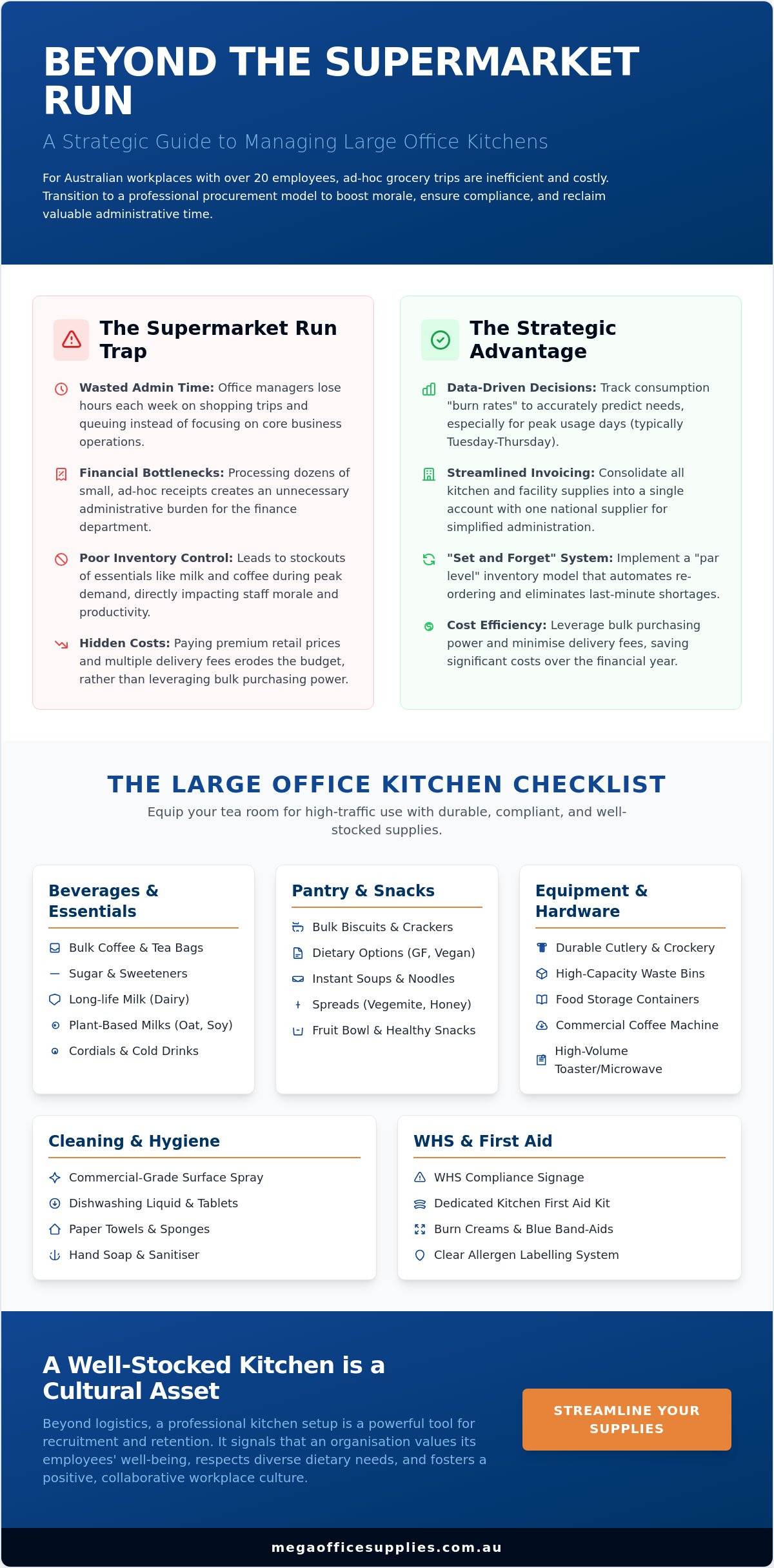
It is 10:00 AM on a Monday in a busy Melbourne CBD office, and the milk has already run out just as the executive team arrives for their morning briefing. For those responsible for managing kitchen supplies for a large office, this scenario is a familiar headache that directly impacts staff morale and workplace productivity. You know that a tea room is more than just a place for a quick break; it is a high-traffic hub where poor inventory control leads to unnecessary waste, messy benches, and frustrated employees.
We understand that large-scale kitchen management is a complex logistical task rather than a simple grocery run. This guide will help you master the logistics of stocking and managing a high-traffic office tea room with professional inventory systems and bulk procurement strategies. You'll learn how to implement a "set and forget" inventory model that accommodates diverse dietary requirements while streamlining your invoicing through a single Australian supplier. We'll cover everything from essential cleaning chemicals to automated coffee supply cycles to ensure your breakroom remains a functional, well-organised asset to your organisation. This approach ensures you maintain compliance with Australian food safety standards while keeping your facility running like a well-oiled machine.
Key Takeaways
- Learn why the traditional "supermarket run" fails for high-traffic workplaces and how to transition to a more efficient, professional procurement model.
- Discover how to implement a systematic inventory process using "par levels" to automate re-ordering and eliminate the stress of morning milk or coffee shortages.
- Identify the essential checklist of bulk staples and pantry items required to support a diverse workforce with varying dietary requirements.
- Ensure your workplace remains compliant with Australian WHS standards by using commercial-grade cleaning chemicals and maintaining a dedicated kitchen first aid kit.
- Master the logistics of managing kitchen supplies for a large office by consolidating your orders into a single national account to minimise delivery costs and administrative downtime.
The Challenges of Managing Kitchen Supplies for a Large Office
The local supermarket run might suffice for a small boutique firm, but it's an unsustainable strategy for any organisation with more than 20 employees. Managing kitchen supplies for a large office requires a shift from reactive shopping to strategic procurement. When a workplace relies on ad-hoc grocery trips, the system inevitably breaks down. Staff productivity suffers when the milk or coffee runs out at 10:00 AM, and the administrative burden of processing dozen of small receipts creates a bottleneck for the finance department.
Hidden costs are the primary drawback of the "supermarket model". You aren't just paying for the groceries; you're paying for high-level administrative downtime. If an office manager spends two hours a week navigating aisles and queues, that is time lost from core business operations. Additionally, reactive shopping often leads to paying premium retail prices and multiple delivery fees, rather than leveraging the scale of a bulk provider like Mega Office Supplies. Logistics matter. Efficiency saves money.
To better understand how to structure your shared storage spaces, watch this helpful video:
The "Monday Morning Peak" is a logistical reality in Australian workplaces. With Melbourne CBD office occupancy reaching a post-pandemic high of over 65% in early 2026, the demand for tea room staples is no longer evenly distributed across the week. Tuesday through Thursday typically sees a massive spike in consumption. If your inventory levels aren't calibrated for these surges, the kitchen becomes a source of frustration rather than a place of refreshment.
Identifying Your Office Consumption Patterns
Success starts with data. You must calculate "burn rates" for essentials like tea, coffee, and long-life milk. This involves tracking how quickly stock is depleted during peak periods. Implementing a professional inventory management system allows you to set re-order triggers based on actual usage rather than guesswork. Don't forget seasonal shifts. Winter demands more soup and hot beverages, while summer requires an increase in cold drinks and lighter snack alternatives. Hybrid work schedules mean your "burn rate" will fluctuate, so your procurement must be flexible enough to adapt.
The Role of the Tea Room in Modern Australian Workplace Culture
A well-stocked kitchen is a powerful recruitment and retention tool. It reduces "desk fatigue" by providing a high-quality space for staff to recharge and collaborate. Meeting diverse dietary needs is now a baseline expectation. Your inventory should include gluten-free, dairy-free, and plant-based options to ensure every team member feels valued. Accessing a wide range of facilities and breakroom products ensures you can scale your orders without the hassle of multiple deliveries. A professional kitchen setup signals that the organisation respects its employees' time and well-being.
Essential Inventory: The Large Office Kitchen Checklist
Maintaining a functional tea room requires a comprehensive inventory that extends far beyond a few boxes of tea bags. When managing kitchen supplies for a large office, the focus must be on durability and high-volume capacity. This starts with hardware like high-capacity waste bins and professional-grade cutlery that can withstand constant use and industrial dishwasher cycles. It's also vital to ensure your setup aligns with WHS compliance for office facilities, which mandates that employers provide adequate dining areas, clean drinking water, and hygienic storage conditions.
Beverages and Hot Drink Essentials
The choice between pod machines and bulk bean-to-cup solutions usually depends on your headcount. While pods offer variety, they often create significant waste and higher costs per cup in high-traffic environments. Bulk coffee beans and instant varieties provide a more scalable solution for the morning rush. Standardising your tea selections to a few core varieties, such as English Breakfast, Green, and Peppermint, minimises clutter and prevents boxes from sitting unused for months. You can explore our range of coffee and tea supplies to find the right balance for your team's specific requirements.
Pantry Staples and Staff Biscuits
A well-managed pantry requires a clear "biscuit hierarchy". Premium assortments are best reserved for client meetings, while standard varieties serve daily staff breaks. To prevent a fridge full of half-empty jars, procure condiments like jam and honey in bulk dispensers or smaller, high-turnover portions. We're also seeing a shift toward healthy snacks. Nuts and fruit bars are increasingly replacing traditional sweets as organisations prioritise staff wellness. For those looking to streamline their procurement, you can browse our full range of kitchen and catering supplies to ensure your pantry is always stocked.
Consumables such as paper towels, napkins, and eco-friendly dishwashing liquids are the unsung heroes of kitchen maintenance. In a large office, these items vanish quickly. Buying in bulk is the only way to avoid constant shortages. Sustainability is another key consideration. Many Australian offices now integrate "Return and Earn" logistics by providing dedicated bins for 10c recyclable containers. This reduces general waste volume and supports corporate social responsibility goals. High-capacity waste bins with clear signage for recycling and organics help maintain a clean, efficient space that employees actually want to use. Effective inventory management ensures these items are always on hand without over-stocking perishable goods.
Implementing a Professional Inventory Management System
Transitioning from a reactive shopping model to a proactive logistics strategy is essential for any organisation with a high headcount. Managing kitchen supplies for a large office is not about occasional grocery trips; it is about establishing a repeatable system that eliminates shortages while controlling costs. Without a structured approach, offices often fall into the trap of over-ordering perishables while running out of high-demand staples like coffee or milk during the Tuesday-to-Thursday peak occupancy periods. Efficiency requires a four-step framework: setting par levels, centralising storage, auditing consumption, and consolidating your supply chain.
Centralised storage is the foundation of this system. Designate a single, secure zone for all bulk tea room supplies rather than scattering them across various kitchenettes or floor levels. This prevents "ghost stock" where items are hidden in cupboards, leading to unnecessary re-orders. A single point of truth for inventory allows for rapid visual audits and ensures that your procurement officer has a clear view of actual stock levels before placing the next order with a national provider like Mega Office Supplies.
Setting Par Levels for High-Volume Items
Success in procurement relies on the "Par Level" method. In an Australian procurement context, par levels represent the minimum quantity of a specific supply that must be on hand at all times to meet demand until the next scheduled delivery arrives. You must calculate these levels based on your weekly "burn rate" while adding a 15-20% buffer to account for unexpected events or client meetings. For example, if your office consumes 50 litres of milk between Monday and Thursday, your par level should trigger a re-order when stock hits 10 litres. Adjust these levels seasonally to account for the increased demand for hot beverages during the colder months.
Waste Reduction and Sustainability
Modern inventory management must address environmental impact alongside cost control. Reducing single-use plastics is a priority for many Australian businesses. Transitioning to reusable cutlery and crockery from our facilities and breakroom range significantly reduces the volume of general waste. For necessary disposables, choose bulk-packaged options to minimise the carbon footprint associated with multiple small deliveries. Implementing a "Return and Earn" station for cans and bottles is an effective way to manage beverage waste while supporting corporate social responsibility goals.
Managing expiry dates is another critical component of waste reduction. Use the "First-In, First-Out" (FIFO) method by placing new stock at the back of the shelf and moving older items to the front. This simple habit ensures that pantry staples are consumed before they reach their best-before date. Finally, consolidate your suppliers to minimise administrative friction. Processing one monthly invoice for kitchen, office supplies, and stationery is far more efficient than managing dozens of small transactions. Logistics matter. A streamlined system saves time and protects your budget.
Kitchen Hygiene and WHS Compliance at Scale
Effective kitchen management at scale requires a transition from domestic cleaning habits to industrial-grade standards. When managing kitchen supplies for a large office, relying on supermarket-tier detergents often leads to equipment failure and poor hygiene outcomes. High-traffic tea rooms require commercial-grade cleaning chemicals to manage the constant load of industrial dishwashers and the accumulation of grease on shared surfaces. From 1 July 2026, approved Codes of Practice in New South Wales become mandatory. This means businesses must demonstrate they're managing hazards to a high standard, including the specific risks associated with chemical storage and electrical safety in shared kitchens.
A shared fridge is a potential health hazard if left unmanaged. Under Food Safety Standard 3.2.2A, which has been mandatory since December 2023, businesses providing food must demonstrate safe management practices. Implementing a weekly purge policy and maintaining records of fridge temperatures ensures compliance and prevents the growth of airborne contaminants. Hand hygiene stations equipped with high-capacity soap dispensers and alcohol-based sanitisers are no longer optional; they're facility essentials that protect staff health and reduce the spread of seasonal illnesses. It's also vital to remember that from 1 December 2026, Australia will replace Workplace Exposure Standards with Workplace Exposure Limits (WELs) for airborne contaminants, making ventilation and cleanliness even more critical.
Essential Cleaning Supplies for Large Kitchens
Domestic products aren't designed for the 50 to 100 cycles a week common in large offices. You need bulk dishwashing tablets and high-performance degreasers that work quickly and effectively. To maintain high hygiene levels, implement a system of colour-coded cloths. This simple visual cue prevents cross-contamination between kitchen surfaces and other facility areas like bathrooms or desks. You can browse our commercial cleaning chemicals to find products specifically formulated for high-volume environments.
Safety and First Aid Integration
Kitchens present unique risks, particularly burns from boiling water and cuts from cutlery or food preparation. A standard office first aid kit often lacks the specific supplies needed for these incidents. You must ensure your tea room has a dedicated kit stocked with burn gels, saline washes, and waterproof dressings. Standardising these kits across multiple floors or sites ensures that every staff member knows exactly where to look during an emergency. To meet your obligations, ensure your kitchen is compliant with professional first aid kits. For a deeper dive into regulatory requirements, read our guide on Complying with Australian Safety: Office First Aid Kits.
Managing the psychosocial hazards of a shared space is also a key part of modern WHS. The "Managing Psychosocial Hazards at Work" Code of Practice highlights that shared environments like kitchens must be managed to prevent bullying or harassment. A clean, well-stocked, and safe kitchen reduces friction between staff and fosters a more positive workplace culture. Review your current facility safety levels by checking our full range of facilities supplies.
Streamlining Procurement with Mega Office Supplies
Managing kitchen supplies for a large office is a logistical challenge that requires a reliable partner. Transitioning from fragmented grocery runs to a centralised procurement model is the final step in mastering your workplace operations. Consolidating your kitchen, stationery, and facility supplies into a single national account eliminates the administrative burden of tracking dozens of small transactions. This approach provides financial transparency and allows your procurement team to focus on high-level tasks rather than chasing missing receipts for milk or tea bags.
Bulk ordering is more than a cost-saving measure. By reducing the frequency of deliveries, your organisation minimises the congestion of delivery vehicles at your loading docks. We understand the specific workflow of professional buyers in corporate and government departments who require simplified invoicing and transparent pricing structures. Efficiency is our priority. We ensure your facility remains stocked without the friction of traditional retail models.
One-Stop Shop for Facility Management
Buying your kitchen essentials from the same provider that handles your office supplies saves significant time. Instead of managing multiple vendors, you can access high-volume discounts on A4 paper, toner and ink cartridges, and pantry staples through one portal. This consolidation leverages your total spend to secure better rates across all categories. For multi-site organisations, our national delivery capabilities ensure consistency across every branch. Whether you are stocking a single floor in Sydney or multiple campuses across Australia, we provide a unified solution for all your facilities and breakroom needs.
Next Steps for Office Managers
The first step toward a "set and forget" inventory system is a thorough kitchen audit. Identify your current supply gaps and establish the par levels discussed earlier in this guide. Once your baseline is clear, you can set up a recurring order list that automates the procurement of high-turnover items. This eliminates the risk of running out of essentials during the busy Tuesday-to-Thursday peak. If your organisation has complex requirements or requires custom quoting for a large-scale fit-out, contact our Australian-based support team. We provide direct assistance to help you build a procurement schedule that fits your specific budget and staff headcount. Professional management starts with the right partner. Let us help you streamline your workplace essentials today.
Optimise Your Workplace Facility Management
Mastering the logistics of a high-traffic tea room requires a shift from reactive habits to a structured, professional system. By implementing par levels and centralising your storage, you eliminate the frustration of shortages and ensure the morning rush remains productive. Prioritising commercial-grade hygiene and WHS compliance protects your team and aligns your organisation with mandatory Australian safety standards. Managing kitchen supplies for a large office becomes a seamless part of your operations when you consolidate procurement to reduce administrative friction and delivery overheads.
Mega Office Supplies has been family owned and operated since 2008. We provide reliable national delivery for large-scale operations, ensuring you have the supplies you need, when you need them. Take the first step toward a more efficient, well-stocked breakroom today.
Streamline your workplace with Mega Office Supplies’ range of kitchen and facility essentials and enjoy the peace of mind that comes with professional facility management.
Frequently Asked Questions
How much milk should I order for an office of 100 people?
For an office of 100 people, a baseline of 20 to 25 litres per week is a standard starting point, though this fluctuates based on hybrid work schedules. It's best to monitor consumption during peak Tuesday-to-Thursday periods to establish your specific "burn rate". Stocking a mix of fresh and long-life varieties ensures you never run out during the morning rush when demand is highest.
What are the most essential kitchen supplies for a new office fit-out?
Essential supplies include high-capacity coffee solutions, bulk tea assortments, and professional-grade cutlery. You should also prioritise industrial waste bins and WHS-compliant first aid kits specifically stocked for burns and cuts. When managing kitchen supplies for a large office, focus on hardware that can withstand constant use and frequent industrial dishwasher cycles to ensure longevity and facility hygiene.
How can I reduce the cost of office kitchen supplies without lowering quality?
Reduce costs by consolidating your procurement through a single Australian supplier to minimise delivery fees and administrative friction. Buying staples like coffee, tea, and cleaning chemicals in bulk provides significant savings compared to standard retail prices. Implementing a professional inventory system with set par levels also prevents over-ordering and reduces the waste of perishable goods while protecting your corporate budget.
What cleaning chemicals are safe and effective for corporate tea rooms?
Use commercial-grade degreasers and bulk dishwashing tablets designed for high-volume machines. Sanitising sprays and high-capacity soap dispensers are also vital for maintaining hygiene standards in shared spaces. Ensure all cleaning chemicals are stored safely according to local regulations and that staff have access to colour-coded cloths to prevent cross-contamination between different facility zones like kitchens and bathrooms.
How do I manage dietary requirements like dairy-free or gluten-free in a large office?
Manage diverse needs by stocking long-life plant-based milks and providing clearly labelled gluten-free snack alternatives in your centralised storage zone. These items have a longer shelf life, which minimises waste compared to fresh alternatives. Regularly auditing your staff's preferences allows you to adjust your bulk orders to include the right ratio of specialty products without overstocking items that have low turnover.
Is it better to buy coffee pods or bulk coffee beans for a large staff?
Bulk coffee beans are the superior choice for large staff numbers due to their lower cost per cup and reduced environmental impact. While pod machines offer convenience, they often fail to meet the demand of a morning peak and generate excessive plastic waste. A bean-to-cup machine provides a professional-grade experience that supports workplace culture and aligns with corporate sustainability goals.
What first aid supplies are required in an office kitchen by Australian law?
Australian law requires adequate first aid facilities, which in a kitchen environment means a dedicated kit for burns, scalds, and cuts. This kit should include burn gels, saline washes, and waterproof dressings. Standardising these kits across your organisation ensures compliance with Safe Work Australia codes and provides peace of mind for your team by ensuring safety equipment is always accessible.
How can I stop staff from leaving unwashed dishes in the shared kitchen?
Eliminate kitchen clutter by installing high-capacity industrial dishwashers and using clear signage to communicate a "load and go" policy. Providing ample reusable crockery and cutlery reduces the temptation to leave items in the sink. Maintaining a clean, well-stocked environment encourages staff to respect the shared space as a professional facility rather than a domestic kitchen, which helps minimise messy tea rooms.
Article by
Mega Office Supplies Team
The Mega Office Supplies Team provides practical guidance for Australian businesses, schools, government organisations, healthcare providers, hospitality venues, warehouses and home offices. Based in Tweed Heads South, Mega Office Supplies is an Australian business, family owned and operated since 2008, offering office stationery, workplace furniture, technology products, labels, printers, cleaning and janitorial supplies, safety products, art materials, education resources and everyday business essentials from trusted brands.
General Information
This article is provided as general information only to help customers compare and choose office, workplace, school, cleaning, technology, furniture, safety and business supplies. Product details, specifications, compatibility, availability, pricing and suitability may vary. Always check the individual product page, manufacturer information, workplace requirements and relevant safety guidance before purchasing or using a product.


