


How much of your monthly operational budget is currently being swallowed by expensive toner cartridges and ink refills that your business doesn't actually need? For many Australian warehouse managers and administrators, the hidden costs of traditional printing go beyond the stationery cupboard; they include the time lost to slow print speeds and the risk of labels smudging during transit. You likely recognise that consistent, durable labelling is the backbone of a reliable supply chain, yet the high price of consumables remains a constant pain point. Understanding the benefits of using a thermal label printer is the first step toward reclaiming that lost revenue and improving your logistical speed.
These professional-grade machines eliminate the need for ink or toner, using heat to create crisp, high-contrast images that won't smear or peel. By adopting this technology, you can ensure your organisation remains compliant with the latest 2026 Australian standards, such as the mandatory Plain English Allergen Labelling (PEAL) requirements. This guide provides a detailed look at how thermal printers streamline workplace efficiency, offering the technical clarity you need to make an informed investment for your business, school, or government department. We'll examine how these devices lower your total cost of ownership while providing the reliability required for high-volume Australian environments.
Key Takeaways
- Learn how to reduce recurring operational costs by eliminating the need for expensive toner and ink cartridges in your daily workflow.
- Understand the core benefits of using a thermal label printer to enhance logistical speed and maintain professional standards across Australian warehouses and offices.
- Compare direct thermal and thermal transfer technologies to ensure your labels withstand the specific environmental demands of your industry.
- Discover how to select the correct connectivity options and label materials to integrate a new printing solution into your existing organisational systems.
- Identify high-efficiency applications for thermal printing in healthcare, education, and retail sectors to improve accuracy and reduce manual errors.
What is a Thermal Label Printer and How Does it Work?
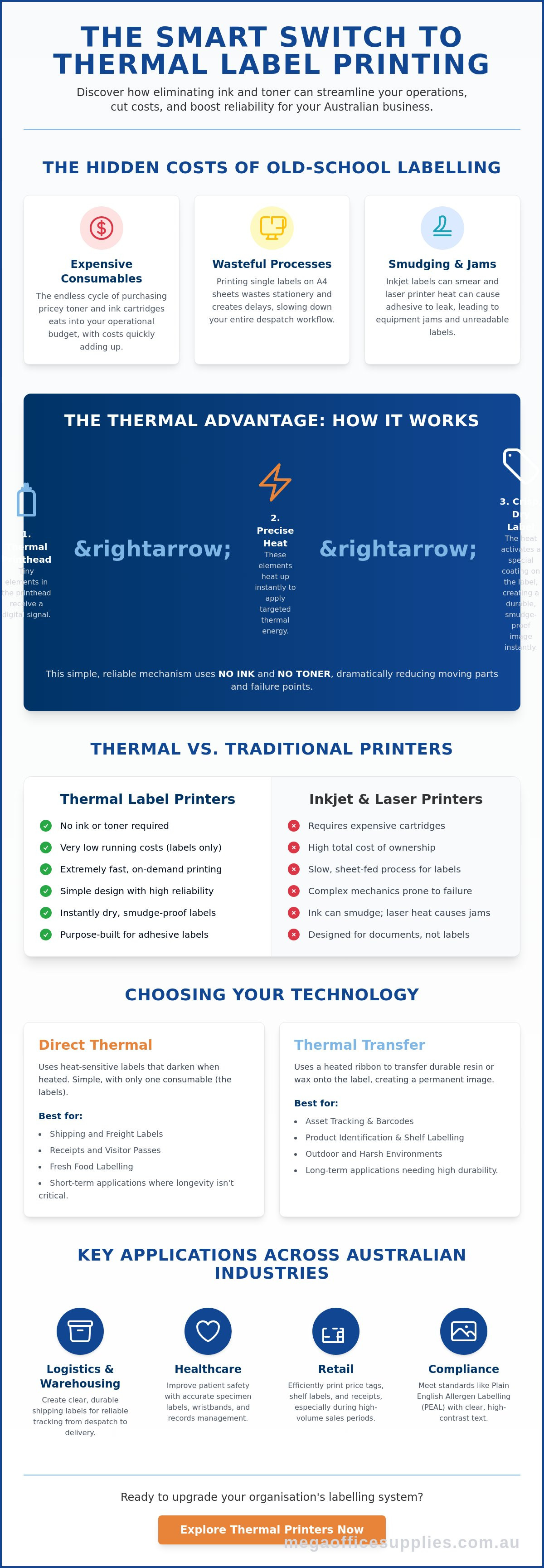
Thermal printing is a digital process that produces a printed image by selectively heating coated thermochromic paper, or thermal paper, as it passes over the thermal printhead. This technology is fundamentally different from the inkjet or laser systems found in most Australian offices. By using heat rather than liquid ink or powdered toner, these machines offer a level of reliability that standard office hardware simply cannot match. One of the primary benefits of using a thermal label printer is the substantial reduction in mechanical complexity. This reliability is built into thermal printing technology, which leads to fewer breakdowns in high-pressure environments like medical centres and distribution hubs.
To better understand this concept, watch this helpful video:
Many Australian organisations are actively transitioning away from traditional A4 sheet labels to improve their workflow. Printing individual shipping labels on a standard laser printer is often a wasteful and frustrating process. You either print a single label and waste the rest of the sheet, or you wait until you have enough orders to fill the page, causing unnecessary delays. This inefficiency creates bottlenecks during peak despatch periods and increases stationery costs. Dedicated thermal units solve this by providing "on-demand" printing, allowing you to produce one label or one hundred with the same level of precision and speed.
The Mechanism of Heat-Based Printing
The thermal printhead uses tiny heating elements. When these elements receive an electrical signal, they apply precise heat to chemically treated paper, causing it to change colour. Because there are no moving ink carriages or complex toner drums, mechanical failure is rare. The thermal printhead is the core component that eliminates liquid ink needs, ensuring your operations remain consistent. This streamlined design highlights the practical benefits of using a thermal label printer for warehouse technology upgrades.
Thermal vs. Inkjet and Laser Printing
Standard office printers were designed for documents, not adhesive labels. Laser printers generate significant heat to fuse toner, which often softens label adhesive and causes internal jams. Conversely, thermal printers are built specifically for roll-fed media. This allows for continuous, high-speed printing that far outpaces sheet-feeding mechanisms. You gain durable, high-contrast labels that are instantly dry, providing a massive advantage for any high-volume despatch centre.
The Financial and Operational Benefits of Thermal Label Printers
Investing in a dedicated labelling system isn't just about convenience; it's a calculated move to protect your bottom line. The benefits of using a thermal label printer become immediately apparent when you audit your annual expenditure on consumables. Traditional inkjet and laser printers require a constant cycle of expensive toner and ink cartridges. By removing these from the equation, you transition to a model where the only recurring cost is the labels themselves. This shift represents a strategic upgrade for shipping and administrative tasks that pays dividends over the life of the hardware.
Operational reliability is equally critical for Australian businesses managing tight delivery windows. Thermal printers are designed with fewer moving parts than their cartridge-based counterparts. There are no ink ribbons to tangle and no toner drums to replace. This simplified design leads to lower maintenance requirements and significantly less downtime. For despatch teams, this means fewer interruptions during peak retail periods like Black Friday or the Christmas rush. You gain a hardworking partner that remains consistent under pressure.
Total Cost of Ownership (TCO) Analysis
When calculating the true cost of office equipment, many administrators overlook "sheet waste." Using a laser printer for a single shipping label often involves printing on a full A4 sheet, effectively wasting the remaining adhesive space. Re-feeding half-used sheets is a common cause of internal jams and adhesive buildup. Thermal rolls eliminate this waste entirely. Because you only print what you need, your cost-per-label remains fixed and predictable. The industrial durability of these machines also means they require less frequent replacement, further lowering your long-term capital expenditure.
Speed and Productivity in High-Volume Environments
Speed is a defining factor in warehouse efficiency. While a standard office printer might take several seconds to "warm up" and process a single sheet, a professional thermal printer can reach speeds of 150mm to 200mm per second. This allows for near-instantaneous output. Because the images are created through heat, the labels are dry the moment they leave the machine. There is no risk of smudging, which ensures that barcodes remain scannable throughout the entire national freight network. This immediate application capability allows your team to move from print to package without hesitation.
If you are looking to modernise your current workflow, exploring the latest office technology can help you identify the right hardware for your specific volume requirements.
Direct Thermal vs. Thermal Transfer: Choosing the Right Technology
Selecting the appropriate printing method is a critical decision for any procurement officer or facility manager. While both technologies fall under the same category, they operate differently to meet specific environmental demands. One of the core benefits of using a thermal label printer is the flexibility to choose a system that matches your required label lifespan. Direct thermal printing is the standard for high-volume, short-term tasks, whereas thermal transfer is the industry benchmark for permanent, high-durability applications. Understanding these differences ensures your organisation invests in the right office technology for its specific logistical needs.
When to Use Direct Thermal
Direct thermal printing is a streamlined process that requires no ink, toner, or ribbon. The printhead applies heat directly to a specialised, heat-sensitive coating on the label material. This simplicity makes it an excellent choice for courier labels, visitor badges, and retail receipts. Because there are no ribbons to load or manage, maintenance is minimal and throughput is high. It's the ideal solution for labels that only need to last for a few months. However, you must consider the environment. Direct thermal labels are sensitive to heat and prolonged sunlight exposure, which can cause the material to darken or the image to fade over time. If your packages are sitting on a hot Australian loading dock for extended periods, this is a factor you cannot ignore.
When to Invest in Thermal Transfer
For labels that must withstand harsh conditions or remain legible for years, thermal transfer is the necessary choice. This method uses a thermal ribbon made of wax or resin. The printhead melts the ribbon material onto the label, creating a permanent bond that is resistant to smudging, chemicals, and extreme temperatures. This technology is the gold standard for asset tracking, outdoor signage, and chemical drum labelling. One of the significant benefits of using a thermal label printer with transfer technology is the ability to print on diverse materials beyond standard paper, including polyester and polypropylene. When selecting your consumables, you'll need to choose the right ribbon type for your application:
- Wax Ribbons: The most common and cost-effective choice for standard paper labels.
- Resin Ribbons: Provide the highest level of chemical and heat resistance, typically used with synthetic materials.
- Wax-Resin Ribbons: A versatile middle ground that offers improved durability on both paper and some synthetic stocks.
Choosing the right combination of printer and labelling supplies will depend on your specific industry requirements. Whether you are managing a warehouse or a healthcare facility, matching the technology to the environment is the best way to ensure long-term operational success.
Key Applications Across Australian Industries
The versatility of thermal printing extends far beyond the warehouse floor. While e-commerce remains a primary driver, the benefits of using a thermal label printer are increasingly recognised in the healthcare, education, and government sectors. These industries require high levels of accuracy and durability that traditional office hardware simply cannot provide. In a medical environment, for instance, a smudged prescription label or an illegible patient wristband is a significant safety risk. Thermal units provide the high-contrast, permanent marking required for patient safety and regulatory compliance across diverse Australian workplaces.
Logistics and E-commerce Despatch
For Australian businesses, seamless integration with courier platforms like Australia Post, StarTrack, and Sendle is essential for maintaining a competitive edge. Thermal printers generate labels that are specifically designed for the high-speed automated sorting centres used by national freight networks. Smudge-proof barcodes ensure that your packages are scanned correctly at every touchpoint, reducing the likelihood of lost or delayed shipments. Whether your organisation is scaling from 10 labels a day to 1,000, industrial-grade thermal units provide the throughput necessary to keep pace with demand without the constant need for manual intervention or cartridge changes.
Administrative and Facility Management
Organisation is the foundation of a productive workplace. In the administrative sector, thermal labels are a vital tool for long-term compliance and asset management. You can use them for professional first aid kit expiry tracking, ensuring that medical supplies are always up to date and ready for use. They are also effective for organising lever arch files and archive boxes, where labels must remain legible for years in storage. In staff kitchens and workshops, thermal labels provide durable safety signage and shelf labelling that resists the moisture and cleaning chemicals common in these environments.
Education and Retail Applications
Schools and libraries use thermal technology to manage vast inventories of resources. Long-lasting asset tags and spine labels help track laptops, tablets, and books across multiple classrooms and campuses. In the retail and hospitality sectors, the speed of thermal printing allows for rapid price marking and the generation of clear kitchen order dockets. This reduces errors in high-pressure service environments. By adopting this technology, you ensure that every department in your organisation has access to clear, durable, and professional labelling that stands the test of time.
To equip your workplace with these essential tools, you can browse our full range of label printers and technology to find a model suited to your specific industry volume.
Selecting and Implementing Your Thermal Label Solution
Implementing a new hardware solution requires more than just unboxing the device. You need to evaluate how the unit integrates into your existing digital and physical infrastructure. One of the primary benefits of using a thermal label printer is the variety of connectivity options available to suit different Australian workplace layouts. While a standard USB connection is sufficient for a dedicated packing station, larger warehouses or healthcare facilities often require Ethernet or wireless integration to allow multiple users to share a single device. Choosing the right interface ensures that your printing capabilities scale alongside your organisational needs. It's a practical investment that prevents technical bottlenecks before they occur.
Where you place your printer is just as important as the model you choose. For maximum efficiency, position the unit at a height that minimises repetitive reaching, ideally integrated into a standing desk or a dedicated packing bench. This ergonomic approach reduces physical strain on staff during high-volume shifts. You don't want your team losing time walking across a warehouse to collect labels. By combining high-performance hardware with a thoughtful layout, you fully realise the operational benefits of using a thermal label printer.
Technical Specifications to Compare
When comparing models, print resolution (DPI) is a key metric. A 203 DPI printer is perfectly adequate for standard shipping labels and large barcodes. However, if your organisation requires high-density barcodes or very small text, such as those used on pharmacy vials or electronics, you should invest in a 300 or 600 DPI model. You must also ensure the printer's maximum print width matches your requirements. While 4-inch printers are the industry standard for logistics, smaller format units are more space-efficient for retail dockets. Always verify that the printer's firmware is compatible with your current technology and ERP systems to avoid software conflicts.
Consumables and Maintenance
The longevity of your hardware depends heavily on the quality of the thermal labels you use. Cheap, abrasive materials can cause premature wear on the thermal printhead, leading to costly repairs. Sourcing high-quality consumables and performing simple cleaning routines with isopropyl alcohol will extend the life of your equipment. For procurement officers looking to stay within budget, the most effective strategy is to bulk-buy stationery supplies. This approach lowers the cost-per-unit and ensures your despatch team never faces downtime due to stock shortages.
Mega Office Supplies projects the reliability of a seasoned industry veteran, offering the scale and logistical prowess needed for high-volume demands. Our team utilises decades of combined industry experience to help you select the precise hardware for your intended sector. We remain a dependable partner for Australian businesses that value stability and regional expertise in their procurement process.
Optimising Your Workplace Labelling Strategy
Transitioning to thermal technology is a fundamental shift toward operational excellence. By removing the burden of recurring ink costs and the inefficiency of sheet waste, your organisation can focus its resources on growth and service delivery. Whether you are managing national freight networks or organising a school library, the benefits of using a thermal label printer include superior print durability and significantly faster throughput during peak periods. This hardware provides the professional grade reliability required to maintain compliance and accuracy across all Australian industries.
Mega Office Supplies has been a family owned Australian private company since 2005. Our team brings decades of combined industry experience to every procurement request, ensuring you receive the right hardware and consumables for your specific sector. We provide national delivery for bulk office and educational supplies, acting as a dependable partner for your long term workplace maintenance needs. You can rely on our regional expertise to support your transition to more efficient labelling systems.
Explore our range of professional thermal label printers and technology at Mega Office Supplies and secure a more productive, organised future for your team today.
Frequently Asked Questions
Do thermal printers really not use any ink or toner?
Thermal printers do not require liquid ink or powdered toner to function. Direct thermal models use heat to activate a chemical layer on the paper, while thermal transfer models melt a solid ribbon onto the label surface. This elimination of traditional consumables is one of the primary financial benefits of using a thermal label printer. It simplifies your inventory and ensures you never run out of ink mid-despatch.
How long do labels printed with a thermal printer actually last?
The lifespan of your labels depends entirely on the printing technology and environmental exposure. Direct thermal labels typically last between six to nine months before they begin to fade, making them suitable for courier parcels. Conversely, thermal transfer labels can remain legible for several years. When used with synthetic materials and resin ribbons, they resist moisture, chemicals, and mechanical abrasion in industrial settings.
Can I print in colour with a thermal label printer?
Most professional thermal label printers are designed for monochrome printing only. While they are exceptionally efficient for producing text and barcodes, they cannot reproduce full-colour images like an inkjet printer. Some specialised thermal transfer ribbons are available in single colours like red or blue, but the technology is primarily intended for high-contrast, black-on-white organisational and logistical labelling.
What is the difference between direct thermal and thermal transfer?
The main distinction lies in the use of a ribbon. Direct thermal printing applies heat directly to treated paper, which is cost-effective for short-term use. Thermal transfer uses a heated ribbon to bond an image to the label, providing the durability needed for asset tracking. Selecting the right method is essential for ensuring your organisation's labels survive their intended environment without degrading or becoming unreadable.
Will thermal labels fade if they are exposed to sunlight or heat?
Direct thermal labels will darken or fade when exposed to high heat or prolonged UV light. Because the paper is chemically treated to react to heat, a hot Australian summer or a bright window can trigger the reaction across the entire label. If your applications involve outdoor storage or high-temperature environments, thermal transfer technology is the reliable alternative for maintaining long-term legibility and barcode scannability.
Are thermal label printers difficult to set up with Australian shipping software?
Most modern thermal units are designed for seamless integration with major Australian courier platforms. Whether you utilise MyPost Business, StarTrack, or Sendle, these printers are generally recognised as standard hardware. Setup usually involves installing a driver and selecting the correct label dimensions in your software settings. This compatibility is a key factor in boosting logistical speed and reducing manual errors for local businesses.
Do I need special paper for a thermal printer?
You must use specific thermal-compatible rolls rather than standard office paper. Direct thermal printing requires chemically treated thermochromic paper that reacts to the printhead's heat. Thermal transfer printers require rolls that are compatible with the specific wax or resin ribbon being used. Using the incorrect media can result in poor print quality and may cause unnecessary wear on the internal components of your machine.
Is it cheaper to use a thermal printer than a laser printer for shipping?
Thermal printing is significantly more cost-effective for high-volume shipping than using a laser printer. You eliminate the high cost of toner and avoid the waste associated with printing single labels on A4 sheets. One of the major benefits of using a thermal label printer is the ability to print exactly one label at a time on a continuous roll, which maximises your stationery budget and reduces overheads.
Article by
Mega Office Supplies Team
The Mega Office Supplies Team provides practical guidance for Australian businesses, schools, government organisations, healthcare providers, hospitality venues, warehouses and home offices. Based in Tweed Heads South, Mega Office Supplies is a family-owned and operated Australian business offering office stationery, workplace furniture, technology products, labels, printers, cleaning and janitorial supplies, safety products, art materials, education resources and everyday business essentials from trusted brands.
General Information
This article is provided as general information only to help customers compare and choose office, workplace, school, cleaning, technology, furniture, safety and business supplies. Product details, specifications, compatibility, availability, pricing and suitability may vary. Always check the individual product page, manufacturer information, workplace requirements and relevant safety guidance before purchasing or using a product.


