


Did you know that once your high-risk workplace reaches 100 employees, a dedicated medical space isn't just a recommendation, it's a requirement under the Model Code of Practice? Setting up a first aid room in the workplace often feels like a logistical hurdle, especially when you're trying to decode complex WHS regulations while sourcing medical-grade furniture that actually lasts. It's a high-stakes task that demands precision because the safety of your entire team depends on the reliability of your equipment and the clarity of your response plan.
We understand the pressure of ensuring your facility remains compliant during a surprise safety audit. This guide provides a comprehensive 2026 checklist to help you build a professional, functional first aid facility that meets Australian standards. You'll find a clear breakdown of mandatory furniture, a practical shopping list of essentials, and strategies to maintain compliance across every shift, giving you the peace of mind that your organisation is prepared for any situation.
Key Takeaways
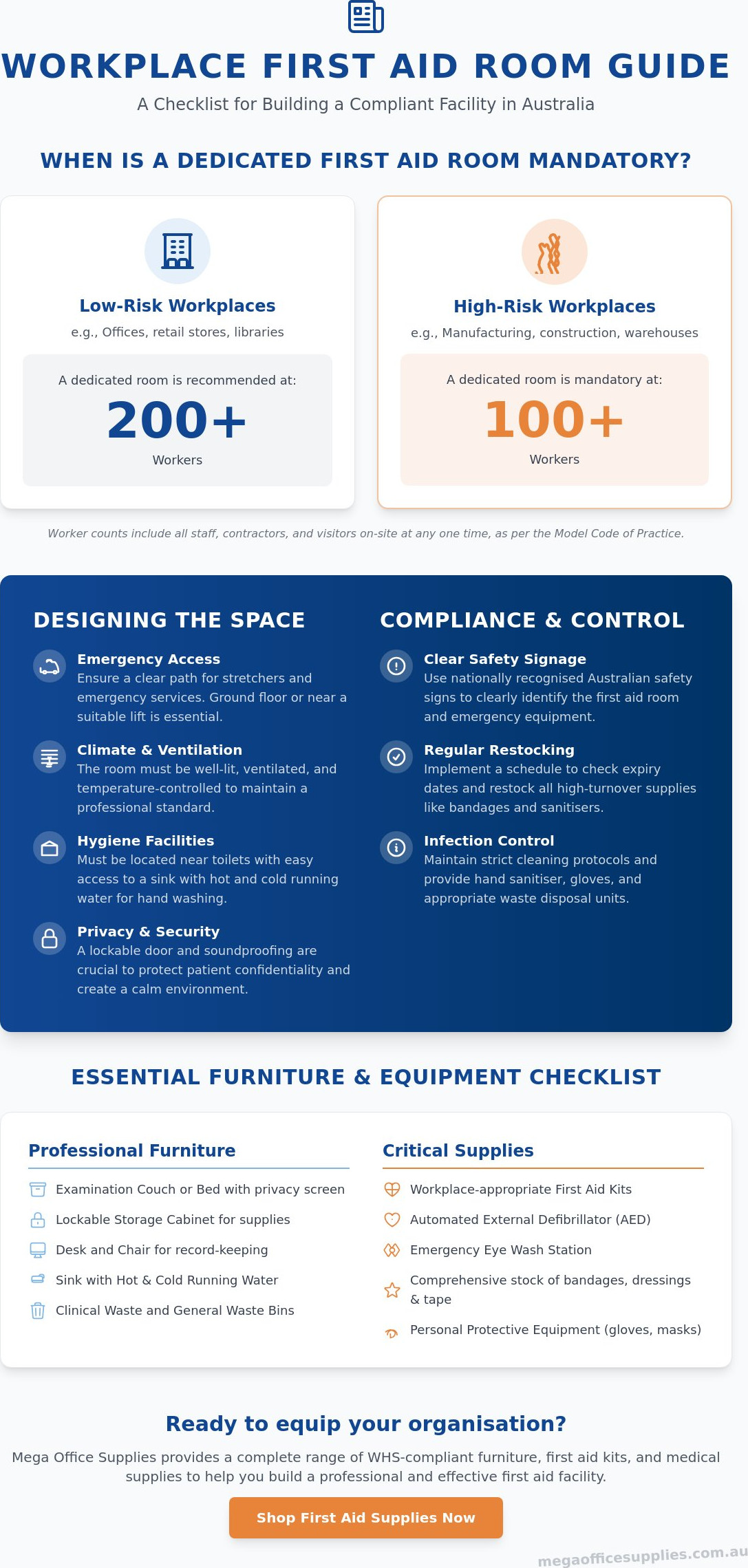
- Identify the specific worker thresholds that mandate a dedicated medical space for low-risk and high-risk environments under the Model Code of Practice.
- Learn how to select a strategic location that ensures rapid access for emergency services while maintaining climate control and patient privacy.
- Discover the essential professional-grade furniture and storage solutions required when setting up a first aid room in the workplace to ensure durability and compliance.
- Master the standards for Australian safety signage and infection control protocols to maintain a sterile environment and pass safety audits with confidence.
- Streamline your procurement process by utilising bulk ordering strategies for high-turnover essentials like first aid kits, bandages, and sanitisers.
Determining Your Workplace First Aid Obligations
Under the Work Health and Safety (WHS) Act, the primary duty of care rests with the Person Conducting a Business or Undertaking (PCBU). This legal framework mandates that every employer must provide adequate first aid facilities, equipment, and trained personnel to ensure the safety of their staff. To meet these obligations, organisations follow the Model Code of Practice: First aid in the workplace. This document serves as the authoritative guide for Australian businesses, detailing how to tailor first aid provisions to specific operational needs. It's not merely a set of recommendations; it's the standard by which your compliance will be measured during a safety audit.
When you start the process of setting up a first aid room in the workplace, you must account for the unique variables of your site. A corporate office in a metropolitan centre has vastly different requirements than a remote industrial facility. Consulting with your workers is a vital part of this process and a legal requirement under WHS laws. Your team can identify specific industry hazards, such as chemical exposure risks or high-traffic zones, that directly influence the type of first aid kits and equipment you need to maintain on-site.
To better understand if your specific business needs a dedicated facility, watch this helpful video:
Conducting a First Aid Risk Assessment
A thorough risk assessment is the foundation of any compliant safety strategy. You need to look beyond simple headcounts and evaluate the nature of the work being performed. For instance, a warehouse environment requires provisions for crush injuries or falls from heights, while a school office might focus on minor burns or allergic reactions. You must also factor in the proximity of your site to the nearest hospital or medical centre. If emergency services face a long transit time to your location, your internal facilities must be more robust. Reviewing your organisation's historical incident data is a practical way to guide your equipment choices and ensure you're prepared for the most likely scenarios.
When is a Dedicated First Aid Room Mandatory?
The decision to build a dedicated first aid room is driven by worker numbers and the inherent risks of your industry. According to current Safe Work Australia guidelines, a dedicated room is recommended for low-risk workplaces, such as retail stores or offices, when they reach 200 or more workers. In high-risk environments like manufacturing or construction, this threshold drops to 100 workers. These figures represent the total number of people on-site at any given time, including contractors and visitors. Even if your business falls below these numbers, setting up a first aid room in the workplace provides a controlled, private environment for managing injuries, supporting mental health first aid, or providing a quiet space for staff wellness.
Designing a Functional and Accessible First Aid Space
When you're setting up a first aid room in the workplace, the physical design determines how effectively your first aiders can operate during a crisis. The location must be chosen with logistical precision. It's essential that the room is easily accessible for emergency services, meaning it should be on the ground floor or near an elevator capable of accommodating a stretcher. Proximity to toilets and hand-washing facilities is a mandatory consideration to ensure hygiene during wound care and patient management. According to Safe Work Australia guidelines, the facility must also be well-lit, ventilated, and temperature-controlled to maintain a professional clinical standard.
Privacy shouldn't be an afterthought. High-stress situations require soundproofing and lockable doors to protect patient confidentiality and provide a calm environment for recovery. This is especially vital in schools or high-traffic warehouses where noise can be a significant distraction. If you are currently planning a new facility, browsing professional workplace furniture options can help you find pieces that balance clinical needs with ergonomic support.
Size and Layout Standards
A functional layout requires enough floor space for a stretcher to enter and turn without obstruction. You should maintain at least one metre of clear space around the examination couch to allow first aiders to work from any side. For those waiting for assessment, incorporating ergonomic office chairs in the waiting area ensures comfort and supports proper posture while they are being monitored. This intersection of ergonomics and clinical care ensures the space is useful for both minor wellness checks and emergency response.
Flooring and Surface Requirements
Surfaces in a first aid room must prioritise infection control. Flooring should be non-porous, such as commercial-grade vinyl with coved edges, to prevent the buildup of bacteria. Slip resistance is a critical Australian standard for commercial interiors to prevent secondary injuries in the room itself. When setting up a first aid room in the workplace, investing in durable furniture made from materials that withstand industrial-strength cleaning chemicals is a smart long-term procurement strategy. These surfaces must be easy to wipe down and resistant to staining from medical fluids or disinfectants.
Essential Furniture and Equipment Checklist
Once the physical layout is finalised, the focus shifts to procurement. A compliant facility is only as effective as the hardware it contains. When setting up a first aid room in the workplace, you must prioritise industrial-grade furniture that offers both durability and ease of maintenance. The centrepiece of any room is the examination couch. It should feature an adjustable headrest and be upholstered in wipeable, non-porous material to meet infection control standards. This allows first aiders to position patients correctly for treatment or recovery while ensuring the surface can be thoroughly disinfected between uses.
Administration and security are equally critical. You'll need lockable cupboards to secure restricted medications and specialised equipment. For record-keeping, high-quality filing cabinets are essential to store confidential incident reports and patient treatment logs. Every first aider also requires a functional workstation. A dedicated desk equipped with essential stationery ensures that logs are completed accurately and promptly. Communication tools shouldn't be overlooked; a dedicated telephone line with a clearly displayed list of emergency contacts is a mandatory requirement for rapid response.
Clinical Furniture and Patient Care
In larger facilities, you may need additional recovery chairs or beds for patients who require monitoring but don't need the full examination couch. If your room serves multiple purposes, privacy screens or curtains are necessary to maintain patient dignity. Proper wound assessment requires high-intensity task lighting. Magnifying lamps are particularly useful for removing splinters or assessing minor lacerations. For more detailed guidance, many procurement officers look for expert advice on First Aid room setup to ensure every piece of clinical furniture meets the required Australian standards.
Medical Supplies and Diagnostic Tools
Your room should serve as the central hub for all first aid kits used across the site. These kits must be regularly audited and restocked with sterile dressings, bandages, and antiseptic wipes. Beyond basic kits, a professional room requires diagnostic tools such as digital thermometers, blood pressure monitors, and pulse oximeters to track a patient's vital signs. In 2026, the inclusion of an Automated External Defibrillator (AED) is considered a benchmark for workplace safety. Ensure the AED is stored in a visible location using a dedicated wall-mount bracket so it can be deployed instantly during a cardiac emergency. Having these tools ready provides the peace of mind that your organisation can handle more than just minor scrapes.
Signage, Maintenance, and Infection Control
Setting up a first aid room in the workplace involves more than just the initial installation of furniture. It requires a commitment to ongoing hygiene and visibility standards that ensure the room is ready for immediate use. Standardised Australian safety signage, typically featuring the white cross on a green background, must be placed at eye level and remain visible from every major corridor. If a worker is in distress, they shouldn't have to guess where to find help. Clear, unobstructed signage is the first step in a rapid emergency response.
Infection control is the backbone of any safe medical environment. You must stock professional-grade cleaning chemicals and high-alcohol hand sanitisers to prevent cross-contamination during treatment. Every surface, including the examination couch and storage units, needs a rigorous wipe-down after each patient interaction. Biohazard management is just as important. Sharps containers for used needles and clinical waste bins for contaminated dressings must be clearly marked and handled according to strict safety protocols to protect both patients and cleaners.
Accurate record-keeping is a legal necessity under Australian WHS laws. Your "First Aid Register" should be the central point for documenting every incident, no matter how minor it may seem. This log provides the historical data needed to refine your site-wide risk assessments and serves as vital evidence of your organisation's proactive approach to safety during an external audit.
Signage and Wayfinding
Wayfinding should be intuitive and clear across the entire facility. Use illuminated exit signs and directional arrows to guide people toward the medical room, especially in large-scale warehouses or multi-level offices. Inside the room, maintain a current list of trained first aiders and their direct contact numbers. Installing whiteboards provides a versatile way to display emergency instructions, update first aider rotations, and share critical safety alerts with the team in real-time.
Regular Maintenance and Auditing
A neglected room quickly becomes a liability during a crisis. Establish a monthly audit to check the expiry dates on bandages and sterile dressings, as expired stock can compromise patient care. Diagnostic equipment, such as blood pressure monitors or pulse oximeters, should be checked for battery life and accuracy. Deep cleaning protocols must be enforced for all clinical furniture and flooring to maintain a sterile environment. Administrative readiness is also key. Ensure your toner and ink cartridges are always topped up so that incident reports and safety protocols can be printed instantly when required.
Maintain your facility's clinical standards and ensure you are always audit-ready by ordering your commercial cleaning and safety supplies in bulk from a reliable Australian partner.
Efficient Procurement for Your First Aid Facility
The final phase of setting up a first aid room in the workplace is establishing a robust procurement pipeline. Managing a medical facility involves balancing high-cost capital items, such as examination couches, with high-turnover consumables like bandages, tissues, and antiseptic wipes. Fragmented purchasing from multiple vendors often leads to administrative friction and inconsistent stock levels. By utilising a single-source supplier, procurement officers can streamline their workflows, ensure brand consistency across furniture, and simplify the auditing process for safety compliance.
Bulk ordering strategies are essential for maintaining a fully stocked environment without constant reordering. High-turnover items should be purchased in volume to ensure you never run out during a peak incident period. Leveraging Australian regional expertise is a significant advantage here. Local distribution networks understand the logistical requirements of domestic businesses, providing the rapid delivery speeds necessary to keep your facility operational. For multi-site organisations, creating a standardised supply list ensures that every branch, from the regional warehouse to the metropolitan head office, maintains the same high standard of care.
Streamlining the Supply Chain
Centralising procurement is particularly vital for large-scale educational supplies or government departments. These sectors often operate under strict budget cycles and require transparent, professional-grade quality that withstands heavy use. To manage these demands, utilise rapid quoting tools that allow for quick budget approvals and clear financial tracking. This approach balances cost-efficiency with the need for durable, compliant hardware, ensuring that your safety budget is utilised effectively without compromising on patient outcomes.
The Mega Office Supplies Advantage
Mega Office Supplies provides a comprehensive range that covers every aspect of your facility's needs. We understand that a functional room requires everything from the pens used in your incident register to the standing desks that form a first aider's ergonomic workstation. Our team relies on decades of combined industry experience to provide tailored advice for complex office fit-outs and facility upgrades.
We position ourselves as a dependable partner for national organisations requiring direct support for large-scale safety rollouts. Our logistical prowess ensures that whether you are setting up a single room or outfitting an entire network of schools, the process is efficient, organised, and grounded in practical workplace maintenance. By choosing a partner that understands the Australian regulatory landscape, you gain the security and peace of mind that your first aid facility is built to last.
Securing Your Workplace Safety Standards
Establishing a dedicated medical space is a strategic investment in your team's wellbeing and your organisation's legal security. Success depends on understanding your specific worker thresholds and prioritising clinical-grade furniture that withstands heavy use. Setting up a first aid room in the workplace requires a disciplined approach to ongoing maintenance, from regular kit audits to the consistent stocking of infection control supplies. By following a structured compliance checklist, you ensure your facility remains functional and professional during a crisis.
Mega Office Supplies is a family-owned Australian private company that has been supplying the national government and corporate sectors since 2005. We maintain a comprehensive inventory of safety and ergonomic solutions, allowing you to consolidate your procurement into a single, reliable stream. Our team's deep industry knowledge helps you select the right equipment for schools, warehouses, or government offices with confidence. Relying on regional expertise ensures your facility stays audit-ready and fully equipped for any situation.
Browse our full range of First Aid Kits and Room Essentials to start building a safer workplace today. With the right equipment and a clear compliance strategy, you'll be ready to provide your staff with the professional care they deserve.
Frequently Asked Questions
Is a first aid room required by law in all Australian workplaces?
A dedicated first aid room is not mandatory for every business, but it is recommended by Safe Work Australia once specific worker thresholds are reached. Low-risk workplaces with 200 or more workers and high-risk workplaces with 100 or more workers should have a dedicated facility. Even if your organisation falls below these numbers, a thorough risk assessment might indicate that a room is necessary to manage your specific industry hazards effectively.
What is the minimum size for a compliant first aid room?
There is no single mandated square meterage, but the room must be large enough to allow a stretcher to enter and turn without obstruction. You need sufficient floor space to accommodate an examination couch with at least one metre of clear space around it for first aiders to work from any side. The layout must also provide enough room for essential storage units and a workstation for record-keeping.
How many first aiders do I need for my office staff?
For low-risk environments like a typical corporate office, the recommended ratio is one trained first aider for every 50 workers. This ensures that help is always available during standard operating hours, including lunch breaks and shift overlaps. If your workplace is classified as high-risk, such as a manufacturing plant or warehouse, the ratio increases to one first aider for every 25 workers.
Does a first aid room need to be near a toilet or sink?
Yes, a compliant room should be located near a sink with hot and cold running water and have easy access to toilets. Hygiene is a critical component of setting up a first aid room in the workplace to ensure first aiders can wash their hands and manage wound care effectively. If a sink is not located directly inside the room, it must be immediately accessible in an adjacent area.
Can a first aid room be used for other purposes, like a prayer or breastfeeding room?
A first aid room should ideally be a dedicated space that is ready for immediate use during an emergency. Using the area as a prayer or breastfeeding room can create dangerous delays if someone requires urgent medical attention. If a space must be shared, it must be clearly understood that medical emergencies take absolute priority, and the room must remain sterile and fully equipped at all times.
What specific furniture is mandatory for a workplace first aid room?
Mandatory furniture includes an examination couch with wipeable upholstery, a desk for record-keeping, and a chair for the first aider or a waiting patient. You also require lockable storage for medications and medical supplies to prevent unauthorised access. High-quality filing cabinets are necessary for storing confidential incident reports and patient treatment logs in accordance with privacy standards.
How often should I restock my first aid room supplies?
You should audit and restock your supplies at least once a month or immediately after any significant incident. Regular checks ensure that sterile items like bandages haven't reached their expiry dates and that diagnostic tools, such as defibrillators, are in good working order. Maintaining a consistent schedule is a key part of setting up a first aid room in the workplace that remains audit-ready and reliable.
What signage is required to identify the first aid room?
The room must be identified by a sign featuring a white cross on a green background, which is the standardised Australian safety symbol for first aid. Signage should be placed at eye level and be clearly visible from a distance to guide people during a crisis. Directional arrows and illuminated exit signs are also recommended in larger facilities to assist with rapid wayfinding in high-stress situations.
Article by
Mega Office Supplies Team
The Mega Office Supplies Team provides practical guidance for Australian businesses, schools, government organisations, healthcare providers, hospitality venues, warehouses and home offices. Based in Tweed Heads South, Mega Office Supplies is a family-owned and operated Australian business offering office stationery, workplace furniture, technology products, labels, printers, cleaning and janitorial supplies, safety products, art materials, education resources and everyday business essentials from trusted brands.
General Information
This article is provided as general information only to help customers compare and choose office, workplace, school, cleaning, technology, furniture, safety and business supplies. Product details, specifications, compatibility, availability, pricing and suitability may vary. Always check the individual product page, manufacturer information, workplace requirements and relevant safety guidance before purchasing or using a product.


