


Imagine spending hours perfecting a high-stakes quarterly report only to have the pages slip out of a loose plastic comb during a critical board presentation. It's a common frustration in Australian workplaces where unorganised documents or misaligned punch holes lead to wasted paper and a loss of professional credibility. You likely already know that the way you present your information is just as important as the data itself. Selecting the right binding machines ensures your hard work is reflected in a secure, polished format that's built to last.
This guide will show you how to select the ideal system for your specific office volume and master the binding process to create durable, crisp booklets. We'll examine the practical differences between comb, wire, and thermal systems, while providing clear steps to ensure your workflow remains streamlined. Whether you're managing a school reception or a busy logistics hub, you'll gain the technical knowledge to produce professional documentation that withstands frequent handling. We'll also cover essential safety standards like AS/NZS 3760:2022 to keep your workplace compliant and your team productive.
Key Takeaways
- Identify the specific differences between comb, wire, and thermal systems to select a binding style that balances document durability with a professional aesthetic.
- Evaluate your workplace volume and required punching capacity to choose between manual and electric binding machines for a more efficient document workflow.
- Master the step-by-step binding process to ensure precise margin alignment and prevent paper waste during the punching phase.
- Extend the operational life of your equipment by performing regular maintenance, including waste tray clearing and the use of specialised lubricant sheets.
- Create organised, secure booklets that withstand frequent handling in high-traffic environments like warehouses, classrooms, or reception areas.
Table of Contents
-
Understanding Binding Machines for Professional Document Organisation
-
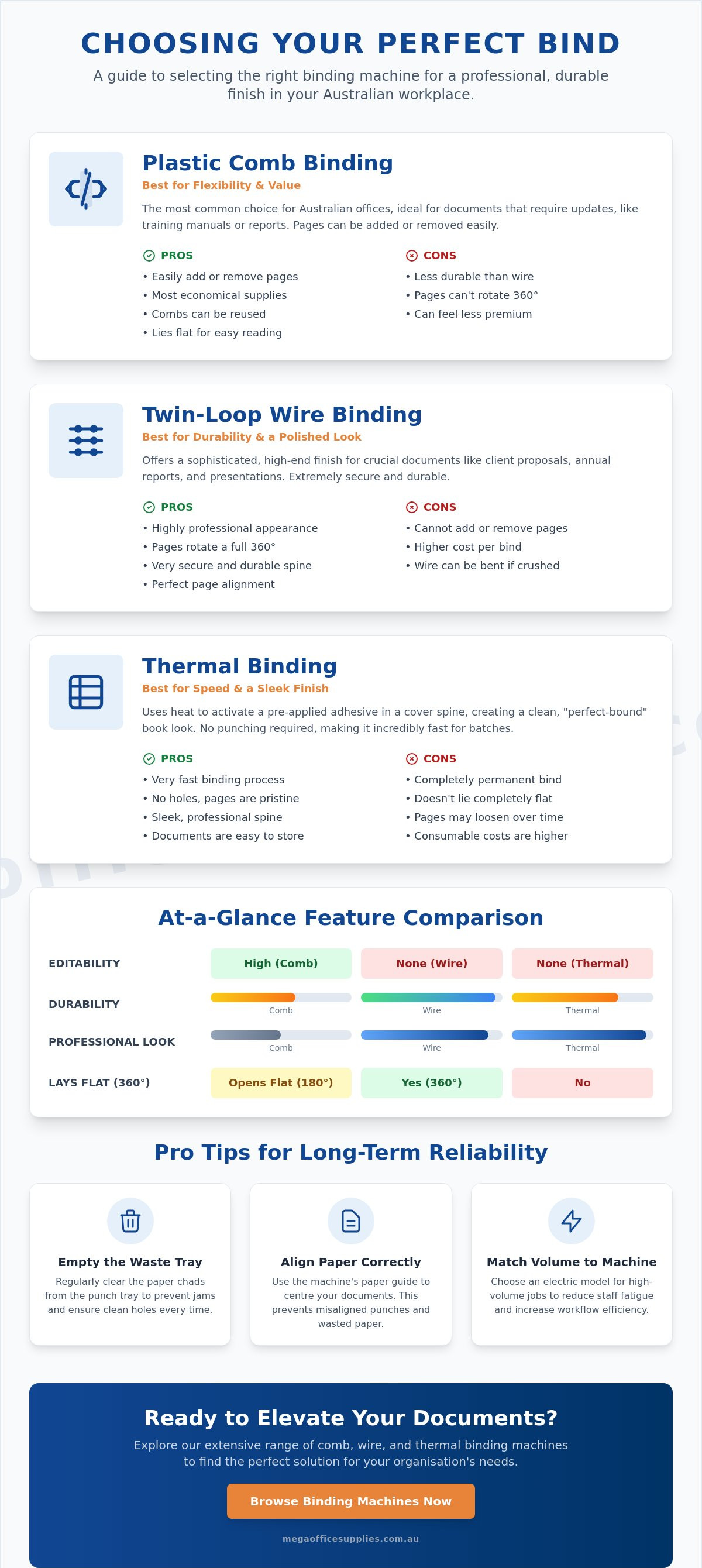
Comparing Binding Mechanisms: Comb, Wire, and Thermal Systems
-
Selecting the Right Machine for Your Australian Workplace Environment
-
Maintaining Your Binding Equipment for Long-Term Reliability
Understanding Binding Machines for Professional Document Organisation
A binding machine is a mechanical device engineered to secure loose pages into a professional, cohesive booklet. It's a critical tool for any workplace that handles multi-page documents, providing a structured alternative to staples or paperclips. While modern office equipment has simplified the process, Understanding the history of bookbinding provides essential context for how these mechanical systems evolved to meet today's archival standards. For Australian businesses, the primary role of binding is protection. In high-traffic environments like warehouses or reception desks, documents face constant wear and tear. A bound report or manual is significantly more durable than a loose stack of A4 copy paper, ensuring that information remains legible and intact over long periods of frequent handling.
Security is another major driver for adopting **binding machines ** in-house. When you bind documents within your own facility, sensitive information stays behind your own locked doors. This eliminates the logistical risk associated with transporting confidential data to external print shops or third-party providers. Beyond security, the aesthetic shift is profound. A bound document signals authority and attention to detail, turning standard office supplies into a finished product that's ready for a boardroom presentation or a high-stakes client pitch. It provides a sense of organisation that loose sheets simply cannot replicate.
Why In-House Binding Beats External Printing Services
Managing your document production internally offers distinct advantages for small to medium print runs. Schools and local businesses often find that external services come with high minimum order requirements or hidden setup fees that inflate the cost-per-unit. By binding in-house, you gain immediate turnaround times for urgent training manuals or reports. You also maintain total control over customisation. You can choose specific binding covers, select the exact colour of the combs, and adjust the layout on the fly without waiting for a physical proof from an outside vendor.
Common Uses Across Australian Industries
The versatility of these systems makes them a staple in various professional settings. In the corporate sector, binding machines are used for annual reports, pitch decks, and internal process documentation. Within educational environments, they are indispensable for creating student workbooks, teacher planners, and curriculum guides that survive the rigours of the school year. Healthcare and government departments rely on them for policy manuals and patient information booklets, where clarity and durability are non-negotiable requirements for compliance and safety.
Comparing Binding Mechanisms: Comb, Wire, and Thermal Systems
Selecting the right hardware depends entirely on the intended lifecycle of your document. Each system carries a different cost-per-bind, which is a critical factor for procurement officers managing high-volume requirements in schools or government departments.
Beyond the machine itself, the ongoing expense of consumables varies significantly. Plastic combs are the most economical choice per unit, while thermal binding covers represent a higher investment because the spine and covers are integrated. Understanding these operational costs ensures your organisation maintains a sustainable workflow without exceeding the stationery budget. Each system offers a specific set of physical limitations and benefits that dictate its suitability for the workplace.
Plastic Comb Binding: Flexibility and Value
Plastic comb binding remains the most versatile and common choice for Australian offices. Its unique advantage is the ability to de-bind a document to add or remove pages without damaging the original sheets. This makes it ideal for training manuals, staff handbooks, and school exercise books that require frequent updates throughout the year. Comb binding is the industry standard for high-volume, low-cost document organisation. It provides a reliable, functional finish that allows documents to stay organised under heavy use. If you need to replenish your supplies, you can find a wide range of compatible binding combs and covers to suit any standard machine.
Wire and Thermal Binding: The Professional Edge
Wire binding, often called twin-loop or Wire-O, is preferred for high-end professional documentation like annual reports or client proposals. Unlike combs, wire allows a document to fold 360 degrees back on itself, making it perfect for presentations where desk space is limited. It's a permanent solution; once the wire is closed, it cannot be reopened without being replaced. This provides a sense of security and a premium metal feel that plastic cannot replicate.
Thermal binding offers a different aesthetic entirely. It provides a sleek, published look without visible holes or external spines. Using a heat-activated adhesive strip inside a specialised cover, the machine secures the pages into a book-like spine. While it lacks the 360-degree flexibility of wire, it excels in shelf storage, as the flat spine allows for clear titling. For documents that need extreme durability and the ability to lay completely flat, coil or spiral binding is a heavy-duty alternative. It uses a continuous plastic or metal loop that is threaded through closely spaced holes, ensuring the pages never snag or detach even with rough handling in a warehouse or workshop environment.
Selecting the Right Machine for Your Australian Workplace Environment
Choosing between various binding machines requires a clear understanding of your workplace's document volume and the physical demands of the task. A home office might only produce five booklets a month, making a compact manual unit sufficient. Conversely, a busy school staffroom during report season or a government department preparing policy manuals handles hundreds of documents in a single week. In these high-demand scenarios, punching capacity becomes the most significant factor in operational speed. If a machine only punches 10 sheets of 80gsm paper at once, a 200-page report requires 20 separate punching actions. Selecting a high-capacity model that handles 25 to 30 sheets per pull dramatically reduces the time spent at the machine and increases overall efficiency.
Manual operation is reliable for small batches, but electric motors are a better investment for bulk orders. Electric punching removes the physical strain of pulling a lever hundreds of times, which is a vital consideration for workplace ergonomics and minimising repetitive strain injuries. Consistency is also determined by technical features like adjustable margin depth and edge guides. These components ensure that every page is aligned perfectly, preventing the frustration of misaligned holes that lead to torn pages or wasted paper during the assembly phase.
Matching Machine to User
A procurement officer's checklist should prioritise reliability, ease of maintenance, and the long-term availability of consumables. In educational settings like classrooms or art rooms, look for heavy-duty construction and safety features that can withstand student use. Industrial environments, such as warehouses or site offices, require robust machines with a high-torque punch. These units must be capable of cleanly piercing through thick binding covers, including heavy-weight frosted polypropylene or leather-grain card, without jamming the internal mechanism or dulling the dies prematurely.
The Importance of Consumable Compatibility
Before purchasing, verify that the machine matches standard Australian pitch sizes. For comb binding, the 21-ring pitch is the local standard, ensuring you won't struggle to find compatible supplies. Proper organisation in the supply cupboard is equally important. Store your binding combs and wires by diameter size, ranging from 6mm for thin reports up to 51mm for thick manuals, to help staff select the correct spine for their project. It's also wise to remember that large-scale binding projects often follow heavy print runs. Ensure your technology consumables, such as toner and high-yield ink cartridges, are fully stocked before commencing a major binding task to avoid mid-project delays.
How to Bind a Professional Document: A Step-by-Step Guide
Precision is mandatory when using binding machines to ensure your final booklet is both functional and aesthetically pleasing. The process begins with meticulous document preparation. Collate your pages and align the front and back covers, ensuring they are flush with the internal sheets. Most professional covers are slightly larger than standard A4 sheets to provide edge protection, so centring them correctly before you begin is a vital step. Once collated, adjust the side margin guide on your machine. This setting determines where the holes are positioned relative to the edge of the paper. For thicker documents, a deeper margin is required to ensure pages turn freely without tearing at the punch points.
Punching should always be performed in small batches, even if your machine has a high rated capacity. While a heavy-duty unit might claim a 25-sheet limit, punching 15 to 20 sheets of 80gsm paper at a time results in cleaner holes and less mechanical strain. After punching the entire document, load your chosen spine onto the machine's comb opener or wire closer. Thread the punched pages onto the spine, starting with the back cover and finishing with the front cover. This specific sequence ensures the spine's seam remains hidden at the back of the booklet. Finally, engage the closing mechanism to secure the document. If you are upgrading your office equipment, you can view our professional binding machines to find a model that matches your required punch capacity.
Pre-Punching Checklist
-
Always perform a test punch on a scrap piece of A4 copy paper to verify the alignment and margin depth before using your actual document.
-
Empty the waste tray frequently to prevent paper chip buildup, which creates mechanical resistance and can dull the punching dies.
-
Check the total document thickness against the integrated spine size guide found on the machine base to ensure you select a comb or wire with sufficient diameter.
Troubleshooting Common Binding Issues
If your punch holes are not centred, the side guide has likely shifted; re-tighten the locking knob and use a fresh test sheet to recalibrate the position. When pages are too thick for the binding mechanism to close, you must switch to a larger spine diameter to allow for proper page rotation. To clear a stubborn jam in a manual machine, gently move the handle back and forth while sliding a thin piece of rigid card into the punch throat to dislodge the stuck paper fibres. Consistent maintenance and following these technical steps will help you produce organised, professional booklets that withstand frequent handling in any Australian workplace.
Maintaining Your Binding Equipment for Long-Term Reliability
The operational lifespan of professional binding machines depends on a consistent maintenance schedule and proper handling. Emptying the waste tray is the most basic yet vital task. Paper chips left to overflow can back up into the punching dies, causing misaligned holes or permanent mechanical damage to the internal springs. For high-volume environments like schools or large corporate hubs, check the tray after every 50 booklets to ensure the mechanism remains clear of debris. Use a dry, lint-free cloth to wipe the exterior surfaces and prevent dust from settling into the punch throat.
Lubricating the internal dies is equally important for maintaining a clean punch. Punching through a specialised lubricant sheet every 2,000 cycles keeps the metal edges sharp and reduces the friction that leads to paper jams. Proper storage is another factor in long-term reliability. Store the unit in a dry, dust-free area away from direct sunlight. Humidity can lead to surface rust on the punching pins, which increases the physical force required for manual operation. If your current machine frequently jams or requires excessive effort for standard A4 sheets, it's likely time to transition to a higher-capacity professional unit that better matches your current output requirements.
Safety and Workplace Compliance
Workplace safety is a priority when operating heavy-duty machinery. Ensure all electric models are included in regular first aid and safety inspections, specifically the Australian AS/NZS 3760:2022 Test and Tag requirements. Staff should be trained on correct lifting techniques, as manual machines with high punch capacities can be surprisingly heavy. Maintaining an organised workspace in facilities and breakroom areas prevents accidents and ensures consumables like combs and wires are easily accessible. A clean environment minimises the risk of paper dust interfering with other sensitive office electronics.
Maximising Your Investment with Mega Office Supplies
Choosing the right partner for your workplace needs provides security beyond the initial purchase. At Mega Office Supplies, we leverage over 150 years of combined service experience to provide expert advice on selecting hardware that withstands the rigours of Australian office life. We understand the logistical needs of local businesses, schools, and government departments. There are significant benefits to bulk ordering your binding supplies alongside other office essentials, ensuring you never run out of stock during a critical project. Our team is grounded in local expertise and ready to assist you in finding the most efficient solution for your document organisation. View our full range of professional binding machines and accessories to secure a reliable system for your organisation.
Upgrade Your Document Organisation Strategy
Implementing the right document finishing system transforms a loose stack of paper into a durable, professional asset. You now understand how to differentiate between versatile plastic combs and permanent twin-loop wires, ensuring your reports are fit for purpose. By matching your workplace volume to the correct punch capacity and following a strict maintenance schedule, you'll minimise paper waste and extend the life of your equipment.
High-quality binding machines are essential for any Australian organisation that values security, organisation, and professional presentation. As an Australian family-owned and operated business with over 150 years of combined service experience, we provide the local expertise and national delivery you need to keep your office running smoothly. Our team is ready to help you find a reliable, heavy-duty solution that meets your specific requirements.
Explore our range of heavy-duty binding machines at Mega Office Supplies and start creating organised, polished documents for your workplace today.
Frequently Asked Questions
How do I know what size binding comb or wire I need for my document?
You determine the diameter based on the total thickness of your document plus the covers. Most binding machines include an integrated measurement tool on the base to help you select the correct size. For example, a 6mm comb is suitable for up to 25 sheets of 80gsm paper, while a 51mm comb is required for large manuals containing up to 450 sheets.
Can I bind different sizes of paper, such as A3 or A5, with a standard machine?
Yes, standard A4 machines can accommodate different sizes by adjusting the side margin guide. For A5 documents, you simply slide the guide to the correct position for half-size sheets. A3 documents can be bound along the short edge in landscape mode, provided the machine has an open-ended punch throat to prevent paper crinkling during the punching phase.
What is the difference between manual and electric binding machines?
The primary difference is the punching mechanism. Manual machines require a physical lever pull to pierce the paper, whereas electric models use a motor activated by a button or foot pedal. If you're processing bulk orders in a school or government office, electric units significantly reduce physical fatigue and increase output speed. It's a vital consideration for maintaining workplace ergonomics.
Is it possible to reuse plastic binding combs once they have been used?
You can reuse plastic binding machines combs multiple times because they're designed to be opened and closed without losing their shape. This flexibility is perfect for internal drafts or training manuals that require frequent page updates. Conversely, wire spines are permanent and must be cut away and replaced if you need to edit the document, which increases the long-term consumable cost.
How many pages can a standard office binding machine handle at once?
A standard office machine typically handles between 150 and 300 pages depending on the spine diameter used. Heavy-duty professional models can secure up to 500 sheets of 80gsm paper using a 51mm plastic comb. Always check the specific capacity of your hardware to ensure it meets your document thickness requirements, as forcing too many pages into a small spine leads to tearing.
What should I do if my binding machine is not punching through all the pages?
You should immediately reduce the number of sheets in your punching batch. If a machine is rated for 20 sheets but struggles to pierce them, try punching 12 to 15 sheets instead to ensure clean holes. You should also verify that the waste tray isn't full, as a buildup of paper chips can block the punching dies and cause the handle to jam.
Do I need a different machine for wire binding and comb binding?
Most standard units are dedicated to either comb or wire binding because each system uses a different hole pattern and pitch. Comb systems typically use a 21-ring rectangular punch, while wire systems use a 2:1 or 3:1 square or round hole pattern. If you need both, look for a multi-functional machine designed to handle multiple binding styles through interchangeable die sets.
How often should I empty the waste tray on my binding machine?
You should empty the waste tray after every 50 to 100 punching cycles or whenever you feel increased resistance during the punch. A full tray causes paper chips to jam the internal mechanism, which can lead to dull dies or broken springs. Regular clearing is a simple way to maintain your equipment's long-term reliability and ensure consistent, professional results for every document.
Article by
Mega Office Supplies Team
The Mega Office Supplies Team provides practical guidance for Australian businesses, schools, government organisations, healthcare providers, hospitality venues, warehouses and home offices. Based in Tweed Heads South, Mega Office Supplies is a family-owned and operated Australian business offering office stationery, workplace furniture, technology products, labels, printers, cleaning and janitorial supplies, safety products, art materials, education resources and everyday business essentials from trusted brands.
General Information
This article is provided as general information only to help customers compare and choose office, workplace, school, cleaning, technology, furniture, safety and business supplies. Product details, specifications, compatibility, availability, pricing and suitability may vary. Always check the individual product page, manufacturer information, workplace requirements and relevant safety guidance before purchasing or using a product.


