


Did you know the Australian cleaning and maintenance supply market reached $1.5 billion in 2025, yet many organisations still lose thousands of dollars annually to wasteful procurement and inefficient stock management? Keeping a facility clean is about more than just appearances; it's a critical component of workplace safety and operational efficiency. You've likely dealt with the frustration of inconsistent stock levels or the confusion of matching the right chemical to a specific surface. This comprehensive janitorial supplies checklist for businesses simplifies your inventory management and ensures you're prepared for the strict new Workplace Exposure Limits (WEL) taking effect on 1 December 2026.
We understand that procurement officers and administrators need reliability and regional expertise to maintain a compliant environment. By following this professional-grade inventory list, you can reduce your overheads through smarter bulk ordering and eliminate WHS compliance anxiety. We'll outline the essential hardware, surface-specific chemicals, and safety equipment required to master your facility management in the current Australian landscape. This guide draws on decades of industry experience to provide a standardised, easy-to-follow framework for any workplace, from school staffrooms to high-volume warehouses.
Key Takeaways
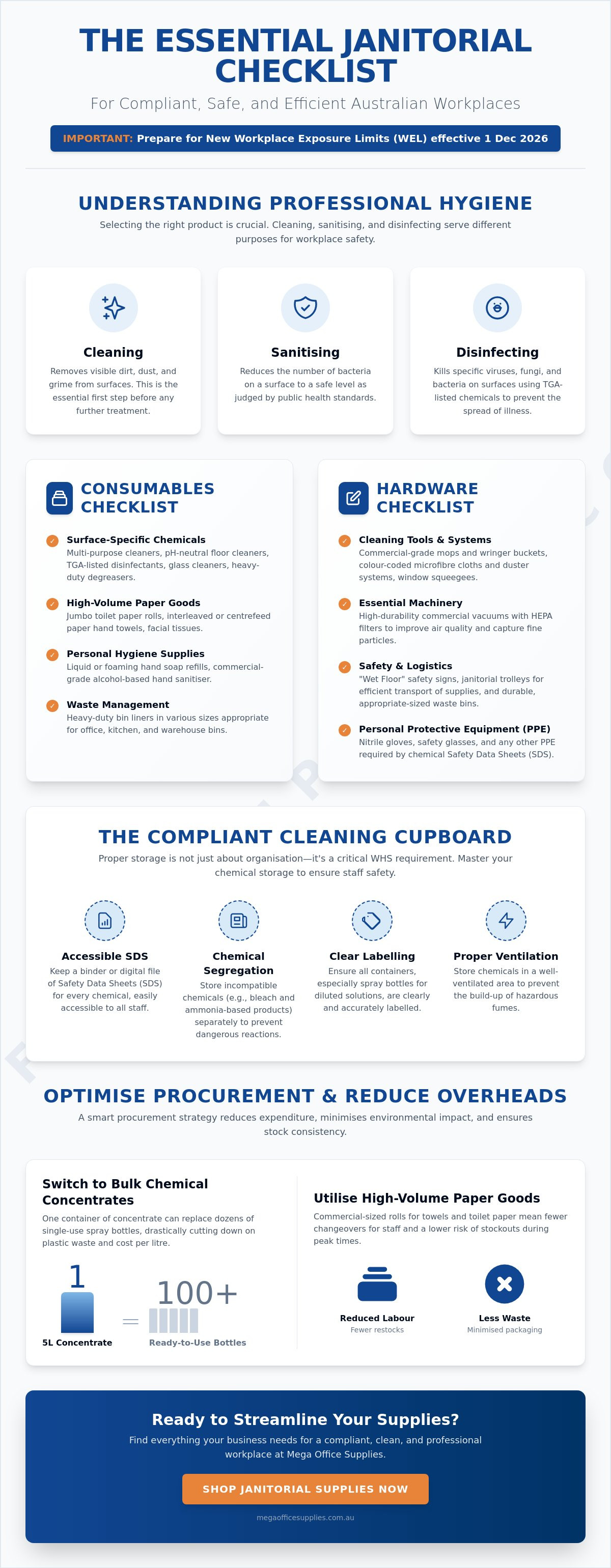
- Implement a standardised janitorial supplies checklist for businesses to ensure multi-site consistency and meet strict Australian WHS compliance standards.
- Select the correct surface-specific chemicals and TGA-listed sanitisers to maintain professional hygiene standards across diverse workplace surfaces.
- Invest in high-durability hardware, including HEPA-filter vacuums and commercial-grade microfibre systems, built for the rigours of Australian commercial environments.
- Establish a compliant cleaning cupboard by mastering chemical segregation and maintaining accessible Safety Data Sheet (SDS) documentation for all staff.
- Optimise your procurement strategy by utilising bulk chemical concentrates and high-volume paper goods to reduce both expenditure and environmental impact.
Essential Janitorial Supplies for Australian Workplace Compliance
The professional standard for facility maintenance in 2026 demands a structured, data-driven approach to hygiene. It is no longer sufficient to simply wipe down surfaces once a day. Businesses must implement a comprehensive janitorial supplies checklist for businesses to ensure every site, whether a Melbourne warehouse or a Sydney office, adheres to the same rigorous safety protocols. This level of consistency is vital for multi-site organisations where procurement oversight can often become fragmented. Reliable systems prevent stockouts and ensure that hygiene standards remain high across the entire company footprint.
High-quality supplies do more than just clean; they act as the first line of defence against workplace illness. By investing in professional-grade chemicals and hardware, organisations can significantly reduce workplace absenteeism. A clean environment fosters productivity and signals to employees that their health is a primary concern for the business. Maintaining this standard requires a deep understanding of the tools and substances used in daily operations.
To better understand the range of equipment needed for a professional setup, watch this helpful video:
Understanding the technical distinction between cleaning, sanitising, and disinfecting is crucial for effective inventory management. Cleaning removes visible soil and organic matter. Sanitising reduces bacteria to safe levels. Disinfecting kills specific pathogens. To select the right products for each task, procurement officers should familiarise themselves with various types of cleaning agents to ensure they aren't using industrial degreasers where a simple pH-neutral cleaner would suffice. This knowledge is essential when browsing facilities and breakroom supplies to ensure the correct chemical is matched to the surface material.
Meeting Australian WHS and Hygiene Standards
Australian employers hold a legal duty of care to provide a safe working environment. This includes maintaining high hygiene standards in shared spaces like staff kitchens, reception areas, and bathrooms. In high-traffic commercial zones, domestic-grade products often fail to provide the required durability or efficacy. The post-pandemic landscape has solidified the requirement for high-efficacy sanitisers that are effective against a broad spectrum of pathogens. Using professional-grade supplies ensures you meet these expectations while preparing for future regulatory shifts in workplace safety.
Categorising Your Inventory for Maximum Efficiency
An organised inventory system prevents stockouts and wasteful spending. Group your janitorial supplies checklist for businesses into two primary categories: consumables and hardware. Consumables include cleaning chemicals, paper towels, and toilet paper. Hardware encompasses durable items like commercial vacuums, mops, and waste bins. Identify high-frequency touchpoints, such as door handles and lift buttons, which require specific sanitisers. Establish a "never-out" list for critical items like soap and hand sanitiser to ensure hygiene levels never drop during peak operational periods.
Consumables Checklist: High-Volume Chemicals and Paper Goods
The consumables portion of your janitorial supplies checklist for businesses requires a strategic balance between versatile multi-purpose cleaners and specialised chemicals. While generic bleach-based products were once the industry standard, modern Australian workplaces feature a variety of sensitive materials. Engineered timber, natural stone, and stainless steel all require specific pH-neutral or non-abrasive formulations to prevent long-term surface degradation. Adhering to standards supported by the Building Service Contractors Association of Australia ensures your chemical choices reflect professional best practices and maintain the longevity of your facility's assets.
Disinfectants and sanitisers must be selected based on their efficacy. For high-risk environments or healthcare settings, look for TGA-listed products that provide laboratory-proven results against specific pathogens. Floor care consumables are equally critical. Using a harsh acidic cleaner on polished concrete or timber can strip protective seals, leading to costly repairs. Instead, standardise your inventory with pH-neutral floor cleaners that lift grime without damaging the finish. High-traffic zones often benefit from specialised spray-buff solutions that maintain a professional gloss between deeper maintenance cycles.
Paper goods represent the highest volume of recurring procurement. A robust inventory includes 2-ply or 3-ply toilet tissue, high-absorbency interleaved hand towels, and facial tissues for reception areas. Hand hygiene remains a cornerstone of workplace health. Transitioning to bulk liquid soap systems and high-percentage alcohol-based sanitisers reduces individual unit costs and ensures your team has constant access to essential hygiene tools. For a comprehensive range of these essentials, you can explore our facilities and breakroom supplies to find high-capacity solutions tailored for commercial use.
Bathroom and Washroom Essentials
Bathrooms require heavy-duty consumables to manage high usage and prevent bacterial growth. Your list should include thickened toilet bowl cleaners and descalers, particularly in regions with hard water that causes calcium buildup. Urinal blocks and automated air fresheners provide necessary odour control, while bulk hand wash refills ensure dispensers never run dry. Matching your refills to your specific dispenser hardware is vital for preventing leaks and maintaining a tidy washroom environment.
Kitchen and Breakroom Hygiene
Communal eating areas demand food-safe sanitisers that don't leave harmful residues on benches or tables. Commercial-grade dishwashing liquids and high-performance dishwasher tablets are essential for managing the daily volume of staff cutlery and crockery. Ensure your janitorial supplies checklist for businesses also accounts for heavy-duty scourers and microfibre cloths dedicated specifically to kitchen zones to prevent cross-contamination with other areas of the building.
Janitorial Hardware and Equipment: Investing for Durability
Businesses often make the mistake of purchasing domestic-grade equipment to save on upfront costs. It's a false economy. In high-traffic Australian workplaces, a standard home vacuum will likely burn out within months of heavy use. A robust janitorial supplies checklist for businesses must prioritise commercial-grade hardware built for daily, multi-hour operation. Investing in durable tools reduces the total cost of ownership and ensures your cleaning team isn't hampered by frequent equipment failure.
Air quality and particulate management are major focuses for 2026. Commercial vacuums equipped with HEPA filters are no longer optional; they're essential for trapping fine dust and allergens to meet updated health standards. Similarly, high-speed floor polishers provide a level of surface protection that manual mopping simply cannot replicate. These machines help maintain the integrity of polished concrete or vinyl floors, extending the life of the flooring material itself.
Manual floor tools require equally careful selection. Dual-bucket systems are the professional choice, as they keep clean water separate from dirty rinse water. This prevents the spread of grime across the floor surface. For rapid response in reception areas or staff kitchens, lobby brooms and covered dustpans allow for quick debris removal without the need for bulky machinery. Every item in your inventory should be selected for its ability to withstand the rigours of a commercial environment.
Efficient waste management relies on high-capacity, space-saving designs. Slim Jim bins are the industry standard for narrow corridors and tight office corners. Pair these with heavy-duty bin liners to prevent the risk of splits and leaks, which can damage flooring and create unnecessary secondary cleaning tasks. Choosing the right bin capacity for each zone reduces the frequency of bag changes and minimises plastic waste.
The Microfibre Advantage in Commercial Cleaning
Microfibre technology outperforms traditional cotton in bacteria removal and soil capture. It's a critical component of a modern janitorial supplies checklist for businesses. Implementing a strict colour-coding system is the best way to prevent cross-contamination. Use red cloths for high-risk bathroom areas, blue for general office surfaces, and green for kitchen zones. To maintain efficacy, establish a laundering protocol that includes high-temperature washing and air drying, as fabric softeners can damage the synthetic fibres.
Ergonomic Equipment for Staff Safety
Staff safety is a core component of your WHS obligations. Choosing adjustable mop handles allows cleaners to set the tool to their height, which significantly minimises back strain during long shifts. Lightweight, high-suction vacuums reduce the physical effort required to clean large floorplates. When selecting gear, consider how the physical design impacts the user's long-term health. You can view our ergonomic furniture and equipment to find solutions that support a healthy and efficient workplace environment.
Organising the Cleaning Cupboard: Safety and Storage Standards
A cleaning cupboard is more than a storage nook; it's a high-risk zone that requires professional organisation to meet Australian WHS standards. Your janitorial supplies checklist for businesses must include the physical infrastructure of the storage area itself. Proper ventilation is mandatory to prevent the buildup of fumes, especially when storing large volumes of chemical concentrates. Shelving should be chemically resistant and installed with heavier liquid containers on lower levels to minimise the risk of spills during handling. Segregating incompatible chemicals, such as acids and bleaches, is a critical safety step that prevents accidental toxic gas release.
Safety signage must be immediately accessible within this space. "Wet Floor" A-frames and chemical hazard warnings should be stored at the front of the cupboard for rapid deployment. To prevent stock-outs of essential hygiene items, implement a simple inventory tracking system. This ensures you never run out of critical paper goods or sanitisers, maintaining the consistent hygiene standards required for your facility. Given the transition to new Workplace Exposure Limits (WEL) on 1 December 2026, keeping an organised and compliant storage area is more important than ever for Australian organisations.
SDS and Chemical Safety Compliance
Compliance hinges on documentation. Every chemical on-site requires a current Safety Data Sheet (SDS) stored in a clearly marked, accessible folder. This folder must be available to all staff, not just the cleaning crew. If you decant chemicals from bulk containers into smaller spray bottles, each bottle must have a professional, legible label that matches the SDS. Ensuring your team can respond to chemical exposure is as vital as having the right medical supplies. You can learn more about meeting these obligations in our guide on Complying with Australian Safety: Office First Aid Kits.
Personal Protective Equipment (PPE) Requirements
Personal Protective Equipment (PPE) is your last line of defence. Stock a variety of disposable nitrile gloves for general tasks and heavy-duty reusable gloves for deep cleaning. Safety goggles and chemical-resistant aprons are essential when decanting concentrates to protect against splashes. For outdoor maintenance or large warehouse environments, maintain a stock of high-visibility vests. Organising these items properly ensures that safety is never an afterthought in your daily operations. To ensure your cupboard is fully equipped for any task, order your commercial cleaning and safety supplies today.
Streamlining Procurement with Bulk Janitorial Supplies
Procurement efficiency is the final pillar of professional facility management. Moving away from 500ml retail bottles toward 5L and 20L chemical concentrates is a fundamental shift for any serious organisation. This approach isn't just about volume; it's about the financial logic of reducing the "cost per use." When you integrate these larger formats into your janitorial supplies checklist for businesses, you significantly lower the unit price of every litre of floor cleaner or sanitiser used across your site. This strategy also directly reduces packaging waste, as fewer plastic containers enter the waste stream, aligning your operations with modern sustainability expectations.
Consolidating your orders provides a distinct logistical advantage. Managing separate vendors for janitorial, office, and kitchen supplies creates an unnecessary administrative burden. By sourcing your cleaning chemicals, paper goods, and tea room essentials from a single provider, you reduce the number of invoices, deliveries, and stock-checks required each month. This streamlined workflow allows procurement officers to focus on higher-level facility management tasks rather than chasing multiple small shipments. Mega Office Supplies provides this national reach and industry expertise, ensuring that high-volume demands are met without friction or delay.
Why Bulk Buying Works for Australian Businesses
The true value of bulk procurement lies in the reduction of the administrative burden. Frequent small orders lead to higher shipping costs and more time spent on data entry. Calculating the "cost per use" rather than the "cost per bottle" provides a more accurate picture of your facility's operational spend. This strategy mirrors the efficiencies found in other departments, as detailed in The Procurement Officer’s Guide to Bulk Stationery Orders. Standardising your janitorial supplies checklist for businesses with bulk concentrates ensures you maintain high hygiene levels while protecting your bottom line.
Your Partner in Facility Management
Choosing a reliable partner is essential for maintaining a well-oiled operation. We leverage over 20 years of combined industry experience to support the specific procurement needs of Australian organisations. Our comprehensive range extends from basic pens and stationery to professional-grade cleaning chemicals and janitorial equipment. We provide direct support for government, educational, and corporate departments, understanding the unique compliance and budgetary requirements of each sector. Our scale and historical depth mean we can handle high-volume orders with the precision and reliability that veteran procurement officers expect. For direct assistance with your facility requirements, contact us to discuss your bulk supply needs.
Future-Proof Your Workplace Hygiene and Safety
Maintaining a professional environment requires more than just reactive cleaning; it demands a proactive strategy built on durable hardware, compliant chemical storage, and a tiered procurement system. Implementing a standardised janitorial supplies checklist for businesses ensures your organisation stays ahead of upcoming regulatory changes, such as the 2026 WEL updates, while minimising wasteful spending on domestic-grade equipment. Reliable facility management is about creating a safe, consistent space for your team and visitors alike.
As a family-owned Australian business since 2005, Mega Office Supplies understands the unique logistical needs of the corporate, healthcare, and educational sectors. We combine decades of combined industry expertise with efficient national delivery to ensure your cleaning cupboard is always stocked with professional-grade essentials. Download your comprehensive janitorial supplies checklist and shop the range at Mega Office Supplies to streamline your operations today. Mastering your inventory is a practical step toward a more efficient, compliant, and productive workplace.
Frequently Asked Questions
What are the most essential janitorial supplies for a small office?
Essential supplies for a small office include a professional multi-purpose sanitiser, glass cleaner, microfibre cloths, a commercial vacuum, and washroom consumables like toilet tissue and hand soap. Even in smaller spaces, using professional-grade tools ensures hygiene standards are met efficiently. This prevents the frequent replacement cycle and lower efficacy often associated with domestic products found in local supermarkets.
How often should I update my janitorial supplies checklist?
You should review your janitorial supplies checklist for businesses at least bi-annually to account for seasonal changes and regulatory shifts. For 2026, a review before 1 December is mandatory to ensure compliance with the new Workplace Exposure Limits (WEL). These updates are critical for maintaining safety standards regarding airborne contaminants and ensuring your PPE stock matches your current chemical inventory.
Do I really need commercial-grade cleaning chemicals for a standard office?
Commercial-grade chemicals are necessary because they are formulated for high-traffic environments and specific commercial surface types. Retail products are often diluted and may not provide the efficacy required for workplace health standards. Using professional concentrates also allows for precise dilution, which protects your facility assets like engineered timber or stone from the damage caused by incorrect pH levels.
What is the Australian standard for colour-coding cleaning equipment?
The industry standard in Australia uses Red for high-risk bathroom areas, Blue for general office zones, Green for food preparation areas, and Yellow for specialised cleaning tasks. Implementing this system with your microfibre cloths and mops is a cornerstone of professional facility management. It provides a simple, visual method to prevent cross-contamination and ensure high hygiene levels across different functional zones.
Where should I store Safety Data Sheets (SDS) for my cleaning supplies?
Safety Data Sheets (SDS) must be stored in a clearly labelled, accessible folder located near the cleaning cupboard or chemical storage area. It's a legal requirement that these documents are available to every staff member who may come into contact with the substances. Digital copies are useful, but a physical master folder ensures accessibility during power outages or emergency situations.
How can I reduce the environmental impact of my janitorial procurement?
Reduce your environmental footprint by prioritising bulk concentrates and refillable spray bottles over single-use retail units. This significantly lowers plastic waste and reduces the carbon emissions associated with frequent deliveries. Investing in high-quality hardware like HEPA-filter vacuums and durable microfibre mops also minimises the waste generated by disposing of broken, low-grade equipment that lacks a long service life.
What PPE is mandatory for staff handling cleaning chemicals in Australia?
Mandatory PPE typically includes nitrile gloves and safety goggles, though specific requirements are dictated by each chemical's SDS. If your team is decanting concentrates, chemical-resistant aprons and closed-toe footwear are also essential to meet Australian WHS obligations. Employers must ensure all PPE is in good condition and that staff are trained in its correct application and disposal.
Is it cheaper to buy cleaning supplies in bulk for a business?
Bulk procurement is consistently more cost-effective because it reduces the cost-per-litre of chemicals and the unit price of paper goods. Consolidating your janitorial supplies checklist for businesses into fewer, larger orders also lowers shipping fees and the administrative time spent processing multiple invoices. These savings contribute to a more stable operational budget while ensuring you never run out of critical items.
Article by
Mega Office Supplies Team
The Mega Office Supplies Team provides practical guidance for Australian businesses, schools, government organisations, healthcare providers, hospitality venues, warehouses and home offices. Based in Tweed Heads South, Mega Office Supplies is a family-owned and operated Australian business offering office stationery, workplace furniture, technology products, labels, printers, cleaning and janitorial supplies, safety products, art materials, education resources and everyday business essentials from trusted brands.
General Information
This article is provided as general information only to help customers compare and choose office, workplace, school, cleaning, technology, furniture, safety and business supplies. Product details, specifications, compatibility, availability, pricing and suitability may vary. Always check the individual product page, manufacturer information, workplace requirements and relevant safety guidance before purchasing or using a product.


