

With Australia generating approximately 75.6 million tonnes of waste every year, the pressure on facilities managers to move beyond basic bins has never been higher. Most Australian workplaces start with good intentions, yet you've likely dealt with the fallout of a poorly planned approach: contaminated yellow bins, overflowing paper trays, and rising waste levy costs that impact your procurement budget. Learning how to set up a recycling system in the office requires more than just placing containers in the staff kitchen; it demands a structured approach to hardware and logistics. It's frustrating when staff are confused and your facility's efficiency suffers due to a lack of standardised signage or logical bin placement.
This professional guide provides a roadmap to design, implement, and maintain a high-performance workplace recycling system. We'll show you how to select durable, Australian Standard-compliant hardware and establish clear workflows that reduce waste and improve facility efficiency. You'll finish this guide equipped with the practical knowledge to choose the right solutions for your specific environment, ensuring your organisation's waste management is as reliable and organised as your core business operations.
Key Takeaways
- Understand how transitioning to a structured recycling model can significantly reduce commercial waste levies and improve your organisation's standing in business tenders.
- Learn how to set up a recycling system in the office by replacing individual desk bins with centralised hubs to minimise contamination and streamline collection.
- Identify the essential features of professional-grade recycling hardware, including colour-coded lids that meet Australian Standards and durable materials suited for high-traffic environments.
- Discover proven strategies for engaging staff through clear signage and establishing a six-month review cycle to ensure your waste management system scales with your business.
Understanding the Business Case for Workplace Recycling in Australia
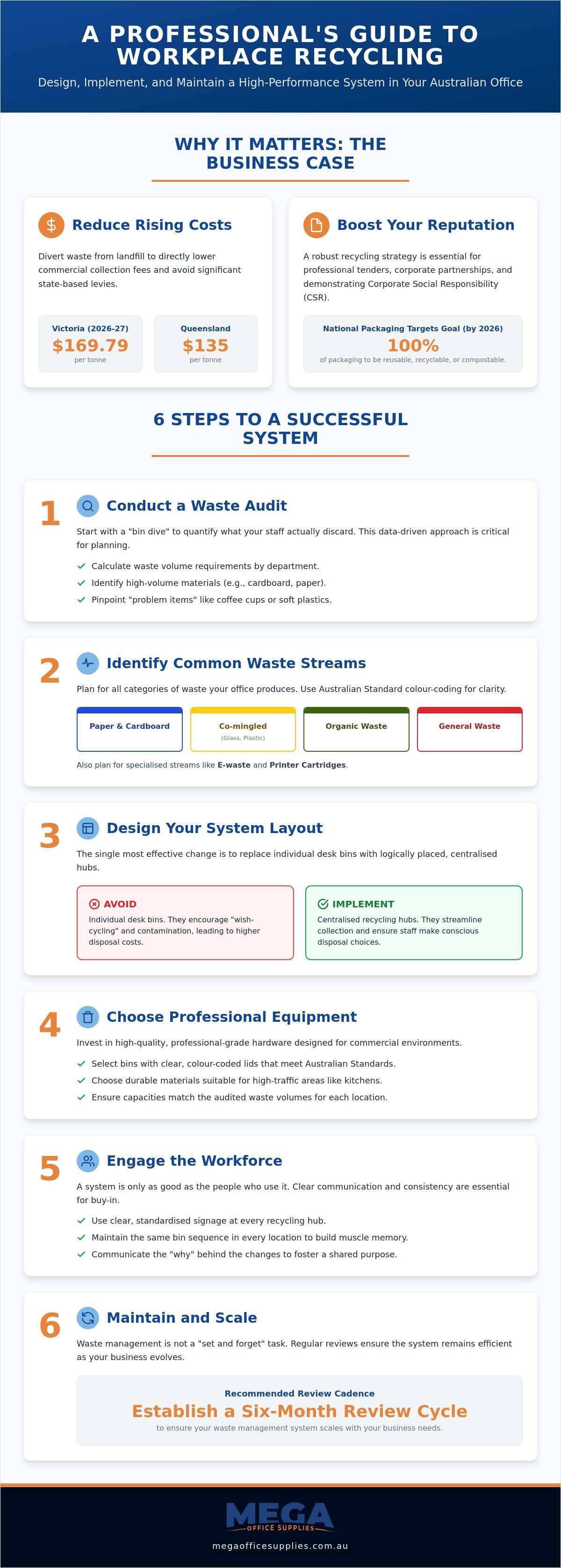
Reducing general waste is no longer just an ethical choice; it's a critical strategy for managing operational overheads. State-based landfill levies are rising across the country to discourage commercial waste. For the 2026-2027 financial year, Victoria's metropolitan commercial waste levy is set at $169.79 per tonne, while Queensland's general waste levy has increased to $135 per tonne. By diverting materials from the red lid bin into appropriate recycling streams, organisations can directly lower their commercial collection fees and improve their bottom line.
Beyond financial transparency, a robust recycling strategy is now a prerequisite for professional tenders and corporate partnerships. Australian government departments and large corporations increasingly require proof of Corporate Social Responsibility (CSR) and adherence to the National Packaging Targets. These targets mandate that 100% of packaging must be reusable, recyclable, or compostable by 2026. Aligning with these standards boosts your competitive edge while improving workplace morale by ensuring your facility's operations match the environmental values held by your staff.
As organisations look to broaden their environmental commitment beyond waste management, exploring sustainable energy infrastructure is a natural progression.
To better understand how these systems function in a professional setting, watch this helpful video:
Conducting a Comprehensive Workplace Waste Audit
A waste audit is the systematic process of quantifying workplace refuse. When determining how to set up a recycling system in the office, you must start with a "bin dive" to see what your staff actually discard. This involves safely inspecting and weighing contents from various departments to calculate volume requirements. For example, a warehouse generates high volumes of cardboard and stretch wrap, whereas an admin hub produces more mixed paper. Identifying "problem items" like single-use coffee cups or soft plastics allows you to target your procurement and education efforts where they'll have the most impact.
Identifying Common Office Waste Streams
Paper and cardboard remain the primary outputs of most professional offices. Streamlining your stationery supplies Australia procurement to include recycled content and digital workflows helps reduce this volume at the source. Co-mingled recycling typically handles glass, aluminium, and rigid plastics, but you must also plan for specialised streams. E-waste, printer cartridges, and organic food waste require dedicated collection points. Understanding these categories is essential for anyone researching modern waste reduction strategies, especially with new regulations like the mandatory food waste separation for NSW businesses starting July 1, 2026. Effectively managing these streams is the first step in learning how to set up a recycling system in the office that actually works.
Designing Your Office Recycling Infrastructure and Layout
Designing a functional layout is the backbone of any waste management strategy. The traditional model of individual desk bins often leads to "wish-cycling," where employees toss miscellaneous items into one container to avoid a trip to the kitchen. By transitioning to centralised recycling hubs, you force a conscious decision at the point of disposal. This shift is a key component of Australia's national waste policy, which focuses on increasing resource recovery and reducing the volume of material sent to landfill.
When planning how to set up a recycling system in the office, the most effective physical change is removing those individual bins. Centralising disposal points allows for better quality control and easier collection for your cleaning staff. Consistency is vital. Applying the same bin sequence in every hub ensures that employees develop a fast, subconscious habit for disposal, regardless of whether they are in the staff kitchen or the boardroom. Mapping your facility to identify high-traffic zones, such as lift lobbies and exits, ensures that recycling is always the most convenient option for a busy workforce.
Strategic Bin Placement for Maximum Diversion
Tea rooms and staff kitchens are the primary generators of organic waste and co-mingled containers. Place burgundy or lime green bins here for food scraps and yellow-lidded bins for rigid plastics and cans. Print rooms require high-capacity blue bins dedicated solely to paper and cardboard. For reception and client-facing areas, select professional-grade bins that match your office decor. Browsing a professional range of facility supplies can help you identify bin sizes and styles that fit your specific floor plan without compromising on aesthetics.
Selecting the Right Bin Capacity and Dimensions
Standardising bin dimensions across your facility simplifies the procurement of liners and cleaning chemicals. When calculating volume, a general rule is to allow for 5 to 10 litres of capacity per staff member per day, depending on the specific waste stream. Taller, ergonomic bins are preferable as they prevent workplace injuries during emptying and stay visible in high-traffic areas. This standardisation is a critical step in how to set up a recycling system in the office that remains manageable as your team grows. Durable materials like high-density polyethylene ensure your infrastructure survives the rigours of a commercial environment while remaining easy to sanitise.
Choosing Professional Recycling Equipment and Supplies
Once you've mapped your facility's layout, the next step in learning how to set up a recycling system in the office is procuring hardware that withstands commercial use. Professional-grade equipment is a long-term investment in your facility's efficiency. Selecting bins based on durability and functional design ensures your system remains operational without frequent replacements. You must consider the specific demands of each zone, matching heavy-duty high-density polyethylene (HDPE) for warehouses with sleek, aesthetic options for client-facing boardrooms.
Adhering to the Australian Standard for mobile bin colours (AS4123.7-2006) is non-negotiable for a high-performance system. Using standardised colours creates an immediate, subconscious link to the recycling habits employees already practice at home. This consistency reduces "decision fatigue" at the bin. Ensure your procurement includes:
- Yellow lids: Mixed or co-mingled recycling (glass, aluminium, and rigid plastics).
- Blue lids: Dedicated paper and cardboard streams.
- Red lids: General landfill waste for non-recyclable materials.
- Burgundy or Lime Green lids: Food waste and organics, particularly in staff kitchens.
Product features like bag retention systems and restrictive lids are essential for quality control. Restrictive lids, such as narrow slots for paper or circular cut-outs for bottles, act as a physical barrier against contamination. These design elements are critical when you're refining how to set up a recycling system in the office, as they prevent staff from accidentally tossing bulky landfill items into specialised streams.
Bin Material and Durability for High-Traffic Areas
Choosing between plastic and metal bins depends on your maintenance capabilities and fire safety requirements. HDPE plastic bins are lightweight, resistant to chemicals, and easy for janitorial staff to sanitise. Stainless steel or powder-coated metal bins offer superior longevity and a professional finish for reception areas but require more frequent polishing to remove fingerprints. Regardless of material, ensure the bins feature smooth internal surfaces to prevent waste build-up and simplify the wiping process during daily cleaning rounds.
Standardised Signage and Colour Coding
Visual cues are significantly more effective than text-heavy instructions in a fast-paced workplace. Use high-contrast Australian standard icons that clearly depict what belongs in each bin. Place these signs at eye level or use durable on-bin stickers to ensure visibility from multiple angles. Effective signage is especially vital in high-traffic zones like staff kitchens, where mixed waste is common. For specific advice on managing breakroom refuse, see our guide on coffee and tea supplies, which covers the essential hardware for a clean and organised tea room environment.
Implementing Your System and Engaging the Workforce
The physical presence of new bins is only half the battle. Successfully learning how to set up a recycling system in the office depends entirely on cultural adoption. A phased roll-out is often the most reliable method for large Australian organisations. Start with a pilot program in a single department, such as the administration hub or a specific floor. This allows you to identify logistical friction points, such as bins filling faster than anticipated or confusion over specific items, before a full-scale implementation across the entire facility.
Leadership must be the primary advocates for the change. When senior management and department heads visibly use the new centralised hubs, it reinforces that the system is a permanent operational standard rather than a temporary initiative. Clear communication is essential during the launch. Send a company-wide announcement detailing the removal of desk bins and the location of the new stations you mapped during the infrastructure design phase. Setting clear expectations from day one prevents confusion and ensures the system integrates seamlessly into the daily workflow.
Recruiting a Green Team and Sustainability Champions
Identify staff members who already show an interest in workplace maintenance or environmental standards to lead your sustainability initiative. These champions, often referred to as a "Green Team," act as the first point of contact for their colleagues. Their responsibilities include monitoring bins for contamination, answering peer questions, and reporting issues to the procurement officer. Use internal newsletters or communal whiteboards to share "wins," such as a reduction in landfill volume or a successful month with zero contamination in the paper stream. This peer-to-peer engagement is often more effective than top-down mandates.
Overcoming Wish Recycling through Education
"Wish recycling" occurs when staff toss non-recyclable items into the yellow bin, hoping they can be processed. This ruins your diversion rates and can lead to entire loads being rejected by waste providers, which ultimately increases your commercial collection fees. Common office culprits include soiled pizza boxes, single-use coffee cups, and soft plastics. To combat this, run a 10-minute "lunch and learn" session during the launch week. Focus on your facility's specific "problem items" and clarify exactly what your local waste contractor accepts. Providing this level of functional clarity ensures your workforce feels equipped to make the right choice every time they approach a bin hub.
Ready to equip your facility for a successful launch? Browse our range of professional facility supplies to find the durable hardware you need for your roll-out.
Maintaining and Scaling Your Waste Management Strategy
Launching your program is just the initial step toward a circular economy. To ensure long-term success, you must establish a consistent feedback loop with your waste collection provider. They can provide specific data on contamination rates and collection weights that are essential for your internal reporting. Reviewing your system every six months allows you to adjust for staff growth or physical layout changes, ensuring your centralised hubs remain in the most effective high-traffic zones as your organisation evolves.
Effective maintenance also requires a structured approach to restocking. A recycling system quickly fails if specialised liners aren't available or if bins become unhygienic due to a lack of proper sanitisation. Integrating your waste management consumables into your broader procurement workflow ensures that your facility remains professional, functional, and compliant with the standards you established during the design phase.
Monitoring Progress and Reporting on Diversion Rates
Tracking your success requires moving beyond anecdotal evidence. Use the initial waste audit data you gathered while learning how to set up a recycling system in the office as your baseline for comparison. Simple monitoring methods, such as janitorial staff reporting the "fullness" of bins before collection, help you identify if certain streams need higher capacity bins or more frequent pick-ups. Reporting these diversion rates in annual sustainability reviews or business tenders demonstrates a clear, data-driven return on investment. Recognising departments that maintain the best recycling habits also helps maintain momentum and keeps staff engaged with the initiative over the long term.
Streamlining Procurement for Facility Supplies
Efficiency in waste management extends to how you restock your consumables. Consolidating your orders for waste bins and heavy-duty liners with your regular stationery and kitchen supplies reduces administrative burden and logistical costs. This is particularly beneficial for national, multi-site organisations that require a standardised approach to facility maintenance across several locations. Ensuring a consistent supply of professional-grade cleaning chemicals is also vital; a recycling station that is visibly clean and well-maintained encourages proper staff use and prevents odour issues in sensitive areas like staff kitchens or reception zones.
For larger organisations looking to simplify their supply chain and manage high-volume demands, completing a business application form provides access to streamlined procurement and dedicated support. Managing your facility consumables alongside your core office needs ensures you never run out of the essential supplies required to keep your waste strategy operational. Understanding how to set up a recycling system in the office is a continuous process of refinement, logistical precision, and reliable procurement from a trusted Australian partner.
Future-Proofing Your Workplace Waste Management
Establishing a professional waste management system is a strategic investment that yields measurable returns. By moving to centralised hubs and adhering to Australian Standard colour coding, you'll reduce contamination and lower landfill levy costs. Understanding how to set up a recycling system in the office is the first step toward aligning your facility with national sustainability targets and improving operational efficiency. It's about creating a hardworking, consistent environment where resource recovery becomes a natural part of the daily workflow.
Success depends on reliable procurement and durable hardware. As a business that's been family owned and operated since 2008, Mega Office Supplies is your dependable partner for workplace fit-outs. We offer national delivery on a comprehensive range of waste bins, liners, and cleaning chemicals to support your long-term goals. Browse our full range of facility and recycling supplies at Mega Office Supplies to secure the professional equipment your organisation requires. Taking these practical steps today helps keep your workplace organised for years to come.
Frequently Asked Questions
How do I know which recycling bins are best for a small Australian office?
Space efficiency and the primary waste streams of your specific workplace should dictate your choice. For smaller footprints, slimline bins that sit flush against walls or under common benches are ideal. You should prioritise high-density polyethylene models for their durability and ease of cleaning. Ensuring the bins are large enough to handle a full day of refuse without overflowing prevents unsightly messes in compact professional environments.
Can we recycle takeaway coffee cups in the office paper bin?
No, standard takeaway coffee cups cannot be placed in normal paper or cardboard bins because of their waterproof plastic lining. These cups are a significant source of contamination in Australian workplaces. You should encourage staff to use reusable mugs or investigate whether your waste contractor offers a specialised collection stream specifically for these items to avoid ruining your paper recycling loads.
What is the standard colour coding for office recycling bins in Australia?
The Australian Standard (AS4123.7-2006) defines specific lid colours to maintain consistency across the country. Blue lids are for paper and cardboard, yellow lids for co-mingled recycling, and red lids for general landfill waste. Burgundy or lime green lids are used for organics and food scraps. Adhering to these colours is a fundamental requirement when learning how to set up a recycling system in the office that staff can use intuitively.
How often should we conduct a waste audit to ensure our system is working?
You should perform a formal waste audit at least every six to twelve months to account for staff growth or changes in procurement. Regular audits allow you to identify new "problem items" and adjust your bin capacities accordingly. This data is also essential for reporting on your organisation's sustainability targets and can help you negotiate better rates with your waste collection provider based on actual volumes.
What is the best way to recycle printer and toner cartridges?
Printer and toner cartridges require a specialised recycling stream and must never be placed in standard co-mingled bins. Most Australian businesses utilise dedicated collection boxes from programs like Cartridges 4 Planet Ark or return them through their procurement partner's take-back scheme. This process ensures that heavy metals and plastics are recovered safely, preventing hazardous materials from entering the landfill system.
Do we really need to remove individual desk bins to make recycling work?
Removing individual desk bins is the most effective way to improve diversion rates and reduce contamination. Centralised hubs force employees to make a conscious decision about where their waste belongs, which significantly increases accuracy. Implementing this change is a proven strategy for anyone researching how to set up a recycling system in the office that delivers a high level of facility efficiency and reduced cleaning labour costs.
How can we encourage employees to stop "wish recycling" in the workplace?
Education combined with clear, high-contrast signage is the most effective solution for wish recycling. Use standardised icons that show exactly what is accepted in each bin, rather than relying on text-heavy instructions. Providing regular feedback to your team about contamination levels helps build a culture of accountability. When staff understand the financial and environmental cost of a rejected load, they're more likely to dispose of items correctly.
Are there specific recycling requirements for Australian government departments?
Yes, government departments must typically align with the National Waste Policy and specific state-based environmental frameworks. These often include mandatory reporting on resource recovery rates and strict targets for purchasing recycled content in office stationery. It's vital to consult your specific jurisdiction's procurement guidelines to ensure your facility's recycling infrastructure meets all current compliance and sustainability reporting obligations.
Article by
Mega Office Supplies Team
The Mega Office Supplies Team provides practical guidance for Australian businesses, schools, government organisations, healthcare providers, hospitality venues, warehouses and home offices. Based in Tweed Heads South, Mega Office Supplies is an Australian business, family owned and operated since 2008, offering office stationery, workplace furniture, technology products, labels, printers, cleaning and janitorial supplies, safety products, art materials, education resources and everyday business essentials from trusted brands.
General Information
This article is provided as general information only to help customers compare and choose office, workplace, school, cleaning, technology, furniture, safety and business supplies. Product details, specifications, compatibility, availability, pricing and suitability may vary. Always check the individual product page, manufacturer information, workplace requirements and relevant safety guidance before purchasing or using a product.


