

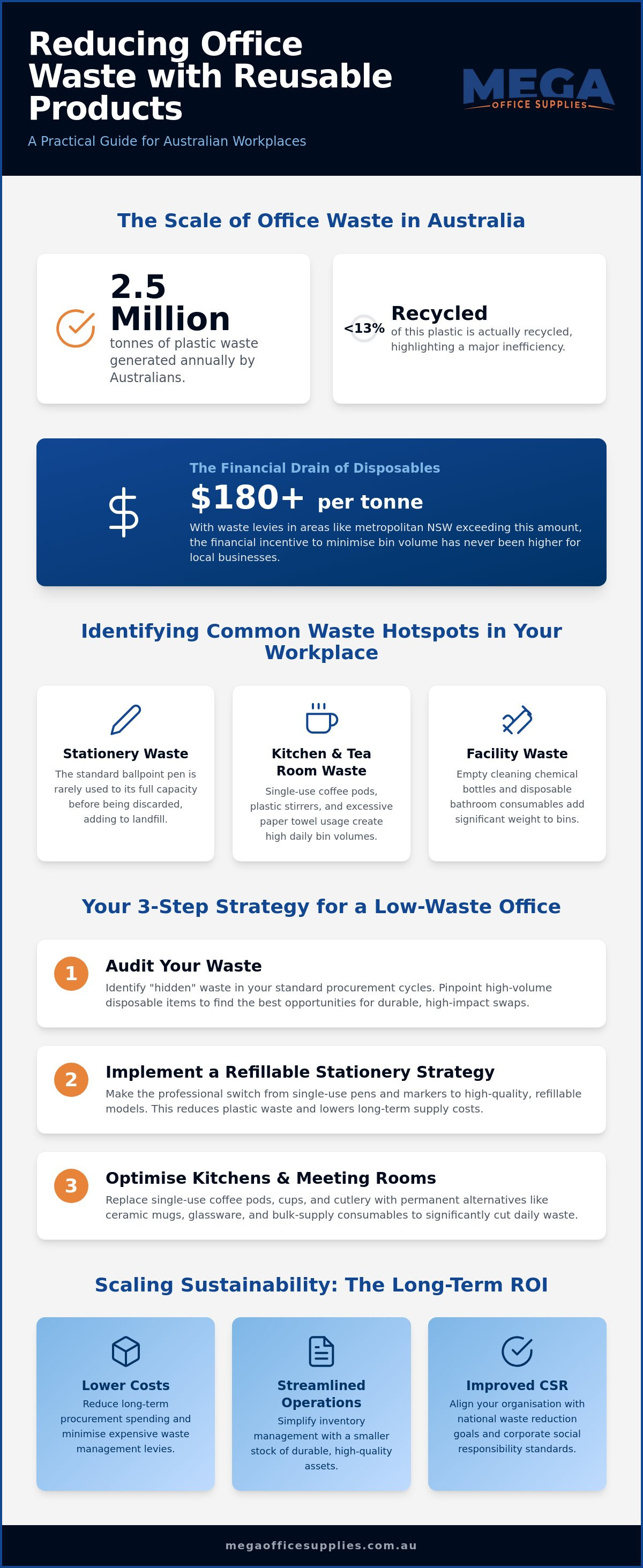
Australians generate approximately 2.5 million tonnes of plastic waste annually, but less than 13% of that volume is actually recycled. Most procurement officers and administrators feel the weight of this inefficiency every time the bins overflow with expensive, single-use supplies. If you're looking for a practical way to cut costs and improve sustainability, focus on reducing office waste with reusable products to streamline your workplace operations. With waste levies in metropolitan areas like New South Wales now exceeding $180 per tonne, the financial incentive to minimise bin volume has never been higher for local businesses.
We agree that the constant replacement of disposable items is a drain on both your budget and your storage space. This guide provides a clear, professional plan to transition your facility to a low-waste model using high-quality reusable stationery, kitchen, and facility essentials. You'll learn how to identify high-impact swaps that lower long-term procurement costs and create a cleaner, more organised work environment. We will cover everything from durable desk accessories to sustainable tea room supplies, ensuring your team has the tools they need without the unnecessary waste and logistical friction of single-use alternatives.
Key Takeaways
- Identify "hidden" waste in your standard procurement cycles to find high-impact opportunities for durable, long-term swaps.
- Implement a refillable stationery strategy by transitioning from disposable pens and markers to professional-grade refillable models.
- Optimise staff kitchens and meeting rooms by replacing single-use pods and cups with ceramic, glass, and bulk-supply alternatives.
- Follow a step-by-step audit process for reducing office waste with reusable products to establish a clear baseline for your workplace.
- Calculate the long-term ROI of higher-quality supplies that pay for themselves through reduced replacement frequency and lower waste levies.
Understanding the Impact of Office Waste in Australian Workplaces
Australian businesses are currently operating under a National Waste Policy Action Plan that aims to reduce total waste generation by 10% per person by 2030. With commercial waste contributing significantly to the 75.8 million tonnes generated annually across the country, professional environments are under increasing pressure to reform. Transitioning to a model focused on reducing office waste with reusable products isn't just an environmental choice; it's a logistical necessity for modern facility management.
Adopting Waste minimisation strategies allows organisations to align with corporate social responsibility (CSR) standards while addressing the "hidden" waste found in standard procurement cycles. This includes excess packaging and the sheer volume of single-use plastics that move through reception areas and staff rooms daily. Reducing these inputs simplifies your supply chain and ensures your workplace isn't contributing to the 2.5 million tonnes of plastic waste generated nationally each year.
To better understand how innovative solutions are changing the way we handle workplace materials, watch this video:
The True Cost of Single-Use Office Culture
Procurement officers often mistake low unit prices for value. However, the cumulative expense of "cheap" disposable stationery quickly outpaces the cost of durable, refillable alternatives. Beyond the invoice price, businesses face escalating waste management fees. In New South Wales, the metropolitan waste levy has reached $180.20 per tonne for the 2026-2027 financial year. Frequent bin collections and the administrative burden of high-volume re-ordering create a productivity drain that many administrators overlook. It's more efficient to manage a smaller inventory of high-quality assets than a constant stream of disposables.
Identifying Common Waste Streams in Professional Settings
Recognising where your waste originates is the first step toward reducing office waste with reusable products. Common streams include:
- Stationery waste: The standard ballpoint pen is rarely used to its full capacity before being discarded, ending its lifecycle in a landfill.
- Kitchen and tea room waste: Single-use coffee pods, plastic stirrers, and excessive paper towel usage contribute to high daily volumes.
- Facility waste: Empty cleaning chemical bottles and bathroom consumables represent a significant percentage of commercial bin weight.
By identifying these high-volume areas, you can implement targeted swaps that provide immediate relief to your facility's waste systems. Moving away from a disposable mindset requires a focus on durability and manual precision, ensuring every item in your office serves a long-term purpose.
Implementing a Refillable Stationery Strategy
Shifting from a disposable mindset to a professional procurement strategy requires more than just buying in bulk. It involves a fundamental change in how your organisation selects and manages its hardware. By following sustainable procurement guidelines, administrators can move beyond the "buy and discard" cycle. This approach focuses on reducing office waste with reusable products by prioritising items designed for long-term service. It's about hardware longevity. When you invest in refillable systems, you're not just cutting down on plastic; you're streamlining your entire inventory management process.
From Disposable to Refillable Pens
Professional-grade refillable pens represent a superior long-term investment for any high-volume environment. Standard ballpoint pens are often treated as temporary tools, leading to significant plastic waste and inconsistent stock levels. Transitioning to refillable models encourages staff to retain their instruments, which fosters a culture of accountability. You'll need to manage refill stock for various pen types across the organisation. This is simplified by standardising your choices. By selecting a few core models, you reduce the logistical friction of managing incompatible refills and ensure your team always has a functional writing tool.
Reusable Filing and Storage Solutions
Durability is the primary factor when choosing filing hardware. Heavy-duty lever arch files offer far greater longevity than flimsy cardboard folders, especially in warehouses or reception areas where documents are accessed frequently. Use plastic sheet protectors and high-capacity binders that can be repurposed across multiple projects once a specific task is archived. Moving away from adhesive notes toward reusable desktop organisers or digital tools further reduces paper clutter. This transition ensures your office remains tidy and functional while minimising the constant churn of short-term supplies.
The strategy extends to technical equipment as well. Refillable whiteboard markers are essential for classrooms and meeting rooms, where standard markers are often thrown away while the barrel is still perfectly functional. Similarly, managing toner and ink cartridges through closed-loop recycling programmes ensures that these complex components don't end up in landfill. Many manufacturers now provide dedicated collection points for spent cartridges. Integrating these habits into your daily operations is a practical way of reducing office waste with reusable products while maintaining professional standards.
Standardising your stationery inventory helps minimise redundant stock and excess packaging. When everyone uses the same high-quality systems, procurement becomes predictable. For organisations looking to upgrade their current inventory, viewing our range of office stationery provides a clear path toward a more sustainable and efficient workplace.
Transitioning the Staff Kitchen and Facility Supplies
The shared kitchen and facility maintenance areas are often the highest sources of daily waste in an Australian workplace. While stationery reform addresses individual habits, kitchen and facility transitions require a structural change in procurement. Focus your efforts on high-traffic zones where single-use items accumulate rapidly. Reducing office waste with reusable products in these areas provides immediate, visible results for your team and significantly lowers your weekly bin volume. It's a matter of choosing professional-grade hardware that withstands the rigours of a busy commercial environment.
This commitment to professional-grade solutions should also extend to your choice of external vendors.
Eliminating Single-Use Kitchen Consumables
Individual coffee pods and stirrers create a massive amount of non-recyclable waste. Setting up a professional coffee and tea supply station that utilises bulk-brewing systems or reusable pod alternatives is a more efficient approach. This setup avoids the excess packaging associated with individual serves. In meeting rooms, replace paper cups with ceramic mugs and glass carafes. This simple switch improves the professional presentation of your business while eliminating hundreds of disposable items each month. Providing stainless steel cutlery and reusable plates for staff lunches further reduces the need for plastic alternatives that often end up in landfill. Filtered water stations also remove the logistical burden of managing large volumes of plastic bottle waste.
Sustainable Cleaning and Facility Management
Facility managers can achieve significant waste reduction by auditing how they procure and use janitorial supplies. Buying cleaning chemicals in concentrated bulk formats allows you to refill smaller, durable spray bottles repeatedly. This reduces the number of plastic containers entering your waste stream and lowers the unit cost of the chemicals themselves. Implementing microfibre cleaning systems is another practical step. These high-absorbency cloths can be laundered and reused hundreds of times, making them a superior choice to disposable paper towels.
Bathroom and kitchen waste can be further minimised by choosing high-capacity dispensers for soap and hand sanitiser. These systems reduce the frequency of packaging disposal and ensure a consistent supply for your staff. When reducing office waste with reusable products, durability is key. Opt for high-quality tea towels and microfibre cloths that maintain their performance after multiple wash cycles. This transition ensures your facility remains hygienic and well-maintained while adhering to a low-waste model that prioritises longevity over convenience. Professional procurement in these sectors is about finding the balance between high-volume demand and environmental accountability.
A Step-by-Step Guide to Auditing Your Office Waste
A successful transition to a low-waste model is built on data, not guesswork. Before implementing the stationery and kitchen swaps discussed in previous sections, you must establish a baseline. Conducting a waste assessment over a standard five-day business week provides a representative sample of your workplace's output. This process is essential for reducing office waste with reusable products because it highlights exactly where your procurement budget is being discarded. By categorising your findings into 'avoidable', 'recyclable', and 'landfill', you can identify the top three procurement categories that are bloating your bin volume and waste management costs.
Identifying these high-volume streams allows you to set realistic reduction targets for the next financial year. It's often more effective to target one or two major waste sources than to attempt a total overhaul overnight. Once you have identified the primary offenders, you can begin the process of sourcing durable, long-term replacements that align with your professional standards. This logical, tiered approach ensures that your sustainability efforts are both measurable and financially sound.
Conducting a Workplace Waste Audit
Safety is paramount during an audit. Use appropriate PPE and inspect office bins at the end of each day to identify frequent offenders like single-use coffee cups, discarded pens, or excessive paper towels. Don't overlook your cleaning staff; they possess unique insight into waste patterns and can provide feedback on which bins fill the fastest. Record these observations in a simple spreadsheet to track the volume and weight of different waste types. This data provides the evidence needed to justify the initial investment in high-quality reusables to stakeholders and department heads.
Establishing a Procurement Policy for Reusables
Updating your internal procurement policy ensures that the gains made during your audit become permanent. You should update your business application form preferences to prioritise bulk-buy options and reusable items over short-term disposables. Establishing 'reusable-first' criteria for all new orders prevents the re-entry of single-use products into your supply chain. It's also worth working with suppliers who offer national delivery and consolidated shipping to reduce the secondary packaging waste associated with multiple small deliveries.
Once these policies are in place, communicate the changes clearly to your staff. High adoption rates depend on the team understanding why these professional standards are being implemented. Clear signage in kitchens and stationery cupboards helps reinforce the new system. To start implementing the findings from your workplace audit, explore our range of commercial facility supplies to find the durable, professional-grade hardware your office requires.
Scaling Sustainability: Long-Term Benefits for Australian Businesses
Adopting a strategic approach to sustainability is a long-term play that yields significant dividends for your operational bottom line. Reducing office waste with reusable products is a decision that pays for itself through a clear return on investment. Once the initial outlay for durable hardware is recovered, your ongoing procurement costs for consumables drop dramatically. This financial stability is a primary driver for administrators who value efficiency over the constant churn of low-quality disposables.
Beyond the balance sheet, an authentic commitment to sustainability enhances your brand reputation. Modern clients, partners, and employees are increasingly discerning about environmental accountability. Demonstrating a workplace that prioritises longevity over convenience projects a sense of stability and forward-thinking leadership. High-quality, durable products also improve workplace organisation and aesthetics. A reception area or boardroom equipped with glass carafes and professional-grade binders looks far more polished than one cluttered with single-use plastics and flimsy cardboard folders. It creates a cleaner, more disciplined environment that reflects the standards of your business.
Financial Advantages of Bulk Procurement
Bulk purchasing is a critical component of a low-waste strategy. By moving away from reactive, small-scale buying, you can significantly reduce the unit cost of essential office supplies. Consolidating your orders allows you to minimise the frequency of delivery fees and reduces the carbon footprint associated with your logistics chain. There is also a substantial administrative benefit to this approach. Processing fewer, larger invoices reduces the overhead of your accounts department and simplifies inventory tracking. It's a more utilitarian way to manage high-volume demands without the friction of constant re-ordering.
Partnering with a National Australian Supplier
Managing a national supply chain requires a partner that understands the specific needs of the Australian market. Mega Office Supplies provides the regional expertise and logistical prowess needed to support businesses, schools, and government departments across the country. Our team brings decades of combined industry experience to every partnership, ensuring you receive reliable advice on selecting the right reusables for your sector. We provide the consistency required for Government official purchase orders and large-scale corporate contracts.
Leveraging a single, high-capacity provider allows you to source everything from ergonomic furniture to kitchen essentials through one reliable channel. This level of integration is essential for reducing office waste with reusable products at scale. It ensures that your sustainability goals are met with professional-grade hardware that is built to last. By choosing a partner that values longevity and functional clarity, you can transition your workplace to a low-waste model that is both sustainable and highly efficient.
Future-Proofing Your Workplace Procurement
Transitioning to a low-waste model is a strategic operational shift that relies on data-driven audits and the selection of professional-grade hardware. By reducing office waste with reusable products, you eliminate the constant churn of disposables and simplify your inventory management. These changes foster a more organised environment while addressing escalating waste levies and administrative overhead. It's about building a facility that values durability over the temporary convenience of single-use items.
As an Australian business that's been family owned and operated since 2008, we provide the regional expertise and logistical support needed to scale your sustainability efforts. Our team ensures consistent supply and national delivery across all sectors, from government departments to local schools. We are here to help you navigate the practicalities of workplace maintenance with reliability and transparency.
Streamline your workplace with Mega Office Supplies' range of durable and reusable products. Start your transition today to build a more resilient and professional facility.
Frequently Asked Questions
What are the most common sources of waste in an Australian office?
Single-use stationery, kitchen consumables, and facility packaging represent the largest waste volumes in most professional settings. Specifically, items like disposable pens, coffee pods, and paper towels are high-frequency offenders that fill bins rapidly. Packaging from frequent, small-scale procurement orders also contributes significantly to a workplace's total waste output.
Is it really cheaper to buy refillable pens for a large office?
Yes, the long-term unit cost of refills is lower than replacing the entire pen barrel every time the ink runs out. While the initial investment for professional-grade hardware is higher, the ROI is realised quickly in high-volume environments. This shift reduces replacement frequency and can help lower waste disposal levies for the organisation.
How can we encourage staff to switch from single-use to reusable products?
Clear communication regarding the professional benefits and environmental impact is essential for high adoption rates. Providing high-quality, durable alternatives that perform better than disposables naturally encourages staff to make the switch. Implementing a "reusable-first" procurement policy ensures these items are the default choice in stationery cupboards and staff kitchens.
What should I look for in a professional waste audit?
A professional audit should focus on identifying avoidable waste streams and quantifying the volume of specific procurement categories. It's important to track the weight and type of waste generated over a standard five-day business week. Feedback from cleaning staff is also invaluable as they possess unique insight into which bins reach capacity most frequently.
Can reusable cleaning products meet workplace health and safety standards?
Yes, provided they are managed with a structured laundering and maintenance schedule. Microfibre cloths and mop heads are highly effective at removing contaminants and can be laundered at high temperatures to meet hygiene standards. Reducing office waste with reusable products like bulk-dispensed chemicals in labelled, durable bottles also maintains safety compliance while minimising plastic waste.
How does bulk buying help in reducing office waste?
Bulk buying reduces the total volume of secondary packaging, such as individual plastic wraps and small cardboard boxes. It also minimises the number of deliveries required, which lowers the logistical waste and administrative overhead associated with transport and invoicing. For facility managers, bulk-dispensed soaps and cleaners are far more efficient than managing hundreds of individual bottles.
What is the best way to manage toner cartridge recycling in Australia?
Utilise established closed-loop recycling programmes provided by manufacturers or national collection schemes. Many major brands offer collection boxes for spent cartridges to ensure these complex components are diverted from landfill. Managing these materials correctly is a critical part of reducing office waste with reusable products and maintaining a professional facility.
Are there specific office products that should never be single-use?
Items with high-frequency usage and low durability should be replaced with permanent alternatives immediately. This includes whiteboard markers, coffee stirrers, and basic cardboard filing folders. Lever arch files and refillable markers are standard professional requirements that offer much better value and functional clarity than their disposable counterparts.
Article by
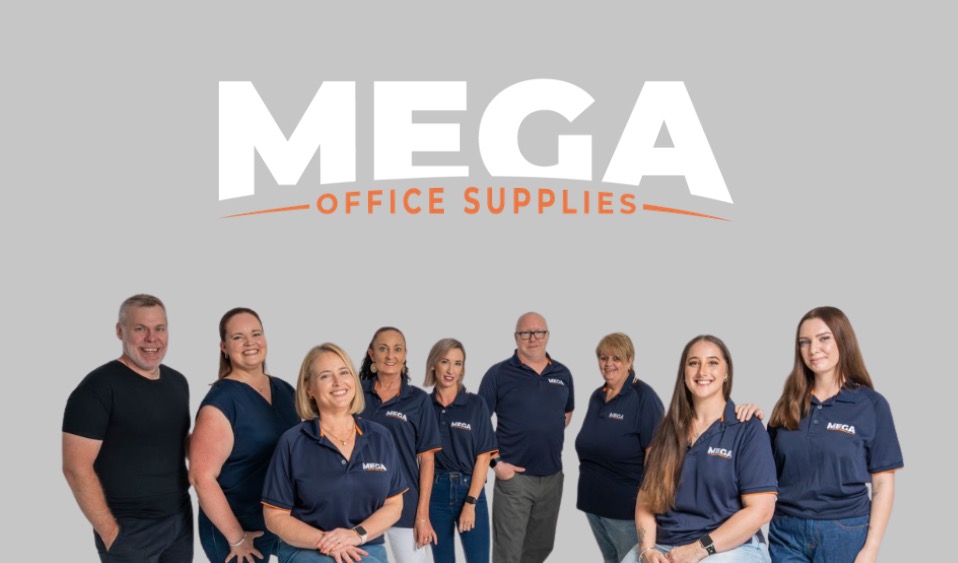
Mega Office Supplies Team
The Mega Office Supplies Team provides practical guidance for Australian businesses, schools, government organisations, healthcare providers, hospitality venues, warehouses and home offices. Based in Tweed Heads South, Mega Office Supplies is an Australian business, family owned and operated since 2008, offering office stationery, workplace furniture, technology products, labels, printers, cleaning and janitorial supplies, safety products, art materials, education resources and everyday business essentials from trusted brands.
General Information
This article is provided as general information only to help customers compare and choose office, workplace, school, cleaning, technology, furniture, safety and business supplies. Product details, specifications, compatibility, availability, pricing and suitability may vary. Always check the individual product page, manufacturer information, workplace requirements and relevant safety guidance before purchasing or using a product.


