


Did you know that 43% of all reported cybercrime in Australia now targets small businesses, with the average incident costing $46,000? While digital threats often take the spotlight, physical document security remains a critical vulnerability for local firms. Finding the best paper shredder for small business Australia is no longer just about clearing desk clutter; it's about protecting your operation from significant financial and reputational risk.
You've likely dealt with the frustration of frequent paper jams or noise levels that disrupt your entire team. We understand that you need a machine that handles staples and credit cards without breaking, while meeting the rigorous demands of a professional office. This guide will help you master the technical specifications and security standards required to select a reliable machine that ensures full regulatory compliance.
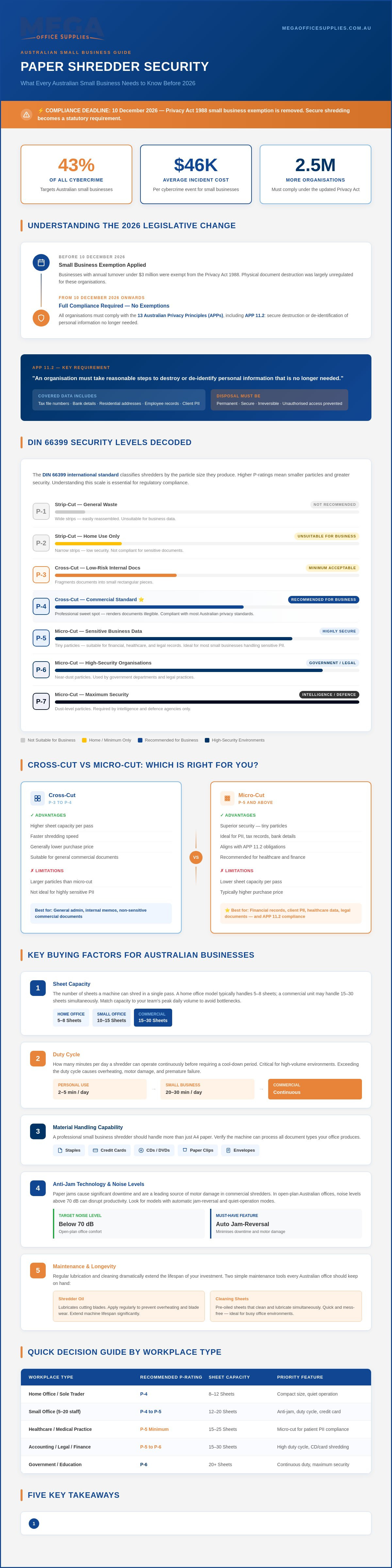
With the removal of the small business exemption from the Privacy Act 1988 on 10 December 2026, your data disposal methods must now align with the 13 Australian Privacy Principles. We'll preview the essential P-ratings, duty cycles, and sheet capacities needed to keep your organisation secure and productive through 2026 and beyond.
Key Takeaways
- Understand how the 2026 removal of the small business exemption from the Privacy Act 1988 makes secure document destruction a legal necessity for your organisation.
- Learn to decode P-ratings and security levels to determine why micro-cut technology is often the superior choice for protecting sensitive Australian business data.
- Identify the critical difference between sheet capacity and duty cycles to ensure you select the best paper shredder for small business Australia that matches your daily volume.
- Discover essential features like anti-jam sensors and noise reduction levels that minimise downtime and protect the acoustic comfort of open-plan offices.
- Master simple maintenance routines, such as using shredder oil and cleaning sheets, to maximise the lifespan and reliability of your hardware investment.
Why Data Security is Non-Negotiable for Australian Small Businesses
Australian small businesses are entering a new era of accountability. From 10 December 2026, the long-standing exemption for businesses with an annual turnover of less than $3 million will be removed from the Privacy Act 1988. This legislative shift means approximately 2.5 million additional organisations must now comply with the 13 Australian Privacy Principles (APPs). Secure disposal of physical records is no longer just a recommendation; it's a statutory requirement for any firm handling sensitive information.
Selecting the best paper shredder for small business Australia involves moving beyond basic retail models. A professional Paper shredder provides the durability and security ratings required to meet these new standards. While a home-office machine might suffice for occasional letters, a commercial-grade unit is designed for the high-volume throughput and sensitive data handling typical of contemporary Australian workplaces.
To better understand the practical applications of shredding technology in a professional setting, watch this helpful video:
Compliance and the Australian Privacy Principles
Under APP 11.2, an organisation must take reasonable steps to destroy or de-identify personal information that is no longer needed. This includes Personal Identifiable Information (PII) such as employee tax file numbers, client bank details, and residential addresses. The Australian Privacy Principles require that document disposal is permanent and secure, ensuring that data cannot be reconstructed or accessed by unauthorised parties. While external services exist, in-house destruction using professional office technology eliminates the risk of data breaches during transport or storage.
The Cost of Identity Theft in the Australian Workplace
Decoding Shredder Security Levels: Cross-Cut vs Micro-Cut
Security levels aren't just technical jargon; they're the foundation of your organisation's data protection strategy. When searching for the best paper shredder for small business Australia, you'll encounter the DIN 66399 standard. This international benchmark categorises machines by the size of the waste particles they produce. For most local firms, moving beyond basic strip-cut models is essential to meet the expectations outlined in the Small business cyber security guide provided by the Australian Cyber Security Centre.
The DIN 66399 Standard Explained
The "P" in P-ratings specifically denotes paper-based media. Ratings range from P-1 to P-7, with higher numbers indicating smaller particles and greater security. P-1 and P-2 models use strip-cutting, which is generally unsuitable for sensitive business data as the strips can be easily reassembled. P-4 represents the professional sweet spot for general commercial documentation. It uses a cross-cut mechanism that renders documents illegible and compliant with most privacy standards. If your organisation operates in high-security government, medical, or legal sectors, upgrading to P-5 or higher micro-cut machines provides the necessary protection for highly confidential files.
Cross-Cut vs Micro-Cut: A Practical Comparison
A standard P-4 cross-cut machine typically reduces a single A4 sheet into roughly 400 particles. In contrast, a P-5 micro-cut machine produces upwards of 2,000 particles from that same sheet. This difference is significant for two reasons. First, security; micro-cut particles are virtually impossible to reconstruct even with advanced forensic tools. Second, bin efficiency; smaller particles compact much more densely. This means you won't need to empty the waste bin as frequently, which improves office productivity and reduces the time staff spend on maintenance tasks.
While higher security is always better for data protection, it often involves a trade-off in shredding speed and sheet capacity. Micro-cut machines generally process fewer sheets per pass compared to their cross-cut counterparts due to the precision required. You must balance the sensitivity of your records against your daily volume requirements. For most local offices, a P-4 rated machine offers the ideal mix of speed, security, and value for money. If you're ready to upgrade your facility's security, you can browse our range of professional shredding solutions to find a model that fits your specific workflow.
Assessing Volume and Capacity for Your Workplace
One of the most common frustrations in Australian offices is a machine that stops mid-task. Selecting the best paper shredder for small business Australia requires a clear understanding of the difference between sheet capacity and daily throughput. While sheet capacity tells you how many pages the machine can process in a single pass, throughput defines the total volume it can handle over an entire workday. A machine that handles 20 sheets at once but requires a 45-minute rest after five minutes of use will quickly become a bottleneck in a busy environment.
Bin volume is another critical factor for office productivity. Measured in litres, the bin size should correlate with the number of users and the cut type. As established in previous sections, micro-cut particles compact more efficiently than cross-cut waste. For a small team of one to three people, a 25-litre bin is usually sufficient. Larger organisations or departments with high disposal needs, such as healthcare clinics or legal firms, should look for 50 to 80-litre capacities to minimise the frequency of emptying the waste.
Calculating Your Daily Shredding Demand
Every department has different requirements. Your accounts team likely generates a high volume of sensitive financial statements at the end of the month, while a reception desk might only shred a few documents daily. You should match your machine specifications to these peak load times rather than your average daily use. If you are currently organising your archive boxes for annual shredding, an auto-feed model is often the most efficient choice. These units allow staff to stack hundreds of sheets in a tray and walk away, leaving the machine to process the stack automatically while they return to more productive tasks.
Understanding Motor Durability and Duty Cycles
The duty cycle is the amount of time a shredder can operate continuously before the motor needs to cool down. Entry-level machines often have short duty cycles of 5 to 10 minutes. In contrast, professional-grade models designed for Australian warehouses or large government departments often feature "continuous run" motors. These heavy-duty motors use internal cooling systems to prevent thermal cut-outs, which is essential when clearing out years of legacy files. To extend the longevity of your hardware, avoid consistently pushing the machine to its thermal limit. If you find your team is frequently waiting for the machine to reset, it's a clear sign that your current hardware doesn't match your organisational volume. Choosing a model with a duty cycle that exceeds your heaviest shredding sessions ensures a smoother, more reliable workflow.
Essential Features for a Productive Office Environment
Modern office hardware must do more than just function; it has to integrate seamlessly into a high-pressure workflow. When identifying the best paper shredder for small business Australia, you'll find that secondary features like sensor-based jam prevention and acoustic engineering often provide the greatest long-term value. These technologies don't just protect the machinery; they safeguard your team's time and focus by minimising the disruptions common with entry-level consumer models.
Productivity Boosters: Jam Prevention and Speed
Paper jams are a primary cause of office downtime. Professional-grade machines now utilise advanced sensors to detect paper thickness at the entry point, preventing over-insertion before the shredding cycle even begins. If the stack is too thick, the machine simply won't start, which eliminates the risk of forced jams that can damage internal gears. High-efficiency models typically achieve a shred speed of approximately 3 to 5 metres per minute, allowing users to process large batches of documentation rapidly. Should a minor misalignment occur, manual reverse functions allow staff to clear the path without technical assistance, keeping the office moving during peak periods.
Acoustics and Safety in the Modern Australian Office
The acoustic environment of an open-plan office or reception area is sensitive. While older machines often produced noise levels exceeding 75 decibels (dB), modern "quiet" models operate in the 55 to 60 dB range, roughly equivalent to a normal conversation. This reduction is vital for maintaining a professional atmosphere in shared workspaces. Safety is equally paramount, particularly in high-traffic areas. Technologies like SafeSense use electronic sensors to shut off the motor immediately if hands touch the paper opening, providing peace of mind for administrators and business owners alike. For the best results, consider your ergonomic office furniture and machinery placement to ensure these units are accessible without creating noise traps or safety hazards.
Energy efficiency is the final pillar of a modern facility. Professional machines now include sophisticated "sleep mode" functions that reduce power consumption to near-zero when the unit is idle. This doesn't just lower your organisation's utility costs; it extends the lifespan of the electronic components by preventing unnecessary heat build-up. If you're looking to equip your workspace with reliable, high-performance hardware, you can view our range of professional office shredders to find the perfect fit for your office layout.
Procuring the Right Shredding Solution for Your Organisation
Procurement for Australian organisations requires a focus on long-term reliability. Buying the best paper shredder for small business Australia from a specialised domestic retailer ensures you have access to technical support and replacement consumables when you need them. Faceless global marketplaces often lack the regional expertise required to help you navigate specific compliance standards or provide prompt warranty assistance within your time zone. A dependable partner understands that office hardware is a critical infrastructure component, not a disposable commodity.
Longevity and Maintenance Best Practices
Regular maintenance is the only way to protect your investment and ensure consistent performance. Shredder blades are precision instruments that require lubrication to reduce friction and heat buildup. You should oil your machine every time you empty the waste bin or at least twice a month for high-volume units in schools or warehouses. If your bin-full sensor fails to trigger, it's often due to paper dust obscuring the infrared eye; a quick wipe with a dry cloth usually restores function. At Mega Office Supplies, we act as a consistent partner for your office technology and consumables, ensuring you always have the right maintenance kits on hand to prevent downtime.
Simplifying Business Procurement
Managing multiple vendors for workplace supplies is inefficient for busy administrators. Many Australian procurement officers find that applying for a business account simplifies the process through consolidated invoicing and rapid quoting for bulk orders. This allows you to bundle your shredder acquisition with other stationery essentials, reducing logistical friction and shipping costs across your entire organisation.
Before finalising your selection, use this final checklist to ensure the model matches your specific sector needs:
- Security Compliance: Does the P-rating meet the 2026 Privacy Act requirements for your specific data type?
- Performance: Is the duty cycle sufficient for your peak monthly volume without triggering thermal cut-outs?
- Capacity: Does the bin volume and sheet capacity match your staff numbers and workflow speed?
- Support: Is the unit backed by a local warranty and a supplier with a history of regional service?
Choosing the right machine involves balancing these technical specifications with the reliability of your supplier. By focusing on professional-grade hardware and consistent maintenance, you ensure your organisation remains secure and compliant for years to come. If you need assistance selecting a model that fits your specific floor plan or volume requirements, our team is available to provide direct, expert guidance.
Future-Proof Your Organisation with Professional Data Destruction
Transitioning to a secure workplace requires more than just a piece of equipment; it demands a strategic investment in compliance and efficiency. You now understand how to navigate P-ratings to meet the December 2026 Privacy Act standards and how to match a machine's duty cycle to your team's specific volume requirements. Maintaining your hardware with regular oiling will ensure these professional-grade units serve your organisation for years to come.
Selecting the best paper shredder for small business Australia is a critical step in a broader security strategy. As an Australian owned and operated company with over 20 years of combined industry experience, we understand the unique logistical needs of local workplaces. We provide national delivery on all office equipment to ensure your team remains productive and protected regardless of your location. Browse our full range of professional paper shredders at Mega Office Supplies to secure your office today. We look forward to helping you build a more resilient and compliant workplace.
Frequently Asked Questions
What is the difference between a cross-cut and a micro-cut shredder for business use?
Micro-cut shredders produce significantly smaller particles than cross-cut models. While a cross-cut (P-4) machine turns an A4 page into roughly 400 pieces, a micro-cut (P-5 or higher) unit creates over 2,000 fragments. This higher density makes it nearly impossible to reconstruct sensitive documents. Micro-cut waste also compacts more tightly in the bin, which means you'll spend less time emptying it during a busy workday in your Australian office.
Does my small business really need a P-4 rated shredder by law in Australia?
Using a P-4 rated shredder is the effective minimum for meeting the "reasonable steps" requirement for secure document destruction under the Australian Privacy Principles. From 10 December 2026, small businesses must comply with the Privacy Act 1988, which necessitates permanent and secure disposal of sensitive data. P-1 or P-2 strip-cut models are generally insufficient for professional compliance as the resulting strips can be easily reassembled by unauthorised parties.
Can modern office shredders handle staples, paper clips, and credit cards?
Most commercial-grade shredders are designed to process standard staples and small paper clips without damaging the cutting cylinders. Professional models often include dedicated slots or heavy-duty blades specifically for destroying expired corporate credit cards and optical media like legacy backup CDs. You should always verify the specific model specifications before insertion, as pushing a machine beyond its rated material capacity can lead to premature wear or mechanical failure.
How long is a typical duty cycle for a commercial-grade paper shredder?
A commercial-grade machine typically offers a duty cycle ranging from 20 minutes to continuous operation. In contrast, entry-level home models often shut down after just 5 minutes of use to prevent motor damage. When searching for the best paper shredder for small business Australia, look for "continuous run" motors if your organisation regularly clears out large volumes of archive boxes or legacy files to avoid frustrating cooling interruptions during peak periods.
How often should I oil my paper shredder to prevent jams and noise?
You should oil your shredder blades every time the waste bin is emptied or at least twice per month for moderate usage. Regular lubrication reduces friction between the cutting heads, which prevents paper jams and significantly lowers operational noise in open-plan offices. You can use specialised shredder oil or lubricant sheets to maintain the machinery. Neglecting this simple maintenance task can lead to decreased sheet capacity and may eventually void your manufacturer's warranty.
What should I do if my shredder stops working due to overheating?
Turn the machine off at the power point and allow it to cool down for the period specified in your user manual, which is usually between 30 and 60 minutes. Most professional shredders include a thermal overload protection sensor that automatically cuts power to the motor to prevent permanent damage. Once the cooling period ends, the "overheat" indicator light will typically turn off, and you can resume shredding at a slightly reduced volume to prevent a recurrence.
Are auto-feed shredders better than manual-feed models for small offices?
Auto-feed models are superior for offices where staff need to destroy large stacks of paper without standing over the machine. These units allow you to load hundreds of sheets into a tray, which the shredder then processes automatically while you return to other tasks. Manual-feed models are better suited for reception areas or desks where documents are destroyed as they are generated. Choosing the right model depends on whether your workflow involves batch processing or immediate disposal.
Where can I find a reliable Australian supplier for bulk office machinery?
Mega Office Supplies is a dependable Australian owned and operated retailer providing a comprehensive range of professional office technology and workplace essentials. With over 20 years of combined industry experience, our team provides expert guidance and national delivery for all your procurement needs. We support various sectors by offering high-capacity hardware and consistent maintenance supplies to keep your organisation secure and compliant with local privacy regulations.
Article by
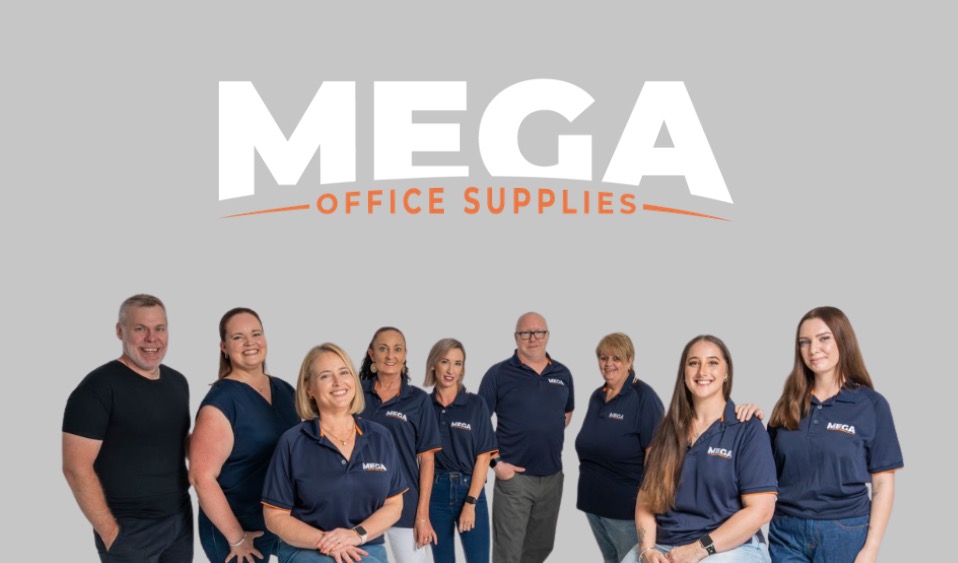
Mega Office Supplies Team
The Mega Office Supplies Team provides practical guidance for Australian businesses, schools, government organisations, healthcare providers, hospitality venues, warehouses and home offices. Based in Tweed Heads South, Mega Office Supplies is a family-owned and operated Australian business offering office stationery, workplace furniture, technology products, labels, printers, cleaning and janitorial supplies, safety products, art materials, education resources and everyday business essentials from trusted brands.
General Information
This article is provided as general information only to help customers compare and choose office, workplace, school, cleaning, technology, furniture, safety and business supplies. Product details, specifications, compatibility, availability, pricing and suitability may vary. Always check the individual product page, manufacturer information, workplace requirements and relevant safety guidance before purchasing or using a product.


