


Your most expensive office asset isn't the hardware on the desk, but the ergonomic chair supporting your staff for over 2,000 hours each year. Most businesses only notice their seating when a gas lift sinks unexpectedly or a caster damages the floor, but reactive repairs are often more costly than simple prevention. We agree that maintaining a professional environment shouldn't be a constant source of frustration or unexpected expense. This office chair maintenance guide provides a structured framework to help you protect your furniture investment and ensure staff comfort.
By implementing a proactive care routine, you can significantly extend the life of your equipment and improve workplace OHS compliance. You will learn which cleaning agents are safe for specific textiles, how to align with BIFMA X10.1-2024 ergonomic standards, and how to establish a clear schedule for regular chair checks. We provide practical, utilitarian advice that keeps your workplace seating in professional-grade condition for years to come.
Key Takeaways
- Understand why a systematic approach to chair care is essential for maintaining OHS compliance and long-term staff productivity in any professional Australian workplace.
- Identify the specific toolkit required for professional upkeep, ranging from pH-neutral cleaning agents for upholstery to silicone-based lubricants for mechanical components.
- Follow this office chair maintenance guide to perform critical structural checks on armrests, backrests, and gas lifts to prevent unexpected equipment failure.
- Learn material-specific techniques for cleaning mesh, fabric, and leather to preserve the aesthetic and functional integrity of your furniture investment.
- Discover how to implement a 'Seating Registry' and a quarterly audit schedule to efficiently track and manage the condition of seating across different office zones.
Why Regular Office Chair Maintenance is a Workplace Necessity
Effective office chair maintenance is more than a reactionary response to a squeaky wheel. It is a systematic approach to cleaning and mechanical safety that ensures every component functions as the manufacturer intended. For Australian businesses, maintaining ergonomic office chairs is directly linked to staff productivity. When a chair provides consistent, stable support, employees can focus on their tasks without the physical distraction of a tilting seat or a sinking gas lift. Neglecting these assets often leads to a decline in workplace morale and an increase in avoidable replacement costs.
To better understand the mechanics behind common seating issues, watch this helpful video on addressing gas lift failures:
OHS and Workplace Safety Standards
Australian employers have a clear "Duty of Care" to provide a safe and functional work environment. Seating is a central part of this obligation. Neglecting your office chair maintenance guide protocols can lead to serious risks. Loose bolts or failing gas lifts aren't just minor annoyances; they are potential catalysts for workplace injury claims. A chair that collapses or tips due to a compromised base can result in musculoskeletal injuries. High-use environments, such as call centres or government departments, require rigorous stability checks. Integrating these inspections into your annual workplace safety audit ensures that structural integrity is never overlooked and that your organisation remains compliant with current safety standards.
Protecting Your Furniture Investment
Procurement officers often focus on the initial cost of furniture, but the real value lies in its longevity. Routine care can extend the lifespan of professional seating by three to five years, significantly improving your return on investment. Many premium chairs include complex ergonomic features of office chairs that require specific maintenance to honour original manufacturer warranties. Beyond the balance sheet, the aesthetic condition of your seating reflects your organisation's standards. Stained fabric or cracked leather can undermine a professional atmosphere during client meetings or recruitment interviews. By following a structured maintenance framework, you preserve both the mechanical function and the visual appeal of your workplace assets.
The Maintenance Toolkit: Essential Supplies for the Office
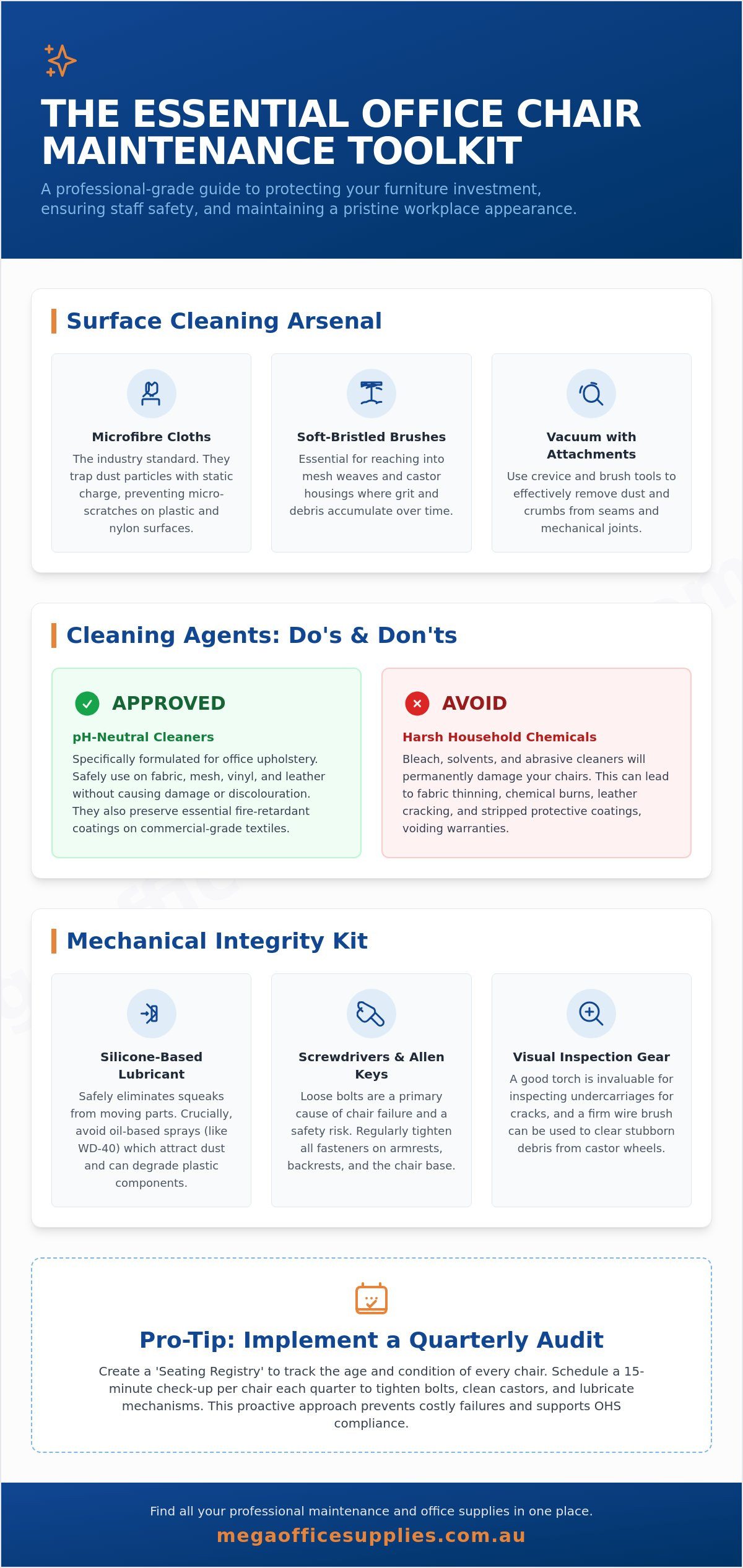
To execute a professional-grade maintenance routine, you need more than just a damp cloth. A comprehensive office chair maintenance guide requires a curated set of supplies designed to protect sensitive materials while ensuring mechanical longevity. Many businesses make the mistake of using generic household sprays, but using the wrong cleaning chemicals can lead to permanent upholstery damage. This includes fabric thinning, chemical burns on synthetic materials, or premature leather cracking. Having the right tools on hand ensures that maintenance is performed correctly the first time.
Surface Cleaning Arsenal
Microfibre cloths are the industry standard for professional facilities management. They trap dust particles through static charge rather than just pushing them around, which prevents micro-scratches on plastic armrests and nylon bases. For mesh chairs, use soft-bristled brushes to reach into the weave and castor housings where grit accumulates over time. It's vital to avoid harsh bleach or solvent-based cleaners at all costs. These aggressive chemicals often strip the fire-retardant coatings from commercial fabrics and can permanently discolour premium plastic components. This makes the furniture look aged and neglected long before its actual service life has ended.
Mechanical Maintenance Supplies
Mechanical integrity is just as vital as surface cleanliness. Most modern office seating uses 5mm Allen keys and standard Phillips-head screwdrivers for structural adjustments and tightening. Keep a dedicated toolkit in the facility manager’s cupboard to ensure these tools are always on hand for quarterly checks. When it comes to lubrication, selecting the right product is critical for a quiet, functional office. Dry silicone spray is the preferred choice for indoor environments because it provides smooth movement for gas lifts and tilt mechanisms without leaving an oily residue. Standard lubricants like WD-40 are often too "wet" for internal office use. They can lead to a build-up of grime and hair that eventually jams the mechanism, causing the very squeaks you're trying to fix.
Maintaining workplace chair ergonomics and safety also involves managing hidden allergens that accumulate in high-traffic zones. High-filtration vacuums equipped with HEPA filters are essential for removing deep-seated dust, skin cells, and microscopic debris from fabric and mesh. During intensive deep cleaning sessions, provide staff with basic safety gear like nitrile gloves and masks to minimise exposure to disturbed dust and cleaning vapours. If your current supplies are running low, you can find a broad range of professional-grade cleaning supplies to restock your maintenance cupboard and keep your workspace healthy.
Material-Specific Care: From Mesh to Premium Leather
Your choice of upholstery dictates your cleaning frequency and method. A one-size-fits-all approach often leads to premature wear or permanent damage to specialised surfaces. This office chair maintenance guide prioritises material-specific protocols to ensure that each component of your office furniture retains its structural and aesthetic integrity. While the frames are typically robust, the surfaces in direct contact with the user require the most consistent attention to prevent the accumulation of oils, dust, and debris.
Revitalising Fabric and Mesh
Fabric seats act as filters for dust and skin cells. Vacuum these surfaces weekly using a high-filtration vacuum to prevent particles from settling deep into the foam. If a spill occurs, follow the "Blot, Don't Rub" rule. Using a circular rubbing motion on fabric often damages the individual fibres; this leads to unsightly pilling and permanent thinning of the material. Instead, use a clean microfibre cloth to pull the liquid upward. For mesh chairs, the challenge is deep-seated dust trapped within the weave. Use a canister of compressed air to blow out debris from the pores before vacuuming. This prevents "clogging" the mesh, which can reduce the breathability and cooling benefits of the chair. Address common office stains like coffee or ink from pens immediately with a mild, pH-neutral detergent to prevent the pigment from setting.
Leather Conditioning for the Australian Climate
The Australian climate presents unique challenges for executive seating. Harsh sun exposure and the dry, constant airflow from office air-conditioning systems sap moisture from leather and vinyl. This leads to brittle surfaces that eventually crack or peel. To combat this, implement a strict six-month conditioning rule. Applying a professional-grade leather conditioner keeps the hide supple and creates a protective barrier against body oils and perspiration. It's vital to distinguish between genuine leather and PU (polyurethane) materials. PU is a synthetic alternative that doesn't absorb conditioners in the same way; it requires a simple wipe-down with a damp cloth and a specialised synthetic protectant to prevent the top layer from delaminating. Finally, don't ignore the metal and plastic frames. Wipe these down monthly to remove acidic finger oils that can cause corrosion on metal bases or scuffing on plastic adjustment levers. Consistent attention to these details ensures your seating remains in professional-grade condition for its entire service life.
Mechanical Integrity: Screws, Castors, and Gas Lifts
Mechanical stability is the foundation of ergonomic safety. While surface care preserves the appearance of your workspace, maintaining the hardware ensures the chair remains a functional tool rather than a safety hazard. A comprehensive office chair maintenance guide must prioritise structural integrity, as daily use puts immense pressure on load-bearing joints and moving parts. Regular mechanical audits prevent the "sinking chair" syndrome and ensure that your investment continues to provide stable support for its intended lifespan.
The 6-Month Tighten-Up
Daily movements create micro-vibrations that gradually loosen the hardware. Focus your attention on high-vibration points such as armrest attachments and backrest brackets. Use a 5mm Allen key or screwdriver to check these connections every six months. It is vital to tighten bolts until they are firm, but avoid over-torquing, as this can strip the threads or crack the internal housing. If you notice a bolt that consistently looses itself, applying a small drop of medium-strength thread-locking fluid can provide a more permanent fix. During these checks, inspect plastic joints for "stress marks," which often appear as thin, white lines in the material. These marks are early indicators of impending mechanical failure and suggest the component may need professional assessment or replacement.
The gas lift is the most critical safety component of any ergonomic seat. If a chair begins to sink unexpectedly, it usually indicates a seal failure within the pressurised cylinder. Never attempt to open or repair a gas lift cylinder yourself; these units are under extreme pressure and can be dangerous if tampered with. If the cylinder is failing, the entire unit must be replaced by a qualified technician to maintain workplace safety standards.
Castor Care and Floor Protection
Castors are the most neglected part of office furniture, yet they have the greatest impact on your flooring. Hair, carpet fibres, and grit naturally accumulate around the wheel axles, creating friction that prevents smooth movement. This friction eventually flat-spots the wheels, leading to permanent floor scratching. Pull the castors from the base and clear any debris with a pair of needle-nose pliers. Once clean, apply a small amount of dry silicone lubricant to the stem to ensure silent, effortless swivelling.
It is equally important to match your castor type to your specific environment. Hard floor castors feature a soft polyurethane coating to prevent skidding on timber or tile, while carpet castors are made of harder nylon to cut through the pile. If your wheels are cracked or no longer rotate freely after cleaning, it is time to source replacements. For those looking to upgrade their current setup or replace worn components, you can browse our full range of ergonomic office furniture and accessories to ensure your team stays mobile and safe.
Implementing a Workplace Chair Audit and Strategy
Managing a fleet of seating in a large organisation or school requires more than a casual glance. A formal Seating Registry is a utilitarian tool for tracking the age, warranty status, and mechanical condition of all office furniture. By assigning a unique identifier to each unit, facility managers can monitor wear patterns across different office zones. For instance, reception seating often requires monthly inspections due to high turnover and varied user weights, whereas standard workstations may only need a quarterly review. This data-driven approach allows for accurate budget forecasting and prevents the sudden, large-scale failure of seating assets.
The Quarterly Maintenance Checklist
A professional audit relies on a standardised visual, tactile, and mechanical check for every chair in the building. While individual employees should be encouraged to report immediate faults, the primary responsibility for the office chair maintenance guide execution lies with the facility manager or OHS officer. Regular documentation is essential; a simple logbook or digital spreadsheet serves as proof of OHS compliance during safety audits. This record should confirm that all adjustment levers function correctly, no structural components are compromised, and the upholstery remains free of hazardous tears or contaminants.
When to Replace vs. Repair
Identifying when a chair has reached the end of its functional life is critical for workplace safety. Structural fatigue, such as a cracked nylon base or a bent internal frame, cannot be safely repaired and poses an immediate risk to the user. We recommend following the "50% Rule" for financial transparency: if the cost of professional parts and labour exceeds half the price of a new, professional-grade replacement, it is more economical to upgrade. During these refresh cycles, many organisations choose to modernise their workspace by transitioning to standing desks and updated ergonomic seating to enhance overall productivity.
Responsible disposal is the final stage of any effective furniture strategy. Australian businesses should prioritise sustainable outcomes by seeking out specialised recyclers who can strip down chairs into separate metal, plastic, and foam components. If the chair is mechanically sound but no longer fits the office aesthetic, consider donating it to local schools or non-profit organisations. This approach minimises landfill waste and ensures your organisation meets its corporate social responsibility targets while maintaining a safe, high-performance work environment. Following this office chair maintenance guide ensures your seating remains a reliable asset rather than a liability.
Maximising Your Workplace Seating Investment
Systematic care is the most effective way to protect your furniture assets and ensure a safe, productive environment for your team. Following this office chair maintenance guide allows you to shift from reactive repairs to a proactive strategy that preserves mechanical integrity and upholstery condition. Regular audits and material-specific cleaning protocols don't just extend the life of your equipment; they reinforce your commitment to workplace OHS standards.
Mega Office Supplies has been family owned and operated since 2008. We specialise in ergonomic workplace fit-outs and provide national delivery for all office and educational supplies. Whether you are managing a large corporate headquarters or a high-use classroom, our team understands the practicalities of durable, high-performance hardware. We provide the stability and regional expertise required to handle high-volume demands without friction.
Browse our full range of professional Office Furniture and Ergonomic Solutions to find the right fit for your organisation. Taking these small, consistent steps today ensures your seating remains a reliable support for years to come.
Frequently Asked Questions
How often should I perform maintenance on my office chair?
Perform a mechanical and structural check every six months to ensure long-term safety. High-traffic zones, such as reception areas or staff kitchens, often require more frequent monthly inspections. This proactive approach is a core part of any professional office chair maintenance guide, helping you identify loose bolts or worn components before they lead to workplace injuries or equipment failure.
What is the best way to clean a mesh office chair without damaging it?
Use a vacuum with a soft brush attachment and a canister of compressed air to remove debris. The compressed air dislodges grit from within the mesh pores, while the vacuum removes it without damaging the weave. Avoid using abrasive sponges or rubbing the material, as this can cause the fibres to fray and lose their structural tension over time.
Why does my office chair keep sinking, and can I fix it myself?
Sinking is typically caused by a failed seal in the gas lift cylinder. You shouldn't attempt to repair this component yourself, as the cylinders are highly pressurised and pose a safety risk if opened. The most practical solution is to have a qualified technician replace the gas lift assembly or consider a new chair if the unit is beyond its warranty period.
Can I use WD-40 to stop my office chair from squeaking?
No, you should use a dry silicone-based lubricant instead of WD-40. Standard WD-40 is an oil-based solvent that attracts dust, hair, and grit, which eventually creates a thick grime that can jam the tilt mechanism. A dry silicone spray provides smooth, silent movement without leaving a sticky residue that compromises the mechanical integrity of the chair.
How do I remove hair and dirt from my office chair wheels?
Remove the castors from the base and use needle-nose pliers to pull debris from the axles. Hair and carpet fibres often wrap tightly around the wheel, preventing smooth rotation and leading to floor scuffs. Once the axle is clear, wipe the wheel with a damp cloth and apply a small amount of silicone lubricant to the stem for effortless swivelling.
What should I do if the leather on my chair starts to crack or peel?
Apply a professional-grade leather conditioner immediately to restore moisture to the hide. If the surface is already peeling, it often indicates that the material is PU (polyurethane) rather than genuine leather. PU delamination is difficult to reverse, but regular cleaning with a specialised synthetic protectant can minimise further damage caused by dry office air-conditioning and body oils.
Is it worth repairing an old office chair or should I buy a new one?
Apply the 50% rule to determine the best course of action. If the cost of professional repair parts and labour exceeds half the price of a new chair, it's generally more economical to upgrade. Always prioritise replacement if you find structural fatigue, such as cracked bases or bent frames, as these issues cannot be safely repaired to meet OHS standards.
Are there specific cleaning products I should avoid using on office furniture?
Avoid using bleach, ammonia, or any solvent-based cleaning agents on your furniture. These harsh chemicals strip the fire-retardant coatings from commercial fabrics and can permanently discolour plastic components. Stick to mild, pH-neutral detergents and microfibre cloths to ensure your office chair maintenance guide protocols don't inadvertently cause chemical damage to your workplace assets.
Article by
Mega Office Supplies Team
The Mega Office Supplies Team provides practical guidance for Australian businesses, schools, government organisations, healthcare providers, hospitality venues, warehouses and home offices. Based in Tweed Heads South, Mega Office Supplies is an Australian business, family owned and operated since 2008, offering office stationery, workplace furniture, technology products, labels, printers, cleaning and janitorial supplies, safety products, art materials, education resources and everyday business essentials from trusted brands.
General Information
This article is provided as general information only to help customers compare and choose office, workplace, school, cleaning, technology, furniture, safety and business supplies. Product details, specifications, compatibility, availability, pricing and suitability may vary. Always check the individual product page, manufacturer information, workplace requirements and relevant safety guidance before purchasing or using a product.


