


Your ergonomic chair is likely one of the highest-touch surfaces in your office, yet the porous nature of mesh makes it a magnet for skin cells, dust, and deep-seated allergens. It's frustrating to see coffee stains or ink marks settle into the fabric while dust remains stubbornly trapped within the weave. You want a workspace that feels professional and hygienic, but standard cleaning methods often fail to reach those tight mesh pores without risking damage to the delicate material. Knowing how to clean a mesh office chair correctly is essential for maintaining both workplace hygiene and the structural integrity of your furniture.
We understand that procurement officers and business owners value longevity and functional clarity in their equipment. This professional maintenance guide will help you master the correct techniques to sanitise mesh upholstery and extend the lifespan of your ergonomic office furniture. You'll learn how to remove stubborn stains, refresh grimy armrests, and service squeaky casters. By following these industry-standard steps, you can ensure your office remains a clean, productive environment while maximising the value of your assets.
Key Takeaways
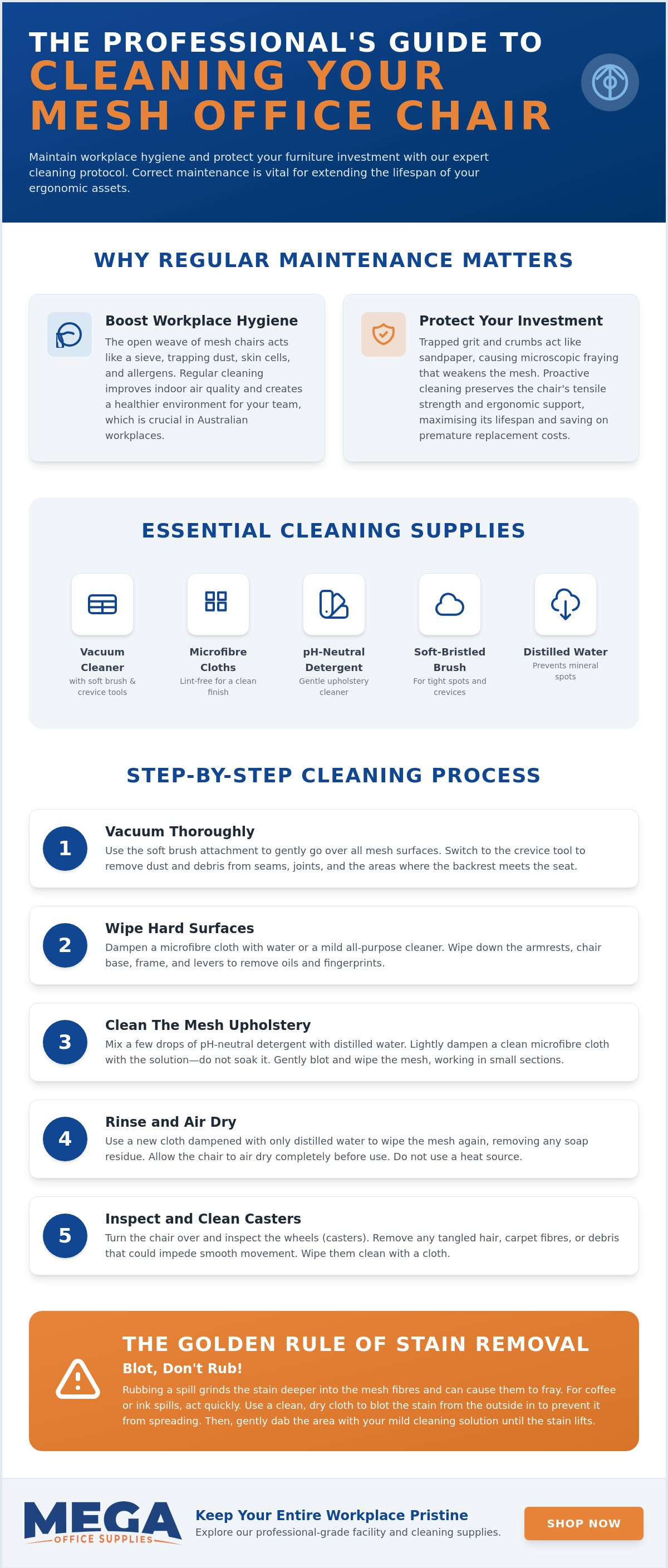
- Understand why mesh upholstery acts as a sieve for dust and how regular sanitisation improves indoor air quality in Australian workplaces.
- Identify the essential professional-grade supplies required, including soft brush vacuum attachments and lint-free microfibre cloths for plastic components.
- Master the sequence of how to clean a mesh office chair using controlled moisture to protect the structural integrity of the ergonomic support.
- Learn the "golden rule" of stain removal to eliminate coffee or ink marks without fraying the delicate mesh weave or spreading the spill.
- Implement a monthly "clean and inspect" routine to identify mechanical wear early and maximise the total lifespan of your office furniture.
Why Regular Mesh Chair Maintenance is Essential for Workplace Hygiene
Mesh chairs are prized for their superior breathability, especially in humid Australian climates or climate-controlled commercial buildings. However, that same open weave acts as a mechanical sieve. Over time, it captures skin cells, hair, and fine dust particles that would otherwise settle on a solid surface. In air-conditioned Australian offices, where air is recirculated, a dirty ergonomic office chair can become a significant source of particulate matter, trapping allergens directly against the user's clothing and skin.
This isn't just about looks; it's about maintaining hygiene standards in modern work environments. Whether you're managing a busy warehouse office in Brisbane, a school staffroom, or a government department in Canberra, the buildup of debris within the mesh can compromise the health of the workspace. Shared equipment that looks or smells neglected can lead to employee dissatisfaction and potential health concerns. Establishing a professional cleaning protocol ensures that every staff member has a sanitised and safe workstation.
To better understand this concept, watch this helpful video:
Beyond hygiene, there's a mechanical reason for learning how to clean a mesh office chair. Small particles of grit and crumbs act like sandpaper. Every time a user sits or shifts, these particles rub against the synthetic fibres. This friction causes microscopic fraying, eventually leading to sagging or "pilling" of the mesh. Regular debris removal is the only way to preserve the original tensile strength and support of the chair's backrest and seat.
Protecting Your Ergonomic Investment
Proactive care is a sound financial strategy. High-quality office furniture represents a significant capital outlay for any organisation. If mesh fibres degrade due to neglected maintenance, the chair loses its ergonomic integrity and aesthetic appeal. This is particularly critical in client-facing reception areas or executive suites where a grimy chair reflects poorly on the business's attention to detail. By implementing a routine cleaning schedule, you avoid the premature cost of replacement and keep your assets in service for longer.
Health and Productivity Benefits
A clean workstation is directly linked to staff wellbeing. Reducing allergens like dust mites and pollen within the chair's mesh can minimise respiratory issues and seasonal allergy flare-ups among employees. There's also a clear psychological benefit; a fresh-smelling, well-organised environment boosts morale and signals that the organisation values its team's health. At Mega Office Supplies, our commitment to workplace solutions extends beyond providing hardware to helping you maintain a healthy, productive office environment.
Essential Supplies for Cleaning Mesh Office Furniture
Achieving a professional finish when learning how to clean a mesh office chair requires more than just standard janitorial gear. You need a specific toolkit that respects the delicate tensile properties of the mesh while being aggressive enough to lift industrial dust and office-related grime. To ensure a thorough result, assemble the following supplies:
- Vacuum cleaner with a soft brush attachment and narrow crevice tool.
- Lint-free microfibre cloths for wiping plastic and metal components.
- pH-neutral upholstery detergents or specialised facility supplies.
- Soft-bristled brush, such as an old toothbrush, for tight spots.
- Distilled water to prevent mineral spotting on dark fabrics.
For the non-fabric components, such as the armrests and star base, high-quality microfibre cloths are essential. These provide a clean finish and are highly effective at capturing oils from skin contact. If you're working with dark-coloured mesh, use distilled water for your cleaning solutions. Australian tap water often has a high mineral content which can leave unsightly white rings or spotting once the fabric dries. Distilled water prevents mineral spotting.
Choosing the Right Cleaning Chemicals
Chemical selection is where many maintenance routines go wrong. You must avoid harsh bleach or ammonia-based cleaners at all costs. These substances can break down the synthetic polymers in the mesh, leading to premature sagging or brittleness. Instead, opt for pH-neutral detergents designed for upholstery. These professional-grade products are specifically formulated to emulsify body oils and perspiration without damaging the material.
Tools for Mechanical Debris Removal
Between deep cleans, mechanical tools keep the furniture looking sharp. Lint rollers are excellent for quick daily touch-ups, particularly in high-traffic reception zones or school libraries where paper dust is prevalent. However, for a thorough how to clean a mesh office chair protocol, the vacuum brush head remains the most vital tool for lifting dust from deep within the weave. For the intricate adjustment mechanisms under the seat, a canister of compressed air is invaluable. It blasts out grit that could otherwise jam the pneumatic lift or tilt controls. If you're managing a larger fleet, keeping these office furniture supplies on hand ensures your team can perform quick, effective maintenance whenever needed.
Step-by-Step Instructions: How to Clean a Mesh Office Chair
Executing a professional-grade clean requires a methodical approach to ensure you don't compromise the tension of the mesh or the mechanical integrity of the chair. Before introducing any moisture, you must perform a thorough dry vacuuming. Use the soft brush attachment to lift loose particles and skin cells trapped in the weave. Skipping this step often leads to "muddying" the dirt, which pushes grime deeper into the pores once a liquid cleaner is applied. Pay specific attention to the crevices where the seat meets the backrest, as these are primary collection points for debris.
Once the surface is dry-cleaned, prepare your diluted cleaning solution in a spray bottle. The key to learning how to clean a mesh office chair without causing damage is controlled application. Never spray the solution directly onto the mesh. Instead, mist it onto a microfibre cloth until it's damp but not dripping. This prevents liquid from seeping through the mesh and pooling in the underlying seat foam, which can lead to mould growth or unpleasant odours in poorly ventilated offices.
Scrub the mesh in gentle, circular motions. Focus your efforts on the lumbar support area and the front edge of the seat, as these points endure the most physical contact and perspiration. After scrubbing, wipe down the hard surfaces, including the armrests, frame, and star base, with a fresh damp cloth to remove any overspray or dust.
Deep Cleaning the Mesh Backrest and Seat
Many premium ergonomic office chairs feature multi-layered or complex 3D mesh structures that require extra care. For these models, use a damp-dry technique: apply your pH-neutral solution with a cloth, then immediately follow up by blotting with a dry, absorbent towel. This "rinsing" step is vital to remove soap residue that can attract more dust once the chair is dry. If the mesh feels sticky after cleaning, you haven't removed enough detergent.
Servicing the Base and Casters
A truly professional maintenance routine extends to the moving parts. Caster wheels often collect hair, carpet fibres, and grit, which can seize the bearings. Use tweezers or a small blade to carefully remove these obstructions from the axles. Finally, wipe the gas lift cylinder with a dry cloth to remove old, gritty grease. Don't apply heavy lubricants; a simple wipe-down prevents the mechanism from binding. Ensure all components are completely air-dried before returning the chair to active service to prevent slipping or moisture-related wear.
Targeted Stain Removal and Odour Control
Stains on mesh require a different tactical approach than solid fabrics. The open weave allows liquids to travel quickly through the layers, making immediate intervention vital. The golden rule for any spill is blotting, never rubbing. Rubbing a stain into mesh effectively grinds the pigment into the synthetic fibres and pushes it into the seat foam below. Use a clean, white microfibre cloth to lift as much liquid as possible before applying any treatment. This mechanical separation of the spill from the fibre is the most critical step in preventing permanent discolouration.
For organic stains like sweat or food, enzyme-based cleaning agents are highly effective. These products break down the proteins that cause both the stain and the associated odour. If you're dealing with ink from a leaking pen, use isopropyl alcohol on a cotton swab. Dab the area precisely to dissolve the ink without saturating the surrounding mesh. This targeted precision is a vital part of how to clean a mesh office chair without leaving unsightly rings or damaging the material's tensile strength. To ensure your maintenance team has the right tools for the job, browse our full range of commercial cleaning supplies today.
Odour control is another challenge in high-density Australian offices. Avoid using heavy masking fragrances or aerosol sprays, which can trigger respiratory sensitivities in colleagues. Instead, neutralise odours at the source. A light dusting of baking soda left on the dry mesh for 30 minutes before vacuuming can absorb many persistent smells. For professional-grade results, specialised odour neutralisers are a better investment than supermarket perfumes, as they eliminate bacteria rather than just covering the scent.
Handling Common Office Spills
In staff kitchens or breakrooms, coffee and tea spills are inevitable. Immediate action is required to prevent tannins from setting into the weave. If you're working in a warehouse or industrial office, you may encounter grease or oil marks. These require a professional degreasing agent applied sparingly to a cloth first. For chairs used in schools or retail, you might find adhesive residue from labels or tape on the frame. Use a specialised adhesive remover, but always test it on the underside of the chair first to ensure it doesn't dull the plastic finish.
Disinfecting High-Touch Points
Workplace hygiene depends on sanitising high-touch points where bacteria accumulate. Armrests, adjustment levers, and the top edge of the backrest are hotspots for cross-contamination. In healthcare or education sectors, these areas should be disinfected daily to maintain safety standards. Use alcohol-free wipes for these plastic components; high concentrations of alcohol can cause certain plastics to become brittle and crack over time. Maintaining a clean fleet is a simple way to protect the health of your team and the professional aesthetic of your organisation.
Long-Term Maintenance and Replacement Indicators
Consistency is the cornerstone of effective facility management. While knowing how to clean a mesh office chair is vital, establishing a formalised monthly "clean and inspect" routine ensures your furniture remains safe and functional. During these sessions, maintenance staff should check for loose bolts under the seat pan and inspect the mesh for signs of abrasive wear. If you detect fraying early, you can often address the cause, such as a sharp desk edge or a faulty armrest adjustment, before the panel fails completely. Tightening hardware every few months prevents the "wobble" that leads to long-term structural damage.
Storing equipment correctly during office closures or seasonal shutdowns also extends the lifespan of your assets. Avoid leaving mesh chairs in areas with high UV exposure, as sunlight can degrade synthetic fibres and cause them to become brittle. If chairs must be stored, covering them with lightweight plastic sheeting helps minimise dust accumulation in the pores. This proactive step reduces the labour required for your next deep clean and maintains the professional aesthetic of your workspace.
The Lifecycle of a Mesh Office Chair
A mesh chair has a finite service life, and there comes a point where cleaning is no longer the solution. The most obvious indicator for replacement is a loss of ergonomic tension. If the backrest sags or the seat no longer provides firm support, the chair's ergonomic benefits are compromised. Mechanical failures in the gas lift or tilt mechanism also signal it's time to evaluate your office furniture supplies. For high-volume environments, repairing a single pneumatic cylinder is often less cost-effective than upgrading to a newer model that carries a fresh manufacturer's warranty.
Professional Procurement for National Fit-outs
Large-scale organisations benefit from standardising their seating models. Using the same chair across a national fit-out simplifies the maintenance workflow; your cleaning team only needs to master one set of protocols. Mega Office Supplies supports bulk procurement for government and corporate sectors, providing the logistical scale required for massive operations. If you are considering a complete ergonomic overhaul, consulting our standing desk guide can help you integrate seating maintenance with a broader workplace wellness strategy. Our team understands the specific workflows of professional buyers who need to evaluate costs and quantities quickly, ensuring your facility remains compliant and productive.
Maximising the Longevity of Your Ergonomic Workspace
Maintaining a high standard of workplace hygiene requires more than just surface-level dusting. By mastering how to clean a mesh office chair, you protect your organisation's ergonomic investment and ensure a healthier environment for your team. Consistent dry vacuuming and the use of pH-neutral chemicals are essential to preserve the structural integrity of the mesh weave. When routine cleaning no longer restores the required tension or support, it's time to evaluate your fleet for a professional upgrade.
Mega Office Supplies has been family owned and operated since 2008; we provide national delivery for all office and facility requirements. We understand the logistical needs of large-scale operations and accept official purchase orders for Government and Education sectors. Whether you need professional-grade detergents or a complete seating refresh, we offer the stability and regional expertise your business deserves.
Browse our full range of Ergonomic Office Chairs and Maintenance Supplies to ensure your workspace remains clean, compliant, and productive for years to come.
Frequently Asked Questions
Can I use a steam cleaner on my mesh office chair?
You should avoid using steam cleaners on most mesh office furniture. The high temperature of the steam can degrade synthetic fibres and weaken the adhesives used in the chair's construction. Excessive heat often causes the mesh to lose its tension, leading to permanent sagging. For a safe deep clean, stick to the pH-neutral solutions and microfibre cloths mentioned in our professional maintenance guide.
How long does a mesh chair take to dry after cleaning?
A mesh chair typically takes between 4 and 6 hours to dry in a well-ventilated Australian office. If the seat features thick foam padding, it might require up to 24 hours to ensure no moisture remains deep within the cushion. Always place the chair in a spot with good airflow, away from direct sunlight, to prevent the growth of mould or unpleasant odours.
Is it safe to use a pressure washer for a deep clean?
No, you shouldn't use a pressure washer to clean your ergonomic seating. The intense force of the water can easily tear the delicate mesh weave and force moisture into the internal mechanical components, such as the gas lift or tilt mechanism. This can lead to rust or mechanical failure. A vacuum with a soft brush attachment is the safest way to handle how to clean a mesh office chair without causing structural damage.
How often should I clean my office chair in a standard workplace?
You should perform a deep clean every six months in a standard commercial environment. However, high-touch areas like armrests and adjustment levers should be wiped down weekly with alcohol-free sanitising wipes. For chairs used in high-traffic zones, such as school libraries or medical reception areas, more frequent cleaning is required to maintain professional hygiene standards and prevent the buildup of allergens.
What is the best way to remove hair from chair wheels?
The most efficient method for removing hair and carpet fibres from caster wheels is using a pair of tweezers or a small utility blade. Carefully cut through the tangled hair wrapped around the axle and pull it out in sections. Regular removal of these obstructions prevents the wheels from seizing and protects your office flooring from unnecessary scuff marks caused by dragged casters.
Can I put my mesh chair seat cover in the washing machine?
You can only machine wash a seat cover if it's specifically designed to be removable and the care label explicitly permits it. Most ergonomic chairs have mesh that is permanently stapled or bonded to the frame. Attempting to remove fixed upholstery will ruin the chair's structural integrity. If your cover isn't removable, use the blotting and targeted scrubbing techniques described in this guide.
How do I get rid of the "old office" smell from my chair?
To eliminate persistent odours, apply an enzyme-based upholstery cleaner that breaks down organic matter at a molecular level. Alternatively, sprinkle a thin layer of baking soda over the dry mesh and let it sit for at least 30 minutes before vacuuming it away. This method neutralises smells without relying on heavy masking fragrances that can be distracting in a shared workplace. Understanding how to clean a mesh office chair effectively involves addressing these invisible hygiene issues.
Will cleaning the mesh affect the chair warranty?
Regular cleaning won't affect your warranty as long as you follow the manufacturer's specific care instructions. However, using abrasive tools, high-heat steam, or harsh chemicals like bleach can void your protection. Always check the documentation provided with your furniture before applying any new cleaning agents. Maintaining your chair properly actually supports warranty claims by proving you've taken reasonable steps to care for the asset.
Article by
Mega Office Supplies Team
The Mega Office Supplies Team provides practical guidance for Australian businesses, schools, government organisations, healthcare providers, hospitality venues, warehouses and home offices. Based in Tweed Heads South, Mega Office Supplies is an Australian business, family owned and operated since 2008, offering office stationery, workplace furniture, technology products, labels, printers, cleaning and janitorial supplies, safety products, art materials, education resources and everyday business essentials from trusted brands.
General Information
This article is provided as general information only to help customers compare and choose office, workplace, school, cleaning, technology, furniture, safety and business supplies. Product details, specifications, compatibility, availability, pricing and suitability may vary. Always check the individual product page, manufacturer information, workplace requirements and relevant safety guidance before purchasing or using a product.


