

You wouldn't leave a five hundred dollar note on a sunny windowsill and expect it to stay crisp, yet many Australian businesses treat their spare printer supplies with exactly that level of risk. We know the frustration of reaching for a backup cartridge during a critical deadline only to find the ink has turned into a useless sludge or the toner has clumped into a solid block. It's a common budget drain that often goes unnoticed until the printer throws an error code at the worst possible moment.
Finding the best way to store unused ink and toner cartridges isn't just about tidying a stationery cupboard; it's about protecting a significant financial investment against our harsh local climate. We understand that procurement officers and administrators need reliability above all else to keep operations running without friction. In this guide, we'll share the exact environmental and physical storage protocols required to prevent ink drying and toner clumping in Australian conditions. You'll learn how to stabilise your storage environment, manage cartridge orientation, and organise your supplies to maximise shelf life and ensure your equipment remains ready for high-volume demands.
Key Takeaways
- Maintain a stable, climate-controlled environment to prevent liquid ink evaporation and stop toner powder from clumping in high humidity.
- Keep all cartridges in their original, vacuum-sealed packaging until the moment of installation to protect the chemical integrity of the contents.
- The best way to store unused ink and toner cartridges involves keeping inkjet units upright with nozzles facing down to keep the print head primed.
- Adopt a First-In-First-Out (FIFO) inventory protocol to ensure older stock is utilised first and to minimise the risk of expired consumables.
- Organise your storage shelves by printer model rather than just part numbers to streamline procurement and reduce the frequency of emergency orders.
Controlling the environment for printer consumables
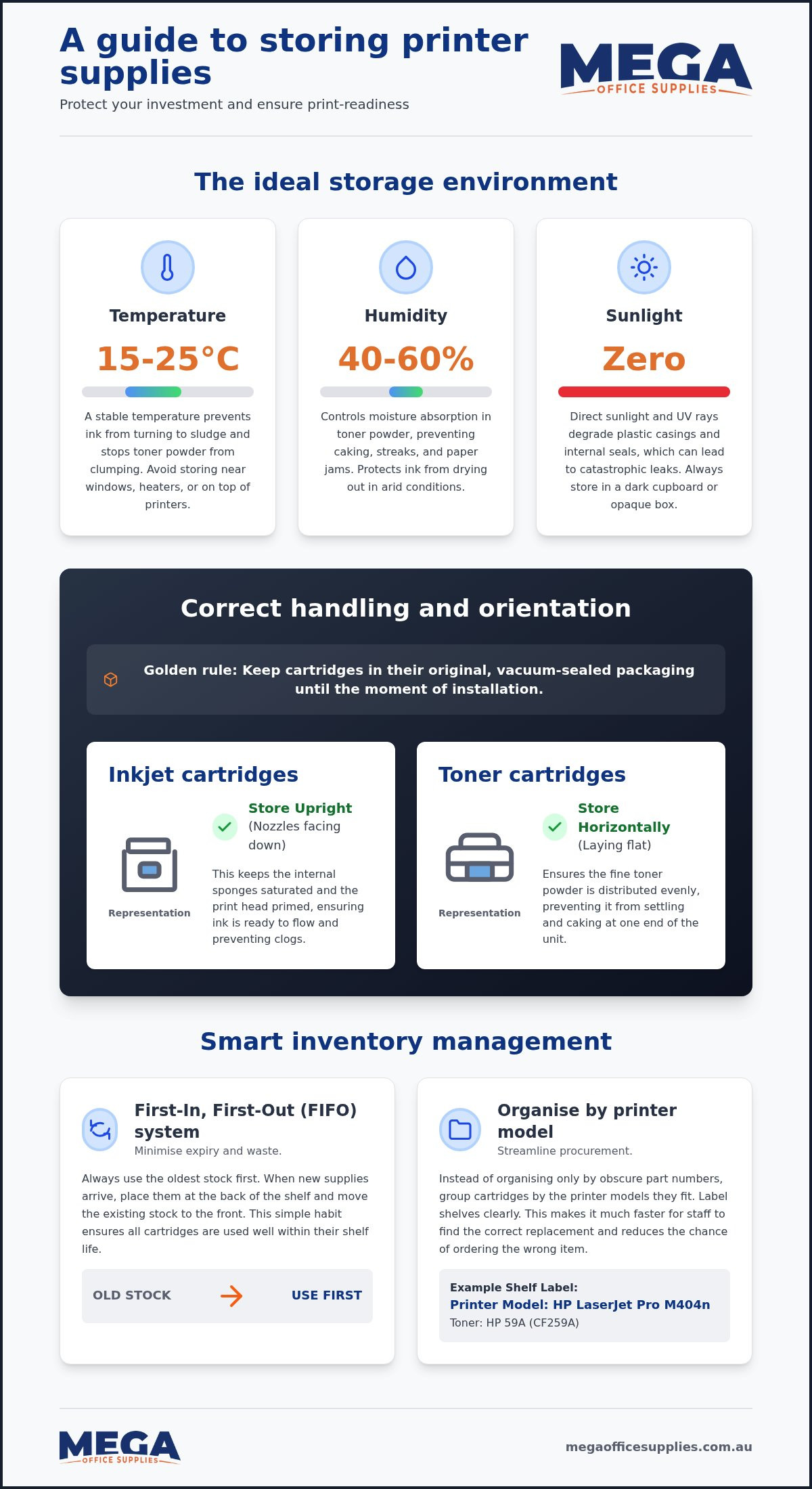
Climate control is the cornerstone of preserving your workplace consumables. The best way to store unused ink and toner cartridges involves more than just finding a spare shelf; it requires a stable environment that protects the chemical integrity of the products. Liquid ink is a complex chemical solution that is highly susceptible to evaporation and molecular changes when exposed to heat. When temperatures rise, the liquid can thicken into a sludge that permanently clogs expensive print heads. Conversely, a Toner cartridge relies on fine plastic and carbon powder that must remain free-flowing to function. If humidity levels exceed 60 percent, this powder can absorb moisture and "cake" into solid clumps, rendering the unit useless.
Ultraviolet rays penetrate standard packaging to degrade the structural integrity of the cartridge plastic and compromise the internal seals, eventually leading to catastrophic leaks. We recommend maintaining a consistent storage temperature between 15 and 25 degrees Celsius. Fluctuations outside this range cause the air inside the cartridge to expand and contract. This pressure change can force ink out of the nozzles or allow air to enter the reservoir, creating airlocks that disrupt print quality.
Managing temperature and sunlight exposure
Positioning is everything when it comes to heat management. We often see backups stored on top of the printer for convenience, but the heat generated by the machine during long print runs can bake the cartridges before they are even installed. Avoid storing supplies near windows, office heaters, or air conditioning vents that blow directly onto the stock. For an extra layer of UV protection, we suggest using opaque storage boxes. These containers act as a thermal buffer and ensure that light exposure remains at zero, even in brightly lit office environments.
Humidity control in Australian workplaces
Australia's diverse climate presents unique challenges, from the tropical humidity of the north to the arid heat of the interior. High humidity leads to moisture absorption in toner powder, which causes unsightly streaks on the page and frequent paper jams as the damp powder sticks to the fuser rollers. In contrast, extremely low humidity can cause ink to dry out at the nozzle, even while it remains inside the original packaging. Keeping your storage area between 40 and 60 percent humidity is the most effective way to ensure your supplies remain in peak condition for their entire shelf life.
Correct handling and orientation for ink and toner
Physical handling is just as critical as climate control when determining the best way to store unused ink and toner cartridges. While it is tempting to stack boxes wherever they fit in the stationery cupboard, improper orientation can lead to mechanical failure before the seal is even broken. We recommend a disciplined approach to positioning that respects the internal chemistry of both liquid and powder based consumables. Following these four steps will significantly reduce the risk of out-of-box failures.
- Step 1: Always keep cartridges in their original, vacuum-sealed plastic packaging until the moment of installation.
- Step 2: Store inkjet cartridges upright with the nozzles facing down to keep the print head primed and ready.
- Step 3: Position toner cartridges horizontally to prevent the powder from settling or caking at one end of the reservoir.
- Step 4: Avoid stacking heavy items on top of cartridge boxes; excessive pressure can compromise the structural integrity of the internal seals.
The importance of seal integrity
Original packaging is not just for branding; it is an engineered barrier designed to maintain a specific internal pressure and moisture level. Manufacturers vacuum-seal these units to prevent oxidation and ensure the chemical composition remains stable. If you remove the protective orange clip or pull-tab prematurely, you expose the sensitive components to air, which leads to rapid degradation. We suggest only opening the box when you are standing in front of the printer ready to swap the unit. If you are managing a large fleet and need to replenish your stock, you can browse our full range of genuine ink and toner cartridges to ensure you have the correct replacements on hand.
Orientation protocols for different cartridge types
The internal mechanics of ink and toner require different storage logic. Vertical storage for ink is essential because the pigments are heavier than the liquid carrier and will naturally settle over time. Keeping them upright ensures the nozzles stay moist and primed. For laser printers, horizontal storage is non-negotiable. If a toner unit is stored vertically, the fine powder shifts to one end. This uneven distribution often results in "faded" prints on one side of the page because the developer roller cannot pick up a consistent layer of powder across its entire length.
Implementing an efficient inventory management system
Even with precise climate control, the best way to store unused ink and toner cartridges involves a rigorous organisational framework. Without a clear system, older units often migrate to the back of the shelf where they sit until they expire. We recommend adopting a First-In-First-Out (FIFO) protocol to ensure that the stock with the earliest manufacture date is utilised first. This simple shift in workplace workflow significantly reduces the likelihood of discovering unusable, expired cartridges during a high-pressure deadline.
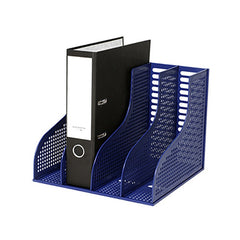
Organisation is more than just stacking boxes. Clearly label your storage shelves by the specific printer model or its office location rather than relying solely on the manufacturer's cryptic part numbers. This makes it easier for non-technical staff to identify the correct supply without opening vacuum-sealed boxes. To maintain a professional record of your supply cycles, we suggest utilising lever arch files to track procurement dates and delivery notes. Conducting quarterly audits will help you identify units nearing their end-of-life, allowing you to prioritise them for immediate use.
Tracking expiry dates and shelf life
Most inkjet units have a reliable shelf life of 18 to 24 months from the date of manufacture. While toner powder technically lasts longer because it is a dry medium, the internal seals and developer rollers can degrade after 2 to 3 years. Keeping a close eye on these dates ensures your hardware isn't damaged by leaking or clumping consumables that have sat in storage for too long.
Procurement strategies for government and schools
Centralising your storage area is the most effective way to prevent over-ordering across different departments or classrooms. For administrative ease, we accept official Australian Government purchase orders, which streamlines the acquisition process for schools and healthcare organisations. This centralised approach, combined with a clear inventory log, ensures you always have the necessary supplies without bloating your annual budget or wasting valuable storage space.
Protecting your investment in printer consumables
Protecting your investment in printer consumables requires a combination of climate stability and disciplined handling. By maintaining a steady temperature and respecting the unique orientation needs of liquid ink versus dry toner, you can effectively eliminate the waste associated with dried nozzles and clumped powder. Implementing the best way to store unused ink and toner cartridges ensures your office remains productive without the disruption of failed hardware or emergency supply runs.
We bring over 150 years of collective industry knowledge to every workplace solution we provide. As a trusted supplier to Australian government departments and schools, our local team understands the logistical demands of high-volume environments. We focus on providing genuine products backed by local service to give you total peace of mind.
Browse our comprehensive range of genuine ink and toner cartridges
With a structured inventory system and the right storage protocols in place, you'll be well-equipped to manage your office supplies with confidence and efficiency.
Frequently Asked Questions
Should ink cartridges be stored upside down?
No, ink cartridges shouldn't be stored upside down or on their sides. This orientation causes air bubbles to migrate toward the print head, which results in frustrating gaps in your print quality or messy internal leaks. To keep your supplies in peak condition, always store them upright with the nozzles facing down. This position ensures the ink remains in contact with the print head, keeping it primed for immediate use when installed.
Do printer toner cartridges expire?
Yes, toner cartridges have a practical expiry date, typically ranging from 24 to 36 months. While the toner powder itself is a dry medium that doesn't spoil like liquid ink, the internal components are not immortal. Over time, the developer rollers and structural seals lose their integrity. Using a unit that has sat on a shelf for over three years increases the risk of powder leakage, which can be difficult to clean and may damage your printer's internal mechanisms.
Can I store ink cartridges in the fridge to keep them fresh?
No, you should never store ink cartridges in a refrigerator. While the cold might seem like it would preserve the chemicals, the resulting condensation is a major risk. When you bring a chilled cartridge back to room temperature, moisture forms inside the nozzle and on the electronic circuitry, often leading to electrical failure or contaminated ink. A climate-controlled office cupboard is the best way to store unused ink and toner cartridges without risking moisture damage.
What is the best way to store a cartridge that has been removed from the printer?
Place the removed cartridge into a resealable plastic bag immediately with a slightly damp cloth or sponge. This creates a micro-climate that prevents the ink in the nozzles from hardening into a solid plug. Make sure the nozzles don't make direct contact with any surface inside the bag. For toner units, wrap them in a dark cloth to block UV light and store them horizontally to ensure the powder remains evenly distributed across the reservoir.

Article by
Mega Office Supplies Team
The Mega Office Supplies Team provides practical buying guides and workplace advice for Australian businesses, schools, government organisations, healthcare providers, hospitality venues, warehouses and home offices. Family owned and operated since 2008 and based in Tweed Heads South on the Gold Coast–Tweed border, Mega Office Supplies helps Australian workplaces choose the right office supplies, furniture, technology, cleaning, safety and education products — backed by genuine local service from real people.
General Information
This article is provided as general information only to help customers compare and choose office, workplace, school, cleaning, technology, furniture, safety and business supplies. Product details, specifications, compatibility, availability, pricing and suitability may vary. Always check the individual product page, manufacturer information, workplace requirements and relevant safety guidance before purchasing or using a product.


