


The difference between a professional delivery and a costly transit loss often comes down to a few microns of adhesive chemistry rather than the strength of the cardboard itself. You have likely experienced the frustration of tape lifting off recycled boxes or splitting mid-application during a high-volume dispatch shift. In the harsh Australian climate, standard adhesives frequently fail when the humidity peaks or warehouse temperatures rise. Choosing the correct packaging tape for shipping boxes is a technical decision that directly impacts your operational efficiency and your brand reputation.
At Mega Office Supplies, our team draws on decades of combined industry experience to provide the functional clarity you need for your procurement decisions. We understand that a quiet office environment requires a different technical solution than a bustling distribution centre. This guide helps you master the science of secure shipping by selecting and applying the ideal adhesive for any Australian workplace. We will examine how to match specific tape grades to your box types to minimise wastage and ensure every customer delivery arrives with a professional, secure finish.
Key Takeaways
- Understand the technical anatomy of a roll, including the carrier and adhesive layers, to ensure the structural integrity of your consignments.
- Identify the performance differences between acrylic, hot melt, and natural rubber to select the most reliable packaging tape for shipping boxes in humid or high-temperature Australian environments.
- Learn how to match adhesive chemistry to specific surfaces, particularly when dealing with the unique bonding challenges of recycled cardboard.
- Optimise your dispatch workflow by integrating professional dispensers and ergonomic application techniques that minimise repetitive strain and material wastage.
- Develop a high-volume procurement strategy that standardises tape specifications across your organisation to facilitate faster inventory management and cost-efficiency.
Understanding Packaging Tape: More Than Just Sticky Tape
Professional-grade packaging tape is a structural component of a shipping carton, not just a simple closure. It maintains the "square" of the box and ensures the flaps remain fused under the significant tension of a stacked pallet. Technically, most of what we use in Australian logistics is a type of pressure-sensitive tape. It doesn't require heat or solvent to activate; it relies on physical pressure to bite into the cardboard fibres and create a permanent bond.
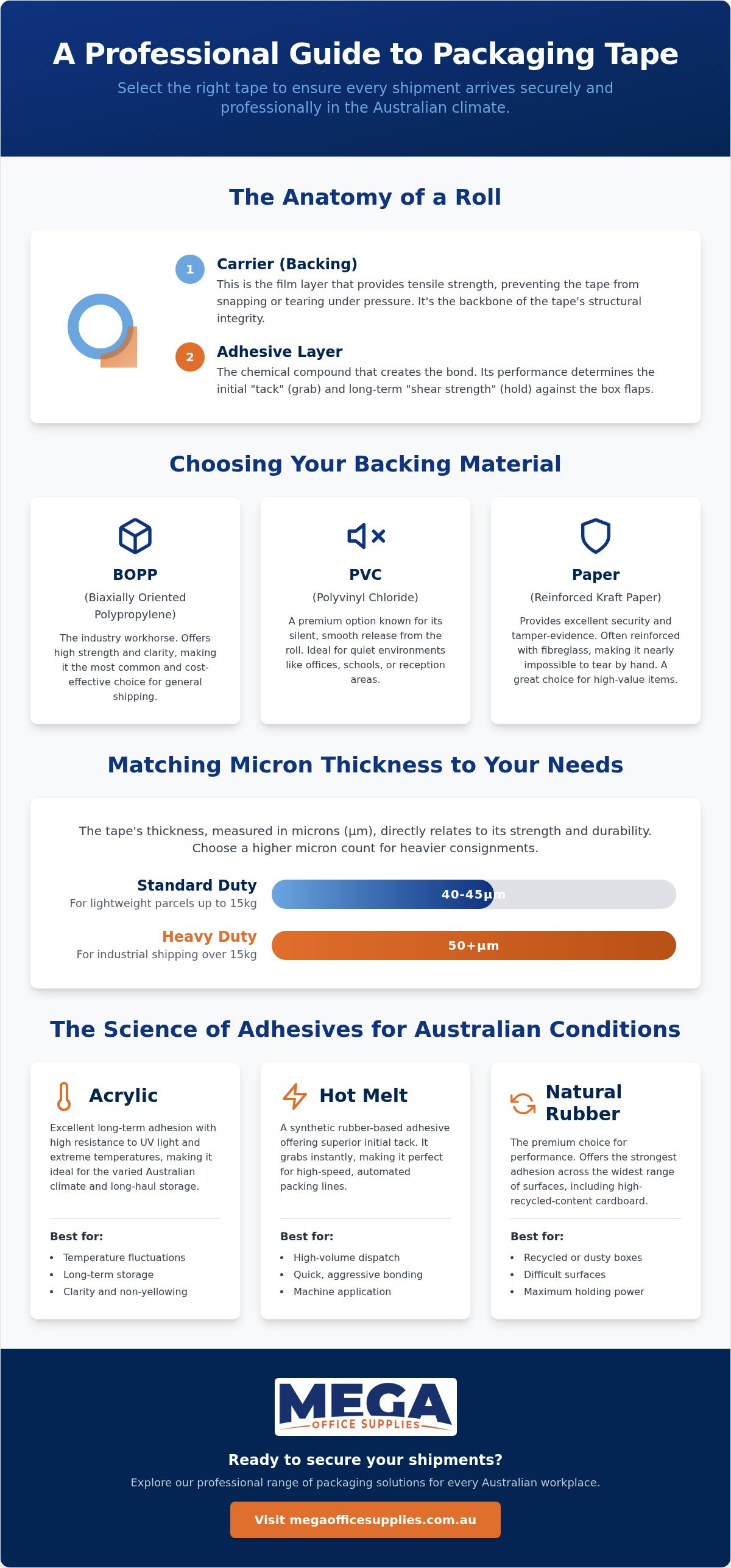
Every roll consists of two distinct layers: the carrier (or backing) and the adhesive layer. The carrier provides the tensile strength, preventing the tape from snapping when the box is handled. The adhesive layer determines the initial "grab" and the long-term hold. Understanding the relationship between these two layers is the first step in mastering secure shipping.
To better understand how these components work together in a professional environment, watch this helpful video:
In Australian workplaces, you'll hear terms like parcel tape, shipping tape, or carton sealing tape used interchangeably. Regardless of the label, the goal is consistent performance. Procurement officers often fall into the trap of buying the lowest-cost option per roll. However, low-grade tape frequently splits during application or lifts off during transit. This leads to staff double-taping to compensate, which increases wastage and packing time. Investing in professional-grade office supplies ensures your team uses less material to achieve a superior bond.
Backing Materials: BOPP vs. PVC vs. Paper
Biaxially Oriented Polypropylene (BOPP) is the workhorse of the industry. It offers high tensile strength and excellent clarity at a competitive price point. PVC tape is a premium alternative known for its "silent" release from the roll. This makes it a favourite in schools, reception areas, and quiet office environments where the screech of standard tape is disruptive. Reinforced paper tape is the professional choice for businesses seeking tamper-evidence and easier recyclability. It's often reinforced with fibreglass, making it nearly impossible to tear by hand, which adds an extra layer of security to high-value consignments.
The Importance of Micron Thickness
The durability of packaging tape for shipping boxes is measured in microns. A micron is one-thousandth of a millimetre, and even small differences here change the tape's performance profile. Standard 40 to 45-micron tape is suitable for lightweight parcels and general office use. For industrial shipping or heavy cartons (over 15kg), we recommend heavy-duty 50+ micron tape. Using thin tape on a heavy carton is a recipe for a burst seam; it simply lacks the shear strength to hold the flaps together when the box is handled roughly in a high-volume transport network.
Adhesive Chemistry: Acrylic, Hot Melt, and Natural Rubber
The performance of packaging tape for shipping boxes depends entirely on the chemical composition of the adhesive layer. While most rolls look identical on the shelf, their ability to withstand the Australian climate varies significantly. In a warehouse where temperatures can swing from 5 degrees on a winter morning to over 40 degrees in mid-summer, the wrong choice leads to "tape flagging" or complete seal failure. Understanding these distinct adhesive chemistries is vital for maintaining a secure supply chain.
Two key metrics define adhesive quality: initial tack and shear strength. Initial tack refers to how quickly the tape grabs the surface upon contact. Shear strength, or holding power, is the tape's ability to resist being pulled away by the constant tension of the box flaps. High heat often softens low-quality adhesives, causing them to "bleed" or lose their grip. UV stability is equally critical. Standard tapes left in the sun can yellow and become brittle, eventually cracking and releasing the carton flaps. Professional-grade solutions are engineered to remain stable under these harsh conditions.
Acrylic Adhesive: The All-Rounder
Acrylic adhesive is a synthetic resin that performs exceptionally well in long-term storage and environments with high UV exposure. Unlike other types, acrylic doesn't yellow or degrade over time. It's the preferred choice for refrigerated transport or winter storage in southern states because it maintains its bond in cold temperatures. However, it requires a "cure time" to reach maximum bond strength. You should apply firm pressure during application to ensure the adhesive penetrates the cardboard fibres. It's a reliable choice for standard office stationery and lightweight shipping needs.
Hot Melt and Natural Rubber: The Industrial Powerhouses
Hot melt adhesive offers superior initial tack. It's the ideal solution for fast-paced warehouse environments where boxes are packed and stacked immediately. It bonds almost instantly to the surface, though it can be more sensitive to extreme heat than acrylic. Natural rubber is widely considered the gold standard for difficult applications. It has the most aggressive "grab" and is the only adhesive that consistently sticks to recycled cardboard or dusty warehouse surfaces. When selecting packaging tape for shipping boxes, you must account for the surface texture of your cartons. If your facility handles high-volume dispatch, you might consider browsing our range of professional packaging supplies to find a rubber-based solution.
Noise levels are another practical consideration. Hot melt and acrylic tapes often produce a loud, high-pitched screech during dispensing. If you're working in a shared office or a school reception area, natural rubber or specially coated "low noise" tapes are far more suitable. They release from the roll with a smooth, quiet action that minimises workplace disruption.
Choosing the Right Tape for Your Specific Environment
Selecting the correct packaging tape for shipping boxes requires a detailed assessment of your specific environment and the substrate of your cartons. It's a common mistake to assume that all cardboard surfaces are identical. Recycled cardboard, now the industry standard for many Australian businesses, presents a unique challenge. These boxes are made from shorter, more porous fibres that can cause standard acrylic tapes to "pop" off shortly after application. This failure occurs because the adhesive cannot find enough long fibres to grip. In these instances, a natural rubber adhesive is the professional choice, as its aggressive initial tack is specifically engineered to penetrate the uneven surface of recycled stock.
Australia's diverse geography also dictates your adhesive requirements. In the humid tropics of Northern Queensland or the Northern Territory, moisture in the air can interfere with the curing process of certain tapes. Conversely, the dry, intense heat of the outback can cause low-grade carriers to become brittle and snap. Matching the adhesive to the local dew point and temperature range ensures your consignments remain sealed from the moment they leave your loading dock until they reach the customer. Aesthetic choices like clear, tan, or coloured tape also play a role in brand presentation. Clear tape offers a clean, modern look, while tan (buff) tape provides a traditional finish that blends seamlessly with kraft paper boxes.
Warehouse and High-Volume Logistics
In high-volume distribution centres, efficiency is the primary metric. We recommend prioritising shear strength for heavy-duty cartons and palletised goods to prevent shifting during transit. For automated packing lines, machine-length rolls (990m) are essential. These larger rolls reduce the frequency of roll changes, which minimises downtime and keeps the dispatch flow consistent. Coloured tape is another utilitarian tool for warehouse managers. Using specific colours for inventory organisation allows staff to identify priority shipments, fragile items, or specific delivery zones at a glance without reading individual labels.
Office, School, and Healthcare Environments
Quiet workspaces require a different technical approach. The loud screech of standard tape is often disruptive in school reception areas, hospitals, or open-plan offices. The "Silent Tape" requirement is met by using PVC carriers or specially coated polypropylene that releases from the roll with minimal noise. For healthcare and government departments handling sensitive documents or medical supplies, tamper-evident solutions are a non-negotiable security feature. It's also vital to ensure your shipping tape is compatible with your broader stationery supplies. Standard dispensers used in administration blocks often require specific core sizes and tape thicknesses to function without jamming or failing mid-task.
Professional Application Techniques and Tools
High-volume dispatch operations require more than just the right adhesive; they require the correct hardware to ensure consistent results. A professional tape dispenser is a non-negotiable tool for any workplace aiming to optimise its shipping workflow. These devices provide the necessary tension to prevent the tape from tangling or doubling back on itself, which is a primary cause of material wastage. When using packaging tape for shipping boxes, the dispenser's weight and grip design also play a critical role in workplace ergonomics. Selecting a model with an contoured handle helps minimise repetitive strain injuries (RSI) during long shifts in the warehouse or mailroom.
Dispenser maintenance is often overlooked but essential for safety and efficiency. Over time, adhesive residue builds up on the rollers and the cutting blade, leading to uneven tears and tape splitting. We recommend cleaning the blades regularly with a small amount of citrus-based cleaner or isopropyl alcohol. Safety is another vital consideration in busy environments. Modern professional dispensers often feature retractable blades or shielded cutters that only engage when the tape is pressed against the carton, significantly reducing the risk of accidental cuts during fast-paced packing cycles.
The "H-Tape" Method for Maximum Security
For heavy cartons or high-value items, the single-strip method is often insufficient. The "H-Tape" method is the industry standard for ensuring structural rigidity. Follow these steps for a professional seal:
- Step 1: Apply a single strip of tape across the centre seam of the box, ensuring at least a 50mm overlap on each end to anchor the flaps.
- Step 2: Apply additional strips along the side edges of the flaps where they meet the box walls, creating a literal "H" shape.
This technique prevents dust and debris from entering the carton and distributes the weight of the contents more evenly across the adhesive bonds. It's particularly effective when shipping heavy goods that might shift during transit.
Common Application Mistakes to Avoid
The most frequent error in Australian warehouses is ignoring the "rub-down" rule. As we established earlier, these are pressure-sensitive adhesives. They don't bond instantly upon contact; they require physical force to drive the adhesive into the cardboard fibres. After applying the tape, staff should firmly wipe their hand or a soft squeegee along the length of the strip. Without this pressure, the tape is far more likely to "flag" or lift, especially in humid conditions.
Under-taping is a significant risk for heavy boxes, as a single strip can burst under the shear stress of a 20kg load. Conversely, over-taping leads to unnecessary costs and a poor professional presentation. Your goal should be a secure seal using the minimum amount of material required for the box weight. To equip your dispatch team with industry-standard tools, view our range of professional packaging supplies and dispensers.
Procurement Strategy: Bulk Ordering and Workplace Integration
Effective procurement of packaging tape for shipping boxes requires a transition from reactive purchasing to strategic inventory management. Instead of ordering when a roll runs out, procurement officers should calculate requirements based on average carton volume per month. A typical 75-metre roll seals approximately 40 to 50 standard cartons using the H-tape method discussed previously. By auditing your dispatch volume, you can establish quarterly ordering cycles that reduce administrative overhead and ensure your team never faces downtime due to stockouts.
Standardising your tape specifications across multiple departments or sites simplifies the supply chain. Using the same professional-grade adhesive for both warehouse logistics and front-office parcels allows for higher volume discounts and reduces the risk of staff using the wrong grade for heavy-duty tasks. To facilitate this, we recommend setting up a business application. This provides a streamlined ordering platform tailored to your specific workplace requirements.
Correct storage is a critical factor in preserving the shelf life of your adhesives. Temperature fluctuations in Australian workplaces can degrade the chemical bond of pressure-sensitive tapes over time. Store your inventory in a cool, dry place away from direct sunlight. This prevents the rolls from becoming brittle or the adhesive from bleeding. Proper storage ensures that your bulk investment maintains its technical performance from the first roll to the last.
Bulk Savings and Inventory Management
High-volume users should analyse the cost-per-metre rather than the cost-per-roll. While a cheaper roll might appear cost-effective, it often contains less length or requires double-taping due to poor adhesive quality. Integrating your tape requirements into your broader facility supplies budget allows for better financial transparency and consolidated deliveries. We manage lead times for national deliveries across Australia, ensuring that regional warehouses and city offices receive their supplies with the same reliability and speed.
Why Partner with Mega Office Supplies?
Our team understands the logistical pressures of the Australian workplace. We provide access to a comprehensive range of packaging and mailing supplies tailored for every sector, from healthcare to heavy industry. As a family-owned Australian business with decades of combined industry experience, we prioritise reliability and established trust over flashy marketing. Our systems are designed to handle high-volume demands without friction, providing peace of mind for procurement officers and business owners alike.
We offer simplified procurement for government and educational organisations, accepting official purchase orders to facilitate a fast user experience. Our scale allows us to maintain competitive rates while providing the grounded, direct assistance you expect from a local partner. If you require assistance with large-scale inventory planning, contact our direct support line for tailored volume quotes and technical guidance.
Optimising Your Australian Dispatch Operations
Mastering the science of secure shipping requires a move away from generic closures toward technically appropriate adhesives. You now understand how matching acrylic, hot melt, or natural rubber to your specific box types prevents transit losses and reduces material wastage. By integrating professional dispensers and the H-tape application method, your team can maintain high-volume efficiency without compromising the structural integrity of your cartons. It's these small technical adjustments that separate a standard warehouse from a high-performance logistics operation.
Strategic procurement is about more than just finding a roll; it's about partnering with a reliable industry veteran. Mega Office Supplies leverages decades of combined industry experience to support your facility's needs. As a trusted supplier for government and schools, we provide the scale and regional expertise required for seamless workplace maintenance. Our national delivery across Australia ensures your essential supplies are always within reach, regardless of your location or volume requirements.
View our full range of professional packaging tape and shipping supplies to find the ideal solution for your next consignment. With the right packaging tape for shipping boxes and a structured application strategy, you'll achieve the professional presentation and security your customers expect. We look forward to supporting your ongoing shipping and logistics success.
Frequently Asked Questions
What is the best packaging tape for heavy shipping boxes?
For heavy boxes, you should use a heavy-duty tape with a thickness of 50 microns or more. This thickness provides the necessary tensile strength to prevent snapping under weight. Natural rubber adhesive is the preferred choice for these applications because it offers the most aggressive grab and high shear strength. This ensures the flaps stay fused even when the carton is subjected to rough handling in high-volume transport networks.
Why does my packaging tape keep lifting off the box?
Tape typically lifts off because it hasn't been properly "rubbed down" or the adhesive chemistry is incompatible with the surface. Since these are pressure-sensitive adhesives, they require physical force to bond with the cardboard fibres. If you're using standard acrylic tape on recycled boxes, the short fibres might not provide enough grip. Extreme Australian humidity can also interfere with the curing process, causing the seal to fail shortly after application.
Is there a difference between packing tape and shipping tape?
There is no technical difference between the two terms in general conversation; however, "shipping tape" often refers to a professional-grade product with a higher micron thickness. While standard packing tape is suitable for lightweight storage, packaging tape for shipping boxes must withstand the rigours of the national logistics network. It's designed with superior shear strength to resist the constant tension of box flaps during long-distance transit and stacking.
How do I choose a tape that is not noisy when I use it?
You should select tape with a PVC carrier or a specialised "low noise" polypropylene coating to minimise workplace disruption. These products are engineered to release from the roll with a smooth, quiet action rather than the high-pitched screech of standard acrylic or hot melt tapes. This makes them ideal for quiet office environments, school reception areas, or healthcare facilities where noise control is a priority for staff and visitor comfort.
Can I use packaging tape on recycled cardboard?
Yes, you can use packaging tape on recycled cardboard, but you must select a natural rubber adhesive for reliable results. Recycled board has shorter, more porous fibres that often reject standard acrylic adhesives. Natural rubber has the aggressive initial tack required to penetrate these uneven surfaces. It's the industry standard for ensuring a permanent bond on sustainable packaging materials, preventing the flaps from popping open during the delivery cycle.
What is the standard width of packaging tape for shipping?
The industry standard width for packaging tape for shipping boxes is 48mm, which is often referred to as 50mm in commercial catalogues. This width provides a sufficient surface area for a secure seal on most standard shipping cartons. For very large or heavy-duty industrial crates, 72mm wide tape is available to provide additional structural support and a larger adhesive footprint, though the 48mm variant remains the universal choice for most Australian business sectors.
Does packaging tape expire or lose its stickiness over time?
Packaging tape does lose its effectiveness over time, typically having a shelf life of approximately 12 months when stored correctly. The adhesive chemistry can eventually dry out or become gummy, especially if exposed to extreme heat or UV light. You'll know the tape is past its prime if it becomes difficult to pull off the roll or if the adhesive layer starts to separate from the carrier film during application.
How many rolls of tape do I need for a standard office move?
For a standard office move, you should budget for approximately one 75-metre roll for every 40 to 50 boxes. This estimate assumes you are using the professional H-tape method to secure both the top and bottom seams. It's always prudent to order a few extra rolls to account for wastage or miscellaneous tasks like bundling loose items. Procurement officers should consider bulk packs to ensure consistency across the entire relocation project.
Article by
Mega Office Supplies Team
The Mega Office Supplies Team provides practical guidance for Australian businesses, schools, government organisations, healthcare providers, hospitality venues, warehouses and home offices. Based in Tweed Heads South, Mega Office Supplies is a family-owned and operated Australian business offering office stationery, workplace furniture, technology products, labels, printers, cleaning and janitorial supplies, safety products, art materials, education resources and everyday business essentials from trusted brands.
General Information
This article is provided as general information only to help customers compare and choose office, workplace, school, cleaning, technology, furniture, safety and business supplies. Product details, specifications, compatibility, availability, pricing and suitability may vary. Always check the individual product page, manufacturer information, workplace requirements and relevant safety guidance before purchasing or using a product.


