


If your 2026 office fit-out looks identical to your 2022 setup, you are likely investing in a workspace that your team will actively avoid. Modern procurement is no longer just about filling floor space; it's about creating a destination that justifies the commute. We know the pressure of trying to stay ahead of office furniture trends for 2026 Australia while ensuring every dollar spent goes toward assets that meet strict Australian safety and ergonomic standards. It's a difficult balance to strike when sterile environments fail to attract staff and trendy designs often lack the commercial-grade durability required for a high-volume workplace.
This guide provides a professional framework to help you select furniture that blends residential comfort with industrial strength. You'll discover how to move beyond disposable minimalism toward human-centric design that prioritises employee well-being and productivity. We will examine the essential shifts in Australian workplace design, including the integration of modular systems for hybrid work and the importance of AFRDI-certified hardware. By the end, you'll be equipped to procure a modern, inviting environment that stands up to years of professional use.
Key Takeaways
- Learn how human-centric design prioritises both psychological comfort and physical ergonomics to encourage staff back into the workplace.
- Discover why the leading office furniture trends for 2026 Australia focus on "resimercial" elements, blending the warmth of hospitality with commercial durability.
- Identify the role of modularity and mobile furniture, such as desks on castors, in creating a future-proof layout for hybrid work environments.
- Understand the shift toward "Rugged Naturalism" and the importance of selecting furniture with high recycled content to meet sustainability goals.
- Access a practical procurement framework for auditing your existing assets and choosing upgrades that offer the best return on staff productivity.
The Evolution of the Australian Workplace: Why 2026 is the Year of Human-Centric Design
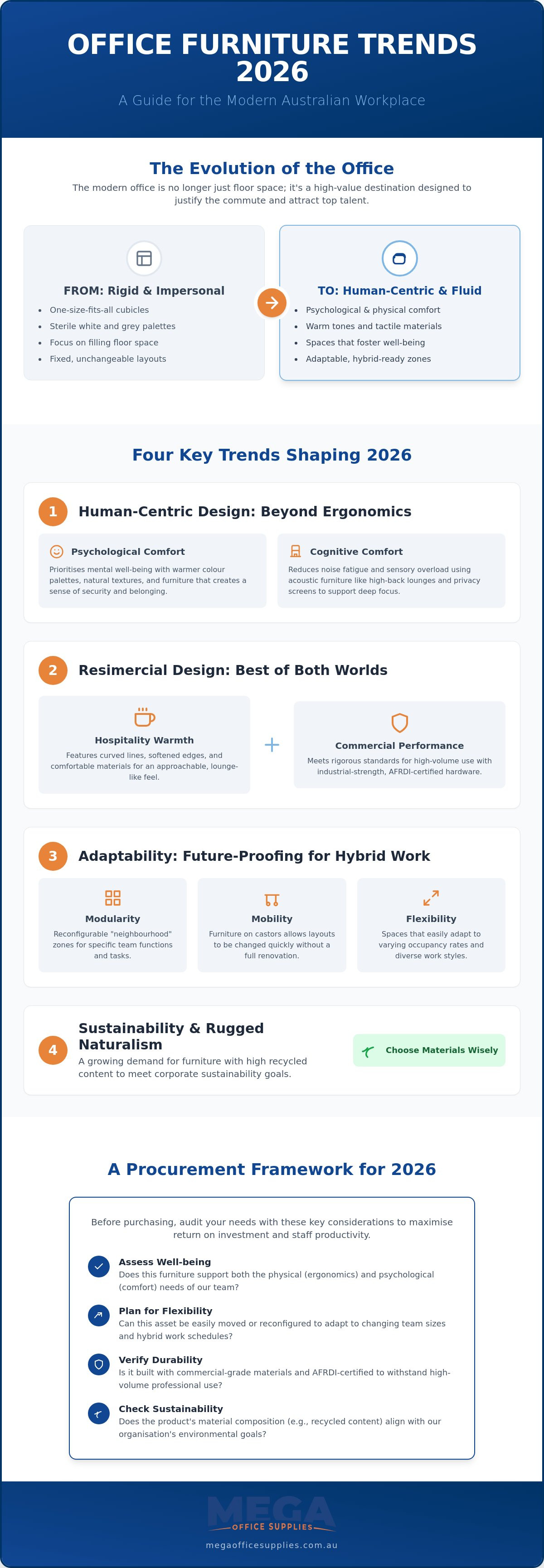
The concept of the office has undergone a radical transformation. In 2026, we've moved past the "one-size-fits-all" mentality that defined previous decades. The Evolution of the Australian Workplace shows a clear progression from the rigid cubicle systems of the mid-20th century to the fluid, high-performance environments we manage today. This shift is driven by the stabilisation of hybrid work models across Australia, where the office must now function as a high-value destination. It isn't just about providing a desk anymore; it's about providing a professional experience that a home office simply cannot replicate.
Human-centric design is the cornerstone of office furniture trends for 2026 Australia. It represents a shift from focusing solely on physical ergonomics, like seat height and lumbar support, to prioritising the psychological comfort of the user. Procurement officers are now moving away from the sterile, clinical white-and-grey palettes of the last decade. Instead, there's a clear demand for warmer tones and tactile materials that create a sense of security and belonging. This approach ensures that the physical environment supports the mental well-being of the workforce, directly impacting staff retention and daily output.
To better understand how workplace aesthetics are shifting toward more inviting and updated environments, watch this helpful video:
Beyond Ergonomics: The Rise of Cognitive Comfort
Workplace productivity is increasingly threatened by "noise fatigue" in open-plan layouts. Cognitive comfort is the strategic use of furniture and spatial design to minimise sensory overload and support deep focus. This involves integrating acoustic furniture, such as high-back lounges and sound-absorbing privacy screens, to create quiet enclaves within busy zones. In 2026, cognitive comfort is defined by furniture that reduces mental friction and allows for sustained concentration without environmental distraction. Reducing these workplace stressors is essential for maintaining a high-functioning team in sectors ranging from government departments to busy corporate headquarters.
The Australian Hybrid Reality: Designing for Flow
Fixed desks are rapidly being replaced by "neighbourhood" zones that cater to specific team functions. This transition requires furniture that facilitates a rapid move between solo administrative tasks and intense group collaboration. Whether you're outfitting a professional reception area or a communal staff kitchen, the focus is on flow. Using office furniture that is easily reconfigurable ensures that your facility can adapt to varying occupancy rates and diverse work styles throughout the week. For Australian businesses, this means investing in versatile pieces that can be moved or adjusted without requiring a full office renovation, ensuring long-term value for money.
Resimercial Design: Blending Hospitality Warmth with Commercial Performance
Resimercial design represents the most significant shift in office furniture trends for 2026 Australia, moving away from rigid cubicles toward spaces that feel like a high-end hospitality lounge. This approach combines the warmth of residential aesthetics with the rigorous performance standards required for commercial use. One of the defining characteristics of this trend is the use of curved lines. Softened edges on desks, meeting tables, and seating pods create a more approachable environment, reducing the visual harshness often associated with traditional corporate fit-outs.
While many competitors focus purely on the visual appeal of a home-like office, professional procurement requires a deeper focus on durability. Commercial-grade fabrics are non-negotiable. Without high double-rub counts and stain-resistant treatments, resimercial furniture will look worn and unprofessional within months. Administrators must prioritise technical specifications to ensure these softer items don't compromise on longevity. Staying ahead of office furniture trends for 2026 Australia requires a balance of visual appeal and structural integrity, ensuring that every piece of furniture serves both the team's comfort and the organisation's bottom line.
Soft Seating and Collaborative Lounges
Collaborative zones now rely heavily on modular sofas that allow for rapid reconfiguration. These systems enable teams to expand or contract their workspace based on the day's specific tasks. For more focused work, occasional chairs are being integrated into these zones to provide necessary ergonomic support within a relaxed aesthetic. If you're managing a full office update, it's worth reviewing our guide to ergonomic office chairs to ensure your collaborative seating doesn't compromise on long-term physical health.
Hospitality-Inspired Kitchens and Staff Tea Rooms
The staff kitchen has transitioned from a hidden utility room to a core work zone. High-quality communal tables are now central to these spaces, fostering informal collaboration and spontaneous problem-solving. When selecting furniture for these areas, prioritise durable materials like high-pressure laminates that can withstand spills and heavy daily use. Ensuring these spaces are fully functional is a priority for facility managers; this includes maintaining a steady inventory of coffee and tea supplies to support the social rhythm of the office. If you're planning a refresh, exploring our range of commercial-grade office furniture can provide the durability your organisation requires.
Adaptability and Modularity: Future-Proofing Australian Offices
In 2026, fixed floor plans are a financial liability. The ability to reconfigure a space without professional contractors is the primary driver of ROI in modern procurement. Staying ahead of office furniture trends for 2026 Australia requires a move away from static installations toward dynamic environments. Investing in modular systems ensures your facility can respond to fluctuating team sizes and changing project requirements without requiring a complete refit.
Mobile furniture is the backbone of the agile workplace. Desks, meeting tables, and whiteboards mounted on high-quality castors allow teams to build their own neighbourhoods in minutes. This level of control supports a more inclusive environment, as staff can adjust their immediate surroundings to suit individual sensory needs or physical requirements. However, true modularity fails without proper technical support. Every piece of furniture must feature integrated power access and robust cable management to prevent the workspace from becoming a cluttered safety hazard. These features are essential for maintaining a professional, organised environment in high-traffic sectors like government and education.
Sit-Stand Workstations: The New Standard
Electric standing desks have transitioned from a premium perk to a baseline requirement for any professional Australian office. When evaluating these workstations, procurement officers should focus on three technical pillars: weight capacity, height range, and motor noise levels. A high-quality motor ensures smooth transitions that don't disrupt neighbouring colleagues. For a deeper dive into selecting the right hardware for your facility, consult our professional guide to standing desks. These units provide the versatility needed to support a diverse workforce while meeting modern ergonomic standards.
Modular Storage and Filing Solutions
The rise of hybrid work has changed the way we think about storage. Massive, fixed filing cabinets are being replaced by mobile pedestals and modular shelving units. These compact solutions support clean desk policies by providing staff with personal, portable storage that can be tucked away at the end of the day. While digital workflows are dominant, physical documentation remains essential in many Australian sectors. Modular systems must still accommodate high-volume items like lever arch files, ensuring that important records are organised and accessible within a flexible footprint. This approach maximises floor space while maintaining high levels of administrative efficiency.
Sustainability and Rugged Naturalism: Materials for the 2026 Workplace
Material selection in 2026 has moved beyond simple aesthetics to become a strategic investment in longevity and environmental responsibility. One of the defining office furniture trends for 2026 Australia is the rise of "Rugged Naturalism". This approach prioritises raw, tactile textures like timber and stone, but applies them with industrial-grade durability. Unlike the fragile residential finishes of the past, these materials are chosen because they hide the scuffs and marks of a high-traffic professional environment while providing a grounding, natural atmosphere. For procurement officers, this means selecting surfaces that don't just look good on day one, but maintain their professional appearance after years of heavy use.
Australian businesses are now prioritising furniture with high recycled content to meet strict ESG targets. This shift is part of a broader commitment to the circular economy, where the focus is on furniture designed for disassembly and repair. Instead of replacing an entire workstation when a single component fails, professional-grade modular systems allow for individual parts to be serviced or upgraded. This repairability extends the asset's lifecycle and ensures a much higher return on investment. Additionally, these natural materials contribute to biophilic design, which has been shown to reduce employee stress levels and improve cognitive performance in demanding corporate settings.
Timber and Stone Accents in Corporate Settings
Reclaimed timber is increasingly used for boardroom tables, serving as a rugged yet professional focal point that signals a brand's commitment to sustainability. For high-use surfaces like reception desks or communal kitchen islands, stone-look laminates and engineered stone provide the necessary resistance to heat, stains, and impact. Rugged materials provide a tactile contrast to digital work, helping to ground employees who spend the majority of their day interacting with screens. These textures provide a sense of permanence and stability that clinical, synthetic surfaces cannot match.
Recycled Plastics and Sustainable Textiles
Innovation in sustainable textiles has led to high-performance fabrics made from ocean plastics that meet heavy-duty commercial rub tests. When outfitting a facility, it is essential to select furniture with low-VOC (Volatile Organic Compound) finishes to ensure superior indoor air quality and meet Australian health standards. Identifying genuine sustainable certifications, such as GECA or the AFRDI Green Tick, is a critical step in the procurement process to avoid "greenwashing". If you are ready to upgrade your facility with these durable, responsible materials, explore our extensive range of office furniture supplies designed for the modern Australian workplace.
Implementing 2026 Trends: A Procurement Guide for Australian Facilities
Perform a comprehensive audit of your current assets before committing to new capital expenditure. Navigating office furniture trends for 2026 Australia requires a logistical mindset that prioritises functional outcomes over mere aesthetics. Start by identifying underutilised zones in your facility. If your traditional desks remain empty while breakout areas are overcrowded, your procurement strategy must pivot toward the collaborative and resimercial solutions discussed earlier. Focus your budget on high-impact upgrades, such as ergonomic seating and modular workstations, which offer the most significant return on employee well-being and daily output.
Transitioning from a traditional layout to a trend-aligned space does not require a single-stage overhaul. Many professional organisations find success with a tiered implementation programme. This involves refreshing social and collaborative zones first to establish the new design language before moving to individual workstations. This phased approach allows for better budget management and gives staff time to adapt to new workplace rhythms. Whether you are managing a single reception area or a national network of warehouses, the goal is to create a consistent, durable environment that meets 2026 standards for safety and performance.
What to Consider Before Buying for 2026
Product compatibility is paramount. Ensure your new workstations and collaborative pods accommodate the specific footprints and power requirements of your existing office technology supplies. You must also evaluate the long-term maintenance of your chosen materials. While the "Rugged Naturalism" trend emphasises tactile textures, these surfaces must be compatible with commercial-grade cleaning chemicals to ensure hygiene standards are maintained without damaging the finish. Prioritise furniture with low-maintenance requirements to reduce the total cost of ownership over the asset's lifecycle.
Procurement for Government and Large-Scale Organisations
Standardising furniture across national office portfolios reduces administrative friction and simplifies future maintenance. Mega Office Supplies operates as a high-capacity provider capable of handling the volume demands of large-scale corporate and public sector refits. We understand the specific administrative workflows of professional buyers. This includes providing a streamlined process for Australian Government official purchase orders, ensuring financial transparency and compliance at every step. With our About Us page highlighting over 20 years of collective industry experience, we position ourselves as a reliable partner for organisations that value stability, regional expertise, and logistical precision. Our massive, well-oiled operation is designed to deliver consistent results across every sector, from healthcare facilities to administrative headquarters.
Future-Proofing Your Facility for 2026 and Beyond
Transitioning to a human-centric workspace is no longer a luxury; it's a strategic necessity for talent retention and operational efficiency. By prioritising resimercial comfort and modularity, you ensure your facility remains adaptable to the shifting office furniture trends for 2026 Australia. Focus on materials that offer rugged naturalism and circularity to maximise the lifecycle of your assets while supporting employee well-being. A professional office shouldn't just fill floor space. It must function as a high-performance destination that justifies the commute for your team.
As a family-owned Australian business with decades of combined industry experience, we understand the logistical complexities of national refits. We provide reliable delivery across Australia and remain a trusted supplier for the Australian Government and major commercial sectors. Whether you require ergonomic workstations or sustainable breakout furniture, we have the scale and regional expertise to support your facility needs. Explore our comprehensive range of 2026 Office Furniture and Supplies to secure a workplace that performs as well as it looks. Your organisation is ready for the next evolution of work.
Frequently Asked Questions
What are the biggest office furniture trends for 2026 in Australia?
The biggest office furniture trends for 2026 Australia include a shift toward human-centric design and the adoption of "rugged naturalism". These trends focus on creating destination workplaces that prioritise employee well-being through tactile materials and industrial durability. You'll see a move away from clinical white-and-grey palettes in favour of warmer, hospitality-inspired environments that still meet rigorous commercial standards across diverse Australian sectors like education and government.
How do I choose between a traditional desk and a standing desk for my office?
Base your decision on the specific ergonomic needs of your staff and the nature of their daily tasks. Standing desks are now the baseline for professional workstations because they support movement and reduce sedentary fatigue during long administrative shifts. Traditional desks remain appropriate for fixed reception areas or specific warehouse terminals where height adjustment isn't a functional requirement. Prioritising sit-stand options generally offers a better long-term return on staff health.
What is resimercial office design and why is it popular?
Resimercial design blends the aesthetic warmth of residential furniture with the high-performance durability of commercial-grade products. This trend has gained popularity as businesses look to attract hybrid workers back to a professional "destination" office. It creates a welcoming, hospitality-style atmosphere that reduces workplace stress while ensuring the furniture withstands the demands of a high-traffic environment. It's an effective way to balance team comfort with organisational longevity.
How can I make my office furniture more sustainable?
Prioritise the circular economy by selecting furniture designed for disassembly, repair, and component replacement. Choose items with high recycled content and recognised certifications like the AFRDI Green Tick or GECA to avoid greenwashing. Opting for low-VOC finishes and durable materials like reclaimed timber ensures your workplace remains sustainable while maintaining superior indoor air quality. This approach reduces waste and ensures your furniture assets provide value for many years.
Are modular office furniture systems worth the investment for small businesses?
Modular systems are a high-ROI investment for small businesses because they provide the flexibility to scale without expensive renovations. These systems allow you to reconfigure your office layout as your team grows or your work style changes. By investing in adaptable furniture now, you avoid the future costs associated with disposing of static furniture that no longer meets your organisational needs. This future-proofing is essential for maintaining a professional environment.
What ergonomic features should I look for in an office chair in 2026?
Look for a minimum of AFRDI Level 6 certification to ensure the chair meets Australian standards for strength and durability. Essential features include adjustable lumbar support, seat pan depth, and high-quality gas lifts for height adjustment. In 2026, the best chairs also prioritise cognitive comfort by using breathable, tactile fabrics that support long periods of focused work.
How do I manage a bulk office furniture fit-out across multiple Australian locations?
Standardise your furniture selections to ensure consistency across all sites and simplify future maintenance requirements. Partnering with a national provider that understands the logistical demands of bulk procurement allows you to manage fit-outs through centralised purchase orders. This approach ensures that every location, from metropolitan headquarters to regional warehouses, receives the same professional-grade hardware. It also allows for better cost control and more efficient rollout schedules for large-scale organisations.
Why is acoustic furniture becoming a trend in Australian workplaces?
Acoustic furniture is essential for reducing "noise fatigue" and supporting deep focus in modern open-plan layouts. Items like high-back lounges and sound-absorbing privacy screens create quiet enclaves that are critical for cognitive comfort. As workplaces become more collaborative and social, providing these dedicated quiet zones is a key part of the office furniture trends for 2026 Australia. It ensures that staff can transition between group interaction and solo concentration without environmental distraction.
Article by
Mega Office Supplies Team
The Mega Office Supplies Team provides practical guidance for Australian businesses, schools, government organisations, healthcare providers, hospitality venues, warehouses and home offices. Based in Tweed Heads South, Mega Office Supplies is a family-owned and operated Australian business offering office stationery, workplace furniture, technology products, labels, printers, cleaning and janitorial supplies, safety products, art materials, education resources and everyday business essentials from trusted brands.
General Information
This article is provided as general information only to help customers compare and choose office, workplace, school, cleaning, technology, furniture, safety and business supplies. Product details, specifications, compatibility, availability, pricing and suitability may vary. Always check the individual product page, manufacturer information, workplace requirements and relevant safety guidance before purchasing or using a product.


